

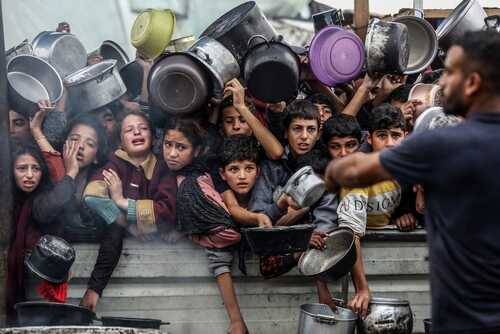
The Gaza Humanitarian Foundation (GHF) has hit a monumental milestone amid fierce opposition and life-threatening conditions—delivering 100 million meals to the beleaguered people of Gaza.
At a Glance
- GHF has delivered 100 million meals across Gaza since May 2025
- Hamas placed active bounties on both U.S. and local GHF workers
- The United Nations criticizes GHF’s securitized approach to aid delivery
- GHF receives direct backing from the U.S. and Israeli governments
- Civilians were trampled during a chaotic food drop in July 2025
GHF’s Bold Mission in Gaza
Founded in May 2025, the Gaza Humanitarian Foundation has rapidly become one of the most aggressive aid actors in the Middle East. Backed by both the United States and Israel, the group has now delivered over 100 million meals to Gaza civilians—an achievement as logistically impressive as it is politically explosive.
Watch now: GHF Hits 100M Meals Amid Violence · X (formerly Twitter)
EXCLUSIVE: Backed by the U.S. and Israel, the Gaza Humanitarian Foundation has delivered 100 million meals to the people of Gaza since May.https://t.co/bekQzFigO3
— The Daily Signal (@DailySignal) August 1, 2025
But this humanitarian feat has not come without cost. According to foundation insiders, multiple GHF workers have been assassinated, with Hamas reportedly placing bounties on both American and Palestinian staff. The threats have escalated alongside the foundation’s growth, suggesting that the very act of distributing food has become a proxy battlefield for Gaza’s tangled web of insurgency, occupation, and survival.
United, Divided
GHF’s mission—food and aid delivery in conflict zones—has gained strong endorsements from Washington and Tel Aviv. President Trump has allocated $30 million in emergency funding to the foundation, stating the need to bypass “terror-linked intermediaries” like Hamas. Israeli military logistics have also reportedly assisted in securing delivery routes, further entrenching the group’s geopolitical alignment.
Yet not everyone sees GHF as a hero. A July 2025 distribution turned tragic when 20 civilians were trampled to death in Khan Younis, leading to international outcry. Critics—including multiple U.N. bodies—argue that GHF blurs the lines between humanitarian work and military strategy. Its well-funded convoys, heavily guarded food depots, and GPS-tracked delivery units have become symbols of a securitized aid paradigm that some fear could reshape humanitarian norms across the globe.
Watch now: GHF’s Gaza Model Under Global Scrutiny · X
The Gaza Humanitarian Foundation has delivered 100 million meals to the people of Gaza since its launch at the end of May. #news https://t.co/9Gu91nOpwN
— Filtered News (@filterednews) August 1, 2025
Risk and Reward
Despite the controversy, the foundation shows no signs of retreat. With hundreds of thousands of Gazans depending on GHF rations, the group has become indispensable to many. But critics worry this model sets a dangerous precedent—where future aid groups are judged not by neutrality or transparency, but by which superpower backs their security protocols.
Supporters argue GHF has achieved what few could: establishing a reliable food pipeline in an active war zone. But even they admit the strategy is risky, politically divisive, and potentially destabilizing for long-term humanitarian coordination in the region.
Sources
- Trump allocates $30M to GHF initiative · U.S. State Department
- Hamas places bounty on GHF workers · Times of Israel
- GHF convoy model raises neutrality questions · Foreign Policy