The U.S. Navy just tested Iran’s “we control Hormuz” narrative—and, in the first 24 hours, Tehran’s shipping blinked first.
Quick Take
- CENTCOM says a U.S.-led blockade began April 13 at 10 a.m. EDT targeting Iranian ports and shipping—while keeping the Strait of Hormuz open for non-Iranian traffic.
- U.S. officials reported no ships breached the blockade in the first 24 hours, with six merchant vessels turning back toward Iranian ports on the Gulf of Oman.
- The blockade followed failed Pakistan-mediated talks where the U.S. demanded major nuclear and regional concessions, including toll-free passage through Hormuz.
- Iran condemned the action as “piracy” and pushed competing claims of control and deterrence, including unconfirmed footage alleging a U.S. destroyer retreated.
What the U.S. Says Happened in the First 24 Hours
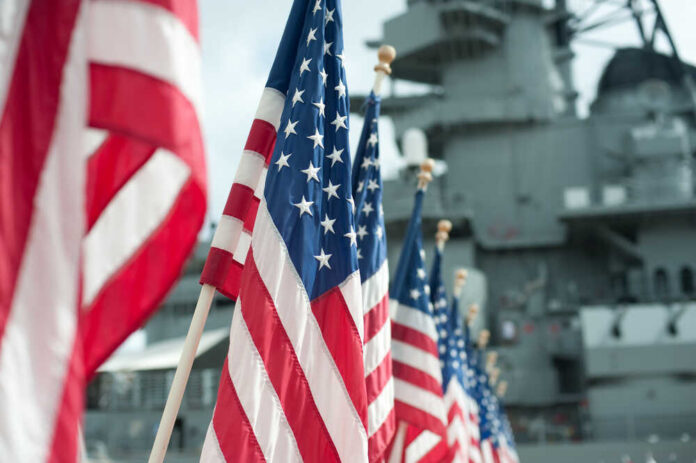
U.S. Central Command described a tightly enforced operation aimed at Iranian ports and Iran-linked shipping, not a closure of the Strait of Hormuz itself. CENTCOM said more than 10,000 personnel supported the mission with roughly a dozen warships and dozens of aircraft. By the morning of April 14, officials reported no breaches of U.S. lines and said six merchant vessels reversed course back to Iranian ports on the Gulf of Oman.
That distinction—shutting down Iranian maritime commerce while keeping global lanes open—matters for both security and economics. Hormuz functions as a critical chokepoint, and broad disruptions can jolt fuel prices quickly. U.S. messaging emphasized “impartial” enforcement in the sense that any nation’s ship heading to Iranian ports could be stopped, while non-Iranian traffic could continue. If that description holds, Washington is trying to pressure Tehran without triggering a total energy-market panic.
Why the Blockade Started Now: Failed Talks and Public Red Lines
CBS reporting tied the blockade to marathon negotiations in Islamabad that collapsed over U.S. demands. Those red lines reportedly included ending uranium enrichment, dismantling facilities, retrieving enriched uranium, and reaching a broader peace framework that also covered Iran’s funding to Hamas, Hezbollah, and the Houthis. Another sticking point was shipping: the U.S. wanted Hormuz open without tolls. After talks failed, President Trump posted that the Navy would interdict toll-paying vessels and destroy Iranian mines.
Vice President JD Vance argued the U.S. held the leverage and suggested Iran “moved the goalposts,” while also describing an uptick in traffic through the strait that was not yet a full return to normal. The administration’s posture signals a preference for coercive leverage—naval power, sanctions pressure, and clear demands—rather than open-ended diplomacy. With Republicans controlling Congress, the White House has more room to sustain a strategy that couples military enforcement with political pressure.
Iran’s Counter-Claims, Propaganda Risks, and What’s Not Verified
Iran’s response mixed threats, rhetoric, and competing claims about who controls the waterway. Iranian officials condemned the blockade as “piracy,” warned of retaliation, and asserted the strait was under Iranian control for non-military vessels. Iranian-linked footage also claimed a U.S. destroyer retreated after IRGC warnings, but U.S. reporting did not confirm that account. In this kind of standoff, information warfare is a feature, not a sideshow, and both audiences at home and abroad become targets.
Energy Stakes and the Real-World Economic Pressure Test
Hormuz is routinely described as one of the world’s most important oil arteries, and it cited estimates that roughly 20% to 30% of global oil moves through it. That reality turns even a “limited” blockade into an economic event, not just a military one. Disruptions to Iranian exports and commercial access can squeeze Tehran’s revenue while also raising the risk of broader volatility. For U.S. households still sensitive to inflation, energy price stability remains the political tripwire.
What This Signals About U.S. Strategy—and the Domestic Political Fault Line
The early reports portray a calculated move: apply maximum pressure to Iran’s ports and shipping, demonstrate freedom-of-navigation capability, and dare Tehran to escalate. Supporters see it as a direct defense of U.S. interests and deterrence after years of perceived weakness in the region. Critics worry about escalation and spillover costs. Either way, the episode reinforces a core public frustration shared across ideologies: too many major national decisions feel reactive, elite-driven, and high-risk, while ordinary families bear the price shocks.
Hormuz Open, Iran Shut: U.S. Navy’s New Day-One Victory https://t.co/jQTtaUYf9C
— 🍊🍊🍊PatriotPureblood🍊🍊🍊 (@PatriotPureblo1) April 14, 2026
For now, the best-supported facts are narrow and time-bound: the blockade began April 13, it held for at least its first day under CENTCOM’s account, and Iran’s competing claims remain partly unverified outside state-aligned channels. What comes next depends on whether Iran challenges enforcement with mines, drones, or proxy action—and whether the U.S. can sustain pressure without turning a targeted operation into a wider regional crisis that drags global energy markets with it.
Sources:
Hormuz Open, Iran Shut: U.S. Navy’s New Day-One Victory
Iran war live updates: U.S. Iran ports blockade, Strait of Hormuz, Trump