
After years of sanctions whiplash and broken promises, a European oil giant is moving to take back the wheel in Venezuela—testing whether Washington’s new leverage can finally force accountability in a country sitting on the world’s biggest proven reserves.
Quick Take
- Repsol says it has reached a deal with Venezuela to regain operational control of the Petroquiriquire joint venture in eastern Venezuela.
- The company is targeting a 50% production increase within 12 months from roughly 45,000 barrels per day, with ambitions to triple output within three years if conditions allow.
- The agreement follows new U.S. general licenses issued in February 2026 that eased energy-sector sanctions for select companies after Maduro was removed from power.
- Repsol and other foreign firms are pushing for tighter commercial terms, including payment mechanisms meant to prevent past nonpayment problems.
Repsol’s deal signals a new phase in Venezuela’s oil restart
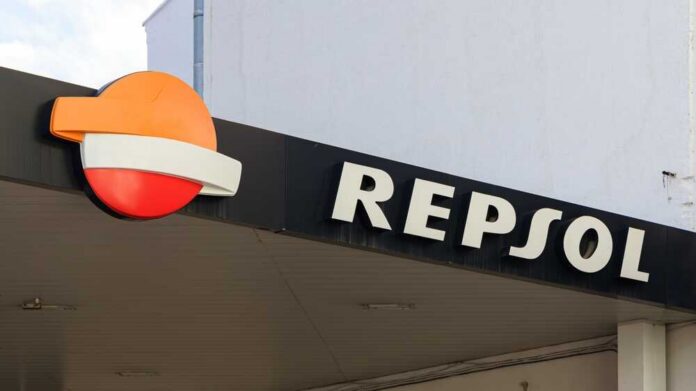
Repsol announced on April 16, 2026 that it had reached an agreement with Venezuela’s government to regain operational control of its Petroquiriquire joint venture oil fields in eastern Venezuela. The company pegged current production around 45,000 barrels per day and said it aims to raise gross output by about 50% within 12 months. Repsol also described a longer-term goal of tripling production within three years, subject to conditions.
The arrangement was signed with Venezuela’s hydrocarbon ministry and state oil company PDVSA, which holds 60% of Petroquiriquire. Repsol has operated in Venezuela since 1993, making it one of the longer-running foreign participants to stay engaged through political turmoil, sanctions risk, and infrastructure deterioration. The shift back to operator control matters because it puts field-level decisions—maintenance, drilling cadence, and technical planning—more directly in Repsol’s hands.
U.S. sanctions policy remains the gatekeeper for who can operate
The deal sits inside a larger reality: access to Venezuela’s oil sector still runs through Washington’s licensing decisions. Reports cited a 2025 U.S. move that revoked licenses and sharply curtailed activities, limiting what companies could do on the ground. After the January 2026 capture of Nicolás Maduro and his transfer to the U.S. for a drug trafficking trial, the U.S. issued general licenses in February 2026 to Repsol and several other oil majors, enabling restarts.
For Americans watching energy prices, the strategic angle is simple: more supply tends to relieve pressure on global crude markets, even when the barrels are not produced on U.S. soil. For conservatives who prefer predictable, rules-based governance over political favoritism, the key question is whether this licensing regime is being applied transparently and consistently. The research indicates the U.S. now effectively oversees who re-enters, making policy stability—not just geology—the key variable.
Production goals are ambitious, but timelines face real constraints
Repsol’s stated targets are sizeable relative to its baseline production in-country. A 50% increase in 12 months would represent a meaningful step-up in an environment where equipment, power reliability, and field services have historically constrained output. The bigger headline—tripling production within three years—was reported as conditional, and the sources do not detail the exact “necessary conditions,” leaving outside observers unable to verify what must change to hit that pace.
Industry coverage also reflected caution. Analysts argued that Venezuela’s broader turnaround “will take a while,” even with licenses in place. Venezuela’s overall oil production was reported by PDVSA at about 1.1 million barrels per day in April 2026, up from 942,000 in February. That improvement is notable, but it also underscores how much sustained investment and competent operations would be required to approach past peak production levels.
Payment guarantees highlight the real trust problem: enforceable contracts
One of the most revealing details is the emphasis on a “guaranteed” payment system aimed at preventing past failures by Caracas to pay partners. That focus aligns with what many Americans—right and left—have come to believe about institutions: fine words are cheap, while enforceable terms are what matter. The sources suggest Repsol’s return to operational control is tied to more dependable commercial mechanics, not simply political optimism.
This also helps explain why the story goes beyond one company. It points to other major players moving in parallel, including Chevron increasing its stake in a PDVSA joint venture and Shell negotiating gas developments. If Venezuela’s post-Maduro environment can sustain clearer rules and consistent enforcement, foreign capital and expertise may continue to flow. If not, the country risks repeating a cycle of headline deals followed by stalled execution.
What this means for Americans watching energy, borders, and governance
Venezuela’s re-opening to large-scale oil operations intersects with U.S. domestic debates that are not going away: energy prices, inflation sensitivity, and distrust of bureaucratic decision-making. It shows Washington’s licenses are now the practical lever shaping Venezuela’s output and which companies benefit. That strengthens U.S. influence, but it also concentrates decision power in federal hands—exactly the kind of arrangement that fuels “deep state” skepticism when transparency is thin.
Repsol Taking Back Control Of Venezuelan Oil Assets – https://t.co/1dCTbhfG01
— Nigeria Newsdesk (@NigeriaNewsdesk) April 16, 2026
Repsol’s move is best understood as a test case for whether a more ordered, contract-driven operating environment can take hold in Venezuela under U.S.-managed sanctions relief. The production numbers and timelines remain aspirational, and the conditions for tripling output are not fully spelled out in the sources. Still, the operational-control shift, paired with payment safeguards, is a concrete signal that companies are demanding harder terms before betting big again.
Sources:
Repsol Taking Back Control of Venezuelan Oil Assets
Repsol taking back control of Venezuelan oil assets
Spains Repsol reportedly wins back control Venezuelan oil operations
Repsol taking back control of Venezuelan oil assets
Repsol Returns to Venezuela With Ambitious Production Growth Plan
Repsol resumes control of Venezuela oil field pledges higher output