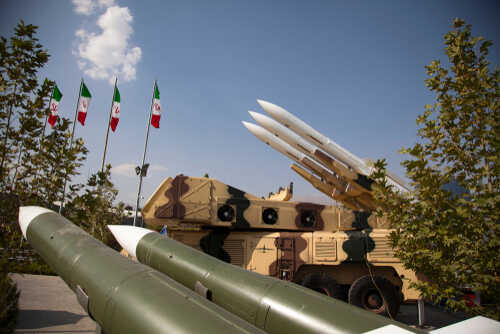
Iran’s new warning that “prominent resorts” and tourist sites could be targets worldwide turns a spring-break season into a security test for Americans—right as the Iran war is splitting the MAGA base over how deep the U.S. should go.
Quick Take
- Iranian military spokesman Abolfazl Shekarchi said U.S. and Israeli officials would no longer be safe at parks, recreational areas, and tourist destinations worldwide.
- The threat follows joint U.S.-Israeli strikes in late February 2026 that reportedly killed Iran’s Supreme Leader Ayatollah Ali Khamenei; his son Mojtaba Khamenei has taken over.
- Regional fallout is already hitting Americans through disrupted air travel and energy infrastructure attacks that risk higher fuel costs.
- Officials have not publicly tied a recent Texas bar shooting to Iran; reports cite Islamist items found in the suspect’s car but provide no direct proof of foreign direction.
Iran Signals a Shift Toward Soft Targets Abroad
Iranian Brigadier General Abolfazl Shekarchi delivered the warning on Iranian state television on March 20, saying U.S. and Israeli officials would not be safe in tourist destinations worldwide, including parks and recreational areas. Several U.S. outlets summarized the message as a warning about “prominent resorts,” timed to U.S. college spring break travel. Skift’s travel-industry reporting framed it as a broad threat to tourist sites rather than a specific hotel chain.
That distinction matters for trying to separate clicks from concrete risk. It does not confirm a named target list or credible operational details, and it does not establish that ordinary American families are being singled out. Still, threats aimed at public spaces and travel hubs are classic asymmetric messaging: they are easier to publicize than to execute, but they force countries and companies to spend heavily on security while raising fear and uncertainty.
What Sparked the Threat: Leadership Losses and Escalation Dynamics
The immediate backdrop is the war that began February 28, 2026, when the United States and Israel launched strikes on Iranian targets over missile concerns, with reports saying the strikes killed Ayatollah Ali Khamenei and other senior figures. Mojtaba Khamenei, described as Khamenei’s son and successor, has called for stripping enemies of “security.” Iran’s posture since then has mixed defiance with warnings, while Israel has claimed Iran’s navy and air force were crippled and missile production halted—claims Iran’s Revolutionary Guard disputes.
Energy and infrastructure have become a major pressure point. Fortune reported attacks and disruption affecting Gulf energy sites, including the South Pars gas field and Kuwait’s Mina Al-Ahmadi refinery, with fires and oil-market anxiety. For U.S. households already exhausted by inflation and high costs, this is the part that hits home fastest: even without a new tax, a disrupted energy supply chain functions like a pay cut. Limited public reporting makes it hard to measure long-term market impact, but the near-term volatility risk is plain.
Travel Disruptions Are Spreading Beyond the Combat Zone
The war’s spillover is not only about threats; it is also about logistics. The Traveler described widespread flight cancellations and air-traffic disruption across the Middle East, calling the situation among the most disruptive to aviation since COVID-era shutdowns. Even Americans not traveling to the region can feel downstream effects through rerouted flights, higher cargo costs, and reduced airline capacity. In practical terms, the country is learning again what global instability does to everyday life—at the pump and at the checkout.
Domestic Security Questions—And What We Actually Know
Some coverage tied heightened concern to a Texas bar shooting that occurred one day after the late-February strikes. Reports said investigators found a Koran and a “Property of Allah” shirt in the suspect’s car, and some outlets raised the possibility of Iranian influence. What’s missing in the available research is a confirmed operational link to Iran or direction by an Iranian entity. We should treat that element as unresolved until law enforcement releases evidence beyond suggestive symbols or timing.
Why This Is Dividing Trump’s Coalition
The political reality is that the conflict is landing inside a conservative movement already wary of “forever wars.” Reporting indicates the Pentagon is preparing for troop deployments related to Iran, while Iran’s leadership is using threats and energy disruption to demonstrate it can still impose costs. For MAGA voters who supported Trump for border enforcement, anti-woke pushback, and America-first economics, the frustration is straightforward: higher energy costs and open-ended escalation collide with the promise to avoid new wars.
Constitutionally, the stakes will also hinge on how Washington funds and expands this fight—troop levels, surveillance, and emergency authorities can grow quickly during international crises. The current research does not document specific new domestic measures, but history shows that overseas conflict often becomes the justification for rushed policy at home. For conservatives, the consistent test is whether leadership protects Americans while respecting limits: clear objectives, transparent authority, and no blank checks that outlive the mission.
Sources:
Iran warns prominent resorts may not be safe, alarming those on spring break
Iran warns prominent resorts may not be safe, alarming those on spring break
Iran warns prominent resorts may not be safe, alarming those on spring break
Iran warns prominent resorts may not be safe, alarming those on spring break
Iran Warns Tourist Sites Could Be Targets Worldwide
Iran-U.S. War Chaos Upends Global Travel in 2026
Iran threatens attack tourist sites across the world