A leading African cardinal is warning that efforts to crush the Traditional Latin Mass are not just bad policy—they may be an attack on the very roots of Christian worship.
Story Snapshot
- Cardinal Robert Sarah calls the Traditional Latin Mass a “pillar” of Catholic worship and says its fruits prove it should not be suppressed.
- He warns that bishops who treat the liturgy like politics risk becoming “commissars of ideology” instead of guardians of tradition.
- Pope Francis’ rules restricting the old rite are seen by many as a threat to Church unity and a break with centuries of faith.
- Sarah criticizes a new “paradigm shift” that brands ancient traditions as “dangerous,” echoing battles conservatives know from woke culture wars.
Cardinal Sarah’s Warning: Don’t Turn Bishops into Political Bosses
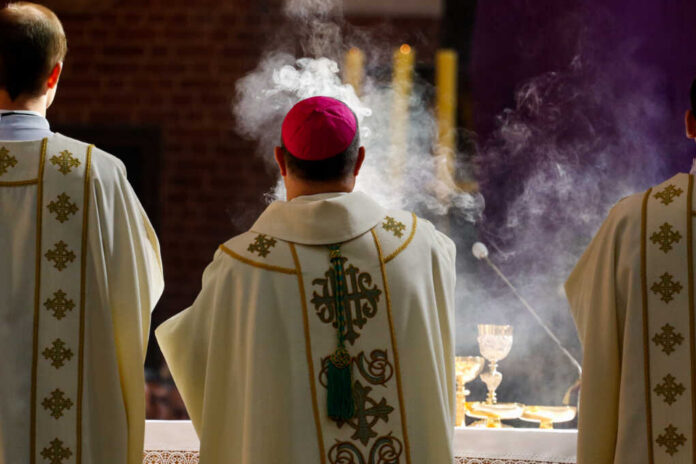
Cardinal Robert Sarah, former head of the Vatican office for worship, has become one of the strongest voices defending the Traditional Latin Mass in today’s Church. In a major essay, he begged bishops to handle Pope Francis’ rules on the old rite with deep respect for “sacred continuity,” the unbroken line of worship over centuries. He cautioned that if bishops follow trends instead of tradition, they start to look like political leaders enforcing ideology, not shepherds guarding the faith handed down to them.
Sarah’s concern hits home for many conservatives who watched American leaders do the same thing with schools, gender rules, and speech codes. He warns that treating liturgy as a tool for reform turns worship into a battleground between factions instead of a place where believers, old and young, meet God in peace. For him, the bishop’s role is not to silence one group of faithful Catholics, but to let both liturgical forms enrich each other under the same roof.
The Traditional Latin Mass as a “Normal” and Fruitful Part of Church Life
Years before the current crackdown, Cardinal Sarah said clearly that the older form of the Mass “should be seen as a normal part of the life of the Church of the twenty-first century.” He defended young Catholics drawn to the reverent silence, clear doctrine, and sense of mystery found in the Traditional Latin Mass, arguing that their attachment is not nostalgia but a real hunger for God. That defense matters today, as many officials still paint these believers as extreme or divisive rather than as loyal Catholics.
Sarah also points to the real-world fruits of the ancient rite. He notes that parishes and communities where the Traditional Latin Mass is celebrated freely often show strong family life, high numbers at confession, and serious commitment to moral teaching. On that basis, he calls the “unfettered celebration” of the old Mass a source of “good fruits” for the Church, not a threat. In another strong statement, he backs reports calling this liturgy a “pillar of the liturgical tradition,” and warns that trying to suppress a rite that formed saints for 1,600 years is an insult to sacred history.
Traditionis Custodes and the New “Paradigm Shift” Against Tradition
In 2021, Pope Francis issued the document Traditionis Custodes to restrict the Traditional Latin Mass and place tight controls on where and how it can be offered. Cardinal Sarah has continued to celebrate the old rite and later wrote that this motu proprio, along with follow-up rules, feels like “liturgical aggression” to many faithful and “may even pose a threat to the Church’s unity.” For Catholics who see worship as the heart of faith, turning the Mass itself into a flashpoint for power struggles is deeply disturbing.
Sarah now warns that a wider push in the Church, tied to the Synod on Synodality, treats ancient practices as “dangerous.” Speaking in Washington, he criticized this “paradigm shift” where centuries-old traditions that served the Church well are suddenly rebranded as harmful. He called this mindset a kind of “practical atheism”—not open denial of God, but living and governing as if God and sacred tradition no longer matter at the center. That language will sound familiar to many American readers who watched elites call basic family values, biblical teaching, and patriotism “dangerous” over the past decade.
A Battle Over Authority, Continuity, and the Rights of the Faithful
At the core of this dispute is a hard question: can Church leaders simply shut down a rite that was “never abrogated,” as Pope Benedict XVI taught in his document Summorum Pontificum? Sarah leans on Benedict’s famous line, “What earlier generations held as sacred, remains sacred and great for us too, and it cannot be all of a sudden entirely forbidden or even considered harmful.” That principle mirrors the conservative belief that you do not trash the Constitution, long-held freedoms, or the moral law just because new managers want a fresh brand.
"Emulate Pope Leo XIV’s generosity towards the Traditional Latin Mass. What was written to the French Bishops must apply to all Bishops."
~ Cardinal Robert Sarah pic.twitter.com/wa2uWiymHX— Ojike Uzoma (@Xtopher_Uzo) July 17, 2026
Pope Francis and his allies answer by stressing papal power to regulate liturgy and by declaring the newer Mass the “unique expression” of worship in the Roman rite. But critics note that they have not yet offered a deep legal or theological answer to Sarah’s concern about “sacred continuity” and the rights of Catholics attached to the old form. For now, the gap remains: one side claims historic worship cannot simply be treated as dangerous and banned, while the other mainly points to authority and unity. The result is an uneasy truce that leaves many traditional families feeling pushed to the margins.
Sources:
lifesitenews.com, thecatholicthing.org, youtube.com, catholicfamilynews.com, english.katholisch.de, catholicculture.org, ncregister.com, uscatholic.org