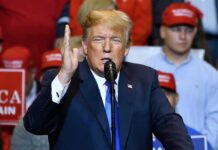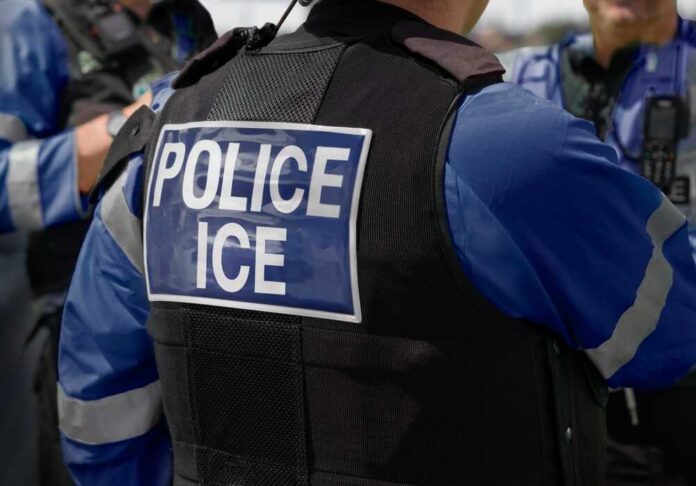
After two deadly shootings during immigration traffic stops, President Trump is urging agents to restart these road operations that he calls “one of their most important tools” for removing criminal illegal immigrants.
Story Snapshot
- President Trump wants immigration agents to resume traffic stops he says are vital for catching dangerous illegal immigrants.
- Federal law gives immigration officers power to stop and briefly question drivers when they have reasonable suspicion of an immigration or federal crime violation.
- Recent court settlements now limit pretext traffic stops and demand written proof of specific reasons for pulling over a vehicle.
- Critics say many people caught in these operations have no criminal record, raising fears of overreach and mistaken targeting.
Trump’s Push to Restart Road Operations
President Trump is praising immigration traffic stops and pressing Immigration and Customs Enforcement to get back on the roads, even after a pause triggered by two fatal shootings during recent operations. He argues these stops are a critical tool to remove criminal illegal immigrants who pose a threat to American families. The Department of Homeland Security has said immigration agents focus on dangerous offenders, including people with past convictions for homicide, sexual assault, drug trafficking, and gang activity. That message fits the administration’s promise to crack down on violent crime tied to illegal immigration and to back frontline officers who enforce the law every day.
Many conservative voters see Trump’s stance as a needed course correction after years of soft enforcement and sanctuary policies that turned a blind eye to repeat offenders. But the shootings, where victims were not the original targets, have raised hard questions about how these operations are carried out and whether innocent people are being put at risk. Supporters say pulling back now would give cartel-linked traffickers and other criminals room to move freely on American roads. Opponents say restarting stops without stronger guardrails invites more tragedy and more attacks on civil liberties.
What the Law Actually Allows Immigration Agents to Do
Federal immigration law gives Immigration and Customs Enforcement authority to stop and briefly question people in vehicles when agents have reasonable suspicion that someone in the car is violating federal law, either committing a crime or being removable under immigration rules. A judicial warrant is not required for car stops, but agents must be able to point to facts that support that suspicion; they cannot rely only on how someone looks or seems. Legal guides stress that immigration officers cannot stop cars just to enforce ordinary traffic rules, which remain the job of state and local police. Once stopped, people have the right to remain silent, to refuse consent to a search of their car, and to ask whether they are under arrest or free to leave.
Recent court settlements have narrowed how immigration officers can use that authority. A class‑action case approved in 2025 forced Immigration and Customs Enforcement to adopt nationwide rules that limit “collateral” arrests during traffic operations and forbid stops based on fake traffic excuses. Under that settlement, agents must base a vehicle stop on specific, articulable facts that suggest a person in the car lacks legal status and must document those reasons, rather than pulling over drivers and then fishing for immigration violations. These changes were pushed by civil rights groups after patterns of aggressive car stops, window breakings, and roadside arrests raised Fourth Amendment concerns about unreasonable seizures and racial targeting.
Deadly Shootings and the Accountability Debate
The recent shootings that led to the temporary halt have become a rallying point for both critics and supporters of tough enforcement. In each case, the men who died were not the original targets of the operation, and reports say they had work permits and Social Security cards that allowed them to work legally in the United States. That reality undercuts claims that traffic-stop raids mostly catch hardened criminals and fuels fears that law‑abiding immigrants can be swept into dangerous confrontations by mistake. It also gives political ammunition to those who argue Immigration and Customs Enforcement is focusing on the wrong people instead of prioritizing violent offenders.
Oversight concerns are heightened by the fact that agents in those shootings reportedly lacked body‑worn cameras, despite federal funding set aside to deploy them. Without clear video records, it is harder for investigators, Congress, and the public to judge whether deadly force was justified or whether agents followed policy. Critics point to broader data showing that a large share of people arrested in expanded operations have no criminal convictions, even as the agency’s budget and reach have grown. That imbalance feeds the argument that enforcement has outpaced accountability and that the government must prove these traffic stops truly target serious threats, not just swell deportation numbers.
Balancing Public Safety, Liberty, and Fair Enforcement
This fight over restarting traffic stops reflects a longer struggle over how far the federal government can go on the roads in the name of immigration enforcement. Legal analyses show that immigration agents must obey the Fourth Amendment like any other officers, meaning they need reasonable suspicion or probable cause, not vague hunches, to stop and detain people. Court findings and advocacy reports have documented cases where immigration agents detained people without showing warrants, ignored papers proving legal status, or targeted Somali and Latino residents based on appearance alone. Those patterns fuel charges of biased enforcement and demands for tighter rules.
For conservatives, the challenge is to hold two truths at once. America needs strong borders and serious tools to remove criminal illegal immigrants before they harm more families. At the same time, the Constitution demands that government power be limited and accountable. Reasonable suspicion must mean real facts, not profiling; deadly force must be a last resort, backed by clear evidence. With new court‑ordered limits on pretext stops and growing scrutiny of immigration operations, Trump’s push to restart traffic stops will rise or fall on whether his administration can show these road operations are precise, lawful, and focused on the worst offenders—not on hardworking people who are following the rules.
Sources:
facebook.com, americanimmigrationcouncil.org, immigrantjustice.org, insightcrime.org, nytimes.com, birdsall-law.com, factually.co, borderlessmag.org, commondreams.org