

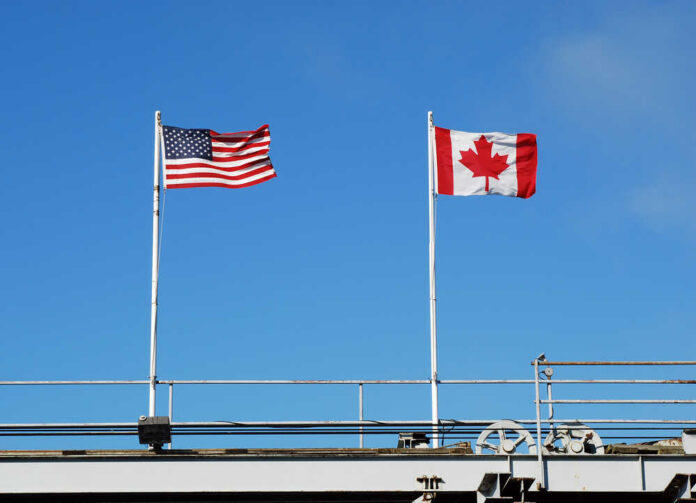
Canadian travel to the United States has fallen hard, and the drop is hitting border states, hotels, and stores in real money.
Quick Take
- Canadian visits to the United States fell 22 percent in 2025, cutting U.S. tourism revenue by billions.
- Survey data says many Canadians blame tariffs, political rhetoric, and U.S. policy choices.
- Some analysts say wider global travel shifts and higher costs also played a role.
- The decline is showing up in border crossings, car traffic, and business losses.
Canadian Visitors Pull Back After Tariffs and Rhetoric
Forbes reported that Canadian visits to the United States fell 22 percent in 2025, with about 4 million fewer visits and an estimated $4.5 billion hit to the U.S. economy. USA Today also reported that total foreign travel to the United States was down 5.4 percent through November, led by the Canadian decline. For border towns and tourism workers, that is not a small dip. It is a direct blow.
Longwoods International found that 59 percent of Canadian adults said U.S. government policies, trade practices, and political rhetoric made them less inclined to travel to the United States in 2026. CNBC also reported that 80 percent of affected Canadian travelers pointed to tariffs as the main negative factor, while 71 percent cited political remarks from U.S. leaders. Those numbers show that many Canadians are reacting to policy, not just price.
The Border Slowdown Is Showing Up in the Data
More than one data set points in the same direction. The University of Toronto School of Cities, using cellphone data, found a 42 percent year-over-year drop in cross-border travel, which was steeper than the official 25 percent figure from Statistics Canada. CNBC reported that Canadian car arrivals to the United States fell 37 percent in July 2025 alone. Those are the kinds of numbers local businesses feel right away, from gas stations to motels.
Former Canadian Prime Minister Justin Trudeau also urged Canadians to rethink travel to the United States after President Donald Trump announced 25 percent tariffs on Canadian imports. That kind of public message matters because travel is often a choice, not a necessity. When people hear their leaders warning them off, they notice. The result is a pullback that can feed on itself, especially when politics turns a simple vacation into a statement.
Other Factors Are Real, But They Do Not Erase the Policy Effect
Some counter-reporting says the decline also reflects higher costs, changing travel habits, exchange-rate pressure, and broader global travel shifts. That point has merit. But the strongest numbers in the record still tie the Canadian slump to tariffs, rhetoric, and policy anxiety. The available research does not provide a clean econometric study that separates every cost factor from every policy factor, so the full split is still not settled.
What is settled is that the damage is not abstract. The Joint Economic Committee minority report said passenger vehicle crossings from Canada into the United States fell nearly 20 percent from January through October 2025, with some states seeing declines as large as 27 percent. That means less foot traffic, less spending, and weaker income for businesses that depend on Canadian guests. For many communities, this is what policy looks like on Main Street.
Why This Matters for the Trump White House
The broader story is simple. Trump-era tariffs, harsh trade talk, and aggressive immigration messaging have changed how many Canadians view travel to the United States. The economic pain is landing on American workers and business owners, not on the politicians who set the tone. At the same time, some analysts argue that the slump also reflects global travel trends and higher costs, so the decline should not be blamed on one factor alone.
Even with that caveat, the public mood in Canada looks unusually sour. Politico reported that 58 percent of Canadians said the United States was not a dependable ally, and nearly 80 percent said Trump weakened Canada-U.S. relations. That is a serious warning sign for a country that depends on friendly neighbors and open commerce. When trust breaks down, tourism is often one of the first places the damage shows up.
Sources:
ttra.com, forbes.com, usatoday.com, finance.yahoo.com, nytimes.com, cepr.org, jec.senate.gov, travelandtourworld.com, reddit.com