A giant Trojan Horse has rolled into London’s Trafalgar Square, turning one of Britain’s most iconic public spaces into a movie billboard dressed up as “art.”
Story Snapshot
- A towering Trojan Horse now dominates Trafalgar Square as promotion for Christopher Nolan’s new film, “The Odyssey.”
- The horse is part of a global touring campaign, not a permanent artwork, underscoring how marketing is invading public squares.
- London’s strict permit rules show how corporate promotions rely on “cultural” labels to access public space that regular citizens can’t use so easily.
- The campaign reflects a wider trend where big studios blend advertising with public art to shape what people see in major cities.
A Massive Movie Prop Turns Trafalgar Square Into A Film Set
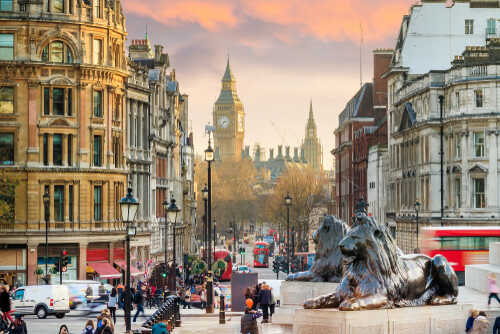
Reports from campaign watchers describe a towering Trojan Horse appearing overnight in Trafalgar Square to mark the release of Christopher Nolan’s new epic, “The Odyssey.” Standing around 11 meters tall and weighing several tons, the horse sits on a sand-covered base between the famous bronze lions and fountains under Nelson’s Column. For one day, the square looks less like a civic monument and more like a movie set. The installation will stay only briefly before moving on to Westfield London in White City.
Unlike real public art, this horse is openly tied to a single commercial product. Coverage of the promotion in the United States confirms that Universal Pictures is using similar giant horses at Universal CityWalk Hollywood and other sites as photo spots for fans ahead of the film’s July 17 release. The displays carry the film’s title carved into the structure and are described as “marketing strategy” and “promotional feature,” leaving little doubt about their true purpose.
From Venice Beach To Arlington To London: A Touring Marketing Machine
This London stop is part of a wider “Odyssey Trojan Horse Touring” experience that has already hit several locations. In Arlington, Texas, officials reported a roughly 40‑foot horse on a lawn near a busy road as part of a national promotional tour for the film. That installation offered a “larger‑than‑life photo opportunity” for just three days, June 17 to June 20, before moving on. The short stay and travel schedule show this is a roving corporate campaign, not a gift to Londoners or Americans.
In California, Hollywood media have covered the arrival of a 34‑foot Trojan Horse at Universal CityWalk Hollywood, praising it as an “insane way” to hype the blockbuster rather than as a serious cultural piece. Reporting notes that the horse stands in front of the Universal Cinema theater, clearly placed to drive ticket sales and park traffic. Another detailed video report shows a similar installation at Venice Beach, again tied directly to the film’s July 17 release date. Together, these stops form a chain of high‑impact marketing moments across major public spaces.
Art, Commerce, And Tight Rules On Public Squares
The choice of Trafalgar Square is not random. Guidance from the Greater London Authority shows that commercial activities in the square require special applications, including clear information about the event, schedule, and any licensable activities like trading or entertainment. Forms for “Application for Commercial Activity in Trafalgar Square” spell out strict time windows and safety rules for companies that want to use the public space to promote their products. For everyday citizens and small groups, these rules can be a real barrier.
Across the last decade, Trafalgar Square’s Fourth Plinth has hosted artworks that comment on money and power, including the “Gift Horse” by Hans Haacke, which mixed a horse skeleton with a stock market ticker. That piece was described as a “comment on the relationship between art and commerce,” hinting at growing concern about corporate influence in civic spaces. Now, the Trojan Horse campaign pushes that link further by placing a branded film prop right in the same symbolic square, under the banner of culture and storytelling rather than plain advertising.
When Marketing Dresses Up As Public Art
Urban studies research explains why studios pick this route. Installation art in public spaces can act as an “iconic spatial landmark” that shapes how people see and remember a city. It draws crowds, creates photo moments, and becomes part of the visual identity of the place, even if only for a short time. Marketing experts note that public art can also boost foot traffic and make people more likely to spend time and money in an area. Big brands see that power and want to tap into it.
A 11-metre-tall Trojan Horse has been set up overnight in Trafalgar Square to mark the launch of Christopher Nolan's latest film, The Odyssey. pic.twitter.com/z5wlnHEIbI
— ARUNI (@aruni_t) July 14, 2026
That is why promotions like “The Odyssey” horse are framed as cultural “experiences” and “immersive installations” instead of simple ads. The language helps secure permits and public acceptance, even when the core goal is to sell movie tickets. For conservative readers, the lesson is clear: large companies are learning how to work around strict rules by blurring the line between civic art and commercial messaging. The more this tactic spreads, the harder it becomes for ordinary people to keep public squares focused on history, faith, and shared national values rather than corporate campaigns.
Sources:
mirror.co.uk, tuoitre.vn, nypost.com, comicbasics.com, horseandhound.co.uk, channel4.com, london.gov.uk, committees.westminster.gov.uk, macleans.ca