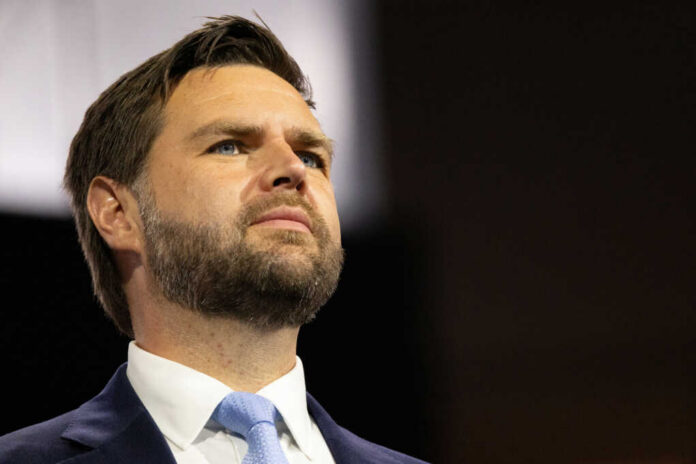
With the Strait of Hormuz and global energy flows in the balance, Vice President JD Vance is warning Iran not to “play” the United States as he heads into rare, high-stakes truce talks.
Quick Take
- Vice President JD Vance departed Washington for Islamabad to lead U.S. negotiations aimed at ending the six-week U.S.-Israel war with Iran.
- Vance said the U.S. is open to talks only if Iran negotiates in good faith, stressing President Trump’s guidelines and U.S. leverage.
- The talks come during a fragile ceasefire after major disruption risks tied to the Strait of Hormuz and broader regional conflict.
- Hawkish voices are warning against a repeat of past deals viewed as weak, while analysts say the VP-level delegation signals seriousness.
Vance departs for Pakistan with a warning and a narrow mandate
Vice President JD Vance left Washington on April 10 for Islamabad, Pakistan, to lead negotiations intended to end the conflict that began February 28, when the United States and Israel launched military action against Iran tied to nuclear, ballistic, and proxy-related concerns. Speaking before boarding Air Force Two, Vance said Tehran should not try to “play” the United States, describing U.S. openness to talks as conditional on genuine engagement.
White House announcements earlier in the week identified Vance as the lead for the delegation, with Special Envoy Steve Witkoff involved. Reporting on the trip also pointed to Jared Kushner’s participation based on earlier indirect contacts, though public accounts vary on who will sit at the table. The stated U.S. posture pairs willingness to negotiate with a clear emphasis on leverage, including previous references to pressure that could extend to Iranian infrastructure if escalation resumes.
A ceasefire is holding, but the underlying flashpoints remain unresolved
The negotiations are set against a two-week ceasefire announced around late March that has been repeatedly described as shaky. The larger strategic issue is not simply the pause in strikes, but whether Iran and the United States can reach terms that prevent a restart—especially after Iran’s moves affecting the Strait of Hormuz raised fears about global shipping and energy markets. Any sustainable truce would need enforcement mechanisms and verifiable actions, details not yet publicly defined.
Vance framed Iran’s choice earlier in the week as “two pathways”: normalization and an end to destabilizing behavior, or deeper economic ruin. That framing fits the administration’s broader strategy of using pressure to produce bargaining power rather than open-ended nation-building. At the same time, the public record still lacks specifics on what Iran is offering, who exactly is authorized to make commitments on Tehran’s side, and whether any agreement would cover proxy activity across the region.
Why Pakistan matters, and what “direct talks” would signal
Islamabad’s role is notable because it offers a venue outside the traditional Gulf or European channels, and because analysts have described the coming discussions as potentially more direct than prior rounds that relied on intermediaries. One academic cited in coverage argued that a vice president leading the effort signals seriousness and improves the odds of progress. The White House has released limited detail on format, leaving uncertainty about whether the talks will be fully direct or partly mediated.
For American voters, the venue is less important than the results: stabilizing the region without drifting into another prolonged conflict, while protecting U.S. interests and allies. Conservatives who prioritize limited government and an “America First” focus will watch whether diplomacy is used to end fighting without committing the country to a costly, indefinite mission. Skeptics across the political spectrum will also look for transparency, given long-running public distrust of elite decision-making on foreign wars.
Pressure from hawks, warnings about weak deals, and the credibility test
Republican voices urging hard terms have argued that any agreement must avoid what they call an “Obama-style” deal, emphasizing verifiable limits on Iran’s nuclear capabilities, restraint in the region, and tangible actions tied to maritime security. A former Treasury official associated with a hawkish think tank questioned whether Vance’s relative inexperience with Iran makes him an unusual choice for a negotiation with high stakes. Supporters counter that his skepticism of intervention may help prevent mission creep.
NEW: Vice President JD Vance speaks as he departs for pivotal negotiations with Iran:
“We're certainly willing to extend the open hand. If they're going to try to play us, then they're going to find that the negotiating team is not that receptive.” pic.twitter.com/xT77rtr9DR
— Fox News (@FoxNews) April 10, 2026
The immediate credibility test is whether Iran shows concrete good faith during the ceasefire period and at the table—rather than using talks to buy time, reset forces, or seek sanctions relief without lasting concessions. Vance’s warning not to “play” the U.S. reflects that concern directly. For the Trump administration, success would mean a durable end to hostilities, reduced threats to energy corridors, and enforceable commitments—while failure could bring renewed escalation and sharper economic fallout.
Sources:
JD Vance Warns Iran Not To “Play” US As He Leaves For Truce Talks
Mike Pence warns JD Vance to avoid ‘Obama-style’ Iran deal as nuclear talks set to begin in Pakistan