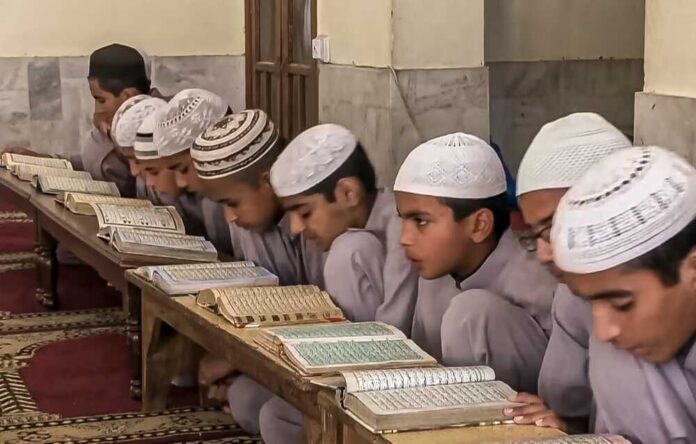
Iran’s Revolutionary Guards now openly recruit children as young as 12 for security checkpoints and war-related operations, announcing the policy through state media with a justification that defies both common sense and international law.
Story Snapshot
- Iran officially lowered the minimum recruitment age to 12 years old for its “For Iran” war support initiative on March 26, 2026
- Revolutionary Guards justify the policy by claiming children themselves requested participation in checkpoint patrols and logistics operations
- Witnesses report masked teenagers already staffing urban checkpoints amid near-total internet blackouts and mass arrests
- The recruitment violates Iran’s commitments under the Convention on the Rights of the Child, which prohibits using minors in military activities
- Iranian parents express fears about conscription leading to overseas deployment while residents describe widespread fear from intensified security measures
A Regime’s Desperation Exposed Through Its Youngest Recruits
Rahim Nadali, a cultural official with the Revolutionary Guards in Tehran, delivered the announcement that should shock any parent worldwide. The regime dropped its minimum age for war support roles to 12 because younger children were “asking to take part,” according to the official statement broadcast through state media. This explanation insults basic intelligence. Children requesting military duty speaks not to voluntary enthusiasm but to a propaganda apparatus that has normalized the unthinkable. The “For Iran” initiative now funnels seventh-graders into activities including patrols, checkpoint operations, and logistics support.
Residents across Iranian cities paint a picture far different from the regime’s portrayal of eager young volunteers. Checkpoints staffed by masked security personnel and Basij volunteers, some described as teenagers, have multiplied across urban areas. One witness account captures the atmosphere: “the feeling for me and many others is fear.” Heavy traffic results from repeated vehicle stops, with reports of phone searches and questioning without clear justification. The pattern emerging suggests population control rather than legitimate security concerns, with coordinated measures executed at night to create intimidation and suppress any dissent.
Historical Echoes of Youth Exploitation
Iran’s exploitation of children for security purposes has precedent. During the 2022 protests following Mahsa Amini’s death, social media images showed children and teenagers outfitted in military-style uniforms and protective gear, drawing condemnation from child rights advocates. The current policy represents not a break from past practice but an escalation with official sanction. The regime’s willingness to broadcast this through state media demonstrates either stunning indifference to international opinion or confidence that global consequences will remain minimal.
The announcement arrives during heightened military tensions and follows the killing of Iran’s top leader. Connectivity across the country has plummeted to approximately 1% of normal levels during this internet blackout. Authorities have conducted widespread arrests on security-related charges and seized weapons, explosives, and banned Starlink communication devices across multiple provinces. Within this environment of information control and suppression, the regime positions 12-year-olds at checkpoints as part of its war effort.
International Recruitment Extends the Pattern
Iran’s recruitment of minors extends beyond its borders through sophisticated cyber operations. Intelligence agencies have recruited children as young as 14 from Europe, Israel, and the United Kingdom through platforms like Telegram. A 14-year-old boy was indicted for spying for Iran after being recruited online. Roger Macmillan, former security director at Iran International, explained how the regime offers financial compensation for surveillance tasks, with teenage recruits citing conflicts between their assignments and school schedules. The combination of domestic checkpoint deployment and international cyber recruitment reveals a systematic strategy.
Parents face a nightmare scenario with rational concerns about conscription evolving into overseas deployment. The regime’s territorial conflicts create legitimate fears that checkpoint duty represents merely the first step toward combat zones. Yet parents possess minimal formal power against the Revolutionary Guards’ authority. The affected population includes families with children aged 12 and older, urban residents navigating increased security presence, and the broader Iranian citizenry subject to intensified control measures. International child rights organizations monitor these developments while possessing limited enforcement mechanisms.
Consequences That Cannot Be Ignored
The psychological impact on children placed in security roles during their formative years will echo for decades. Educational disruption, exposure to violence, and normalization of militarized society affects not just individual development but Iran’s future social fabric. The international implications carry weight beyond symbolic condemnation. Iran’s flagrant violation of the Convention on the Rights of the Child, which it ratified, exposes the hollowness of its international commitments. Any nation claiming legitimacy while deploying 12-year-olds in war-related operations forfeits credibility on human rights matters.
The characterization of these measures by residents and security experts aligns with observable facts. Accounts from multiple cities describe patterns suggesting population control objectives rather than responses to external threats. One source noted the systematic execution of nighttime actions appears designed for “creating fear and preventing any form of protest.” This assessment matches conservative principles recognizing that legitimate governments protect children rather than conscript them. Common sense dictates that 12-year-olds belong in classrooms, not at military checkpoints conducting vehicle searches and surveillance operations.
Sources:
Iran International: Children as young as 12 can join war support, IRGC says
India Today: Iran Revolutionary Guards lower minimum age to 12 for war support roles
Egyptian Gazette: Iran recruits children as young as 12 for checkpoints