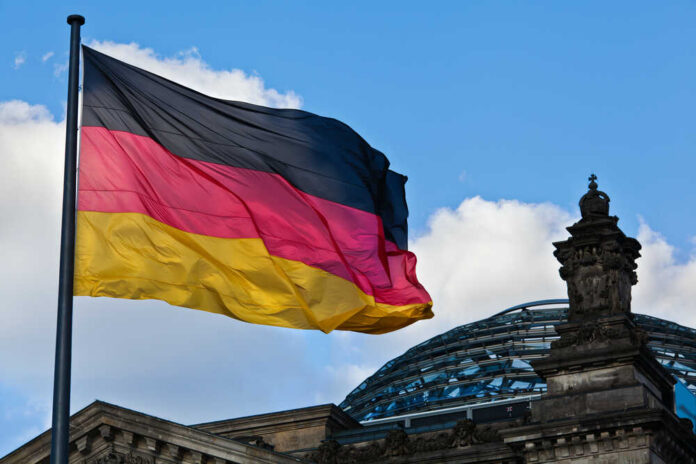
Germany’s shocking loss of a United Nations Security Council seat exposes how secret-ballot geopolitics, not merit, decide who shapes global rules that affect American sovereignty.
Story Highlights
- Portugal and Austria won the Western Europe and Others Group seats; Germany finished third with 104 votes [1][6].
- Germany’s defeat is its first such failure after six prior non-permanent Security Council terms, underscoring a sharp diplomatic setback [1][3].
- German officials linked the result to Berlin’s stances on Israel and Ukraine, but the ballot’s secrecy prevents proof of motive [2].
- United Nations elections require a two-thirds General Assembly majority, rewarding coalition-building over raw contributions [6].
Recorded Vote Shows Clear Outcome Over German Claims
United Nations General Assembly members elected Portugal and Austria to the two Western Europe and Others Group non-permanent seats for 2027 to 2028, leaving Germany short of the required two-thirds majority. Official United Nations material and reporting put Germany’s total at 104 votes, trailing the winners in a contest governed by regional allocation and supermajority rules [6][1]. Euronews likewise reported that Germany finished behind Portugal and Austria in the secret ballot, confirming the defeat and the final order [3].
Chancellor Friedrich Merz publicly acknowledged the setback, stating Germany “did not achieve our goal,” reflecting the scale of the loss given Berlin’s repeated previous service on the Council [1]. The result punctured Germany’s expectation that its history and financial weight inside multilateral bodies would translate into votes. The vote count demonstrated that, regardless of past terms or contributions, member states preferred rival candidates in a competitive Western Europe and Others Group field this cycle [1][6].
Secret Ballot Fuels Narrative Battles Over Motive
German officials and broadcasters highlighted that Germany’s positions on Israel and Ukraine may have cost votes, a claim that tracks with political tensions but remains unprovable because ballots are secret [2]. The absence of attributable country-by-country rationales allows competing narratives to fill the vacuum. That secrecy means observers can measure only the arithmetic—Portugal and Austria cleared the bar; Germany did not—while speculation about motives risks overshadowing straightforward electoral math [2][1].
For readers who value transparent, accountable processes, the United Nations method illustrates how influence often hinges on behind-closed-doors deals, blocs, and timing rather than open debate on merit. Germany’s campaign materials emphasized conflict prevention and security themes, yet that message did not convert into the needed supermajority of votes this round, underscoring how coalition-building beats credentials in this forum [6]. The structure rewards quiet diplomacy and regional strategy over public claims of standing.
What The Loss Reveals About Multilateral Power And U.S. Interests
Germany’s failure after six prior terms shows how fluid clout can be inside multilateral institutions that frequently lecture sovereign nations on policy priorities [1][3]. Because regional allocations and supermajorities drive outcomes, outcomes can surprise even well-funded, high-profile campaigns. For Americans, the lesson is clear: bodies like the United Nations Security Council shape sanctions, peacekeeping mandates, and narratives that touch U.S. energy policy, border security debates, and constitutional questions—even as the selection process remains opaque [6].
Germany fails to win UN Security Council seat for first time ever
The defeat for Berlin comes as calls grow to reform the world body in favor of the Global South
Published 3 Jun, 2026https://t.co/tsYKwYj1t8
Germany has failed to win a temporary seat on the UN Security Council… pic.twitter.com/XaM5wc1Wdm— rbg4lif 🟥⬛🟩 (@rbg4lif) June 4, 2026
Conservatives should read the result as a reminder that global governance often advances agendas disconnected from voters’ priorities. When ballots are secret and criteria are undefined, power tilts toward coalitions willing to trade favors, not toward clear standards that respect national sovereignty. Germany’s disappointment highlights the same structural problem Americans resent: elite institutions that operate without sunlight, then claim a mandate to pressure nations on spending, migration, and security while insulating their own decision-making from scrutiny [2][6].
Sources:
[1] Web – Germany fails to gain seat on UN Security Council
[2] Web – Germany fails to gain UN Security Council seat for first time as five …
[3] YouTube – Did support for Israel cost Germany a UN Security Council seat?
[6] Web – Germany Bids for a Seat on the UN Security Council for 2027–2028