
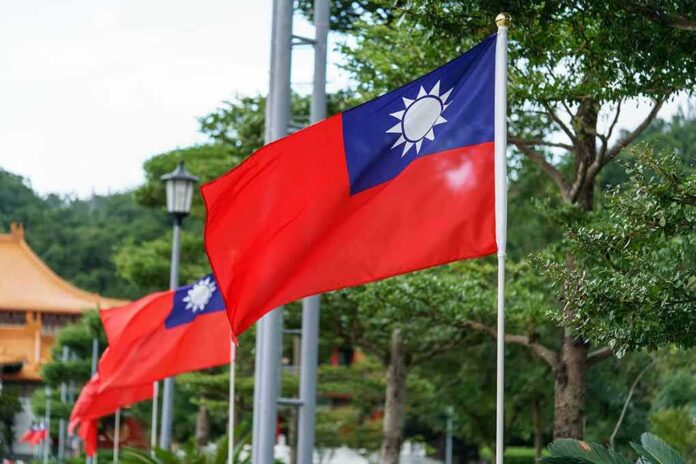
Taiwan’s president warned that Beijing’s new “red terror” push aims to reach across borders and squeeze a free democracy.
Story Highlights
- Taiwan’s President Lai urged his party and the public to resist Beijing’s “red terror.”
- Lai tied the warning to China’s “Ethnic Unity” law and legal warfare concerns.
- Lai reaffirmed that the Republic of China and the People’s Republic of China are not subordinate to each other.
- China rejects Lai’s stance and insists Taiwan is part of China, keeping tensions high.
Lai’s Warning: Resist “Red Terror” And Protect Democracy
President Lai Ching-te told members of his Democratic Progressive Party that Taiwan must not become part of China and must resist Beijing’s “red terror.” He said Taiwan needs to work together to protect a free, democratic way of life. The remarks came as he pushed back on growing pressure from Beijing. Lai framed the moment as a choice between a self-ruled future or absorption by the mainland. The speech echoed his earlier messages since taking office.
Lai linked “red terror” to Beijing’s effort to use laws and influence to reach into Taiwan’s society. He cited China’s Law on Promoting Ethnic Unity and Progress as part of a broader legal warfare toolkit that can target people across borders. He argued Taiwan should build safeguards to block united front work and legal intimidation. His words sought to rally the public behind tighter defenses in media, civic life, and the courts against pressure from Beijing.
Sovereignty Claim: “Not Subordinate To Each Other”
Lai restated a core point on sovereignty that shapes every move in the strait. He said the Republic of China, Taiwan’s formal name, and the People’s Republic of China are not subordinate to each other. That line sets Taiwan apart from Beijing’s “one China” push. It also tells partners what Taipei believes the status quo is and why it resists unification. This stance has guided Lai’s security planning and outreach to allies since taking office.
China has rejected Lai’s claim and labeled it heresy and provocation. Chinese officials say Taiwan is part of China and that reunification is a historic and legal fact. That message has not changed even as Taiwan reaffirms its own path. The clash over legal and historic framing fuels each new spat. It also keeps military and diplomatic pressure high around the island and across the region.
Why This Matters To Americans And U.S. Policy
Beijing’s use of laws to reach beyond its borders should concern anyone who values free speech, faith, and family without fear. When a regime exports legal pressure, it chills debate at home and abroad. Taiwan now weighs steps to guard its courts, media, and civil groups. American readers know this pattern. We have seen how speech codes and government pressure can creep into daily life. Free nations must set clear lines and defend them together.
The United States has long backed peace and stability in the Taiwan Strait. Past and present administrations have approved defensive arms sales and urged restraint. Today, the Trump administration faces a sharper test. China’s legal and military playbook grows wider each year. Clear signals, strong supply chains, and energy independence help America lead. Support for a free Taiwan also deters aggression, which protects trade lanes, jobs, and our own security at home.
The Cycle Of Pressure And Pushback Across The Strait
Analysts have tracked a pattern that repeats. Taiwan’s leaders state that the island is self-ruled and free. Beijing answers with harder words, military drills, and new legal tools to claim control. Lai’s warnings about “red terror” fit that cycle, as do China’s vows that Taiwan is part of China. Each turn raises risk for missteps at sea and in the air. That is why clear policy, steady support, and strong defense planning matter now.
Lai also outlined a plan to strengthen defense and a broader “democratic shield.” He said Taiwan will boost readiness and deepen ties with partners who back freedom in the Indo-Pacific. He tied that work to resisting united front influence and legal intimidation. The aim is simple: keep choices in the hands of Taiwan’s people. For Americans, the lesson is familiar. Peace comes from strength, clear laws, and a united public that defends its rights.
Sources:
youtube.com, nbcnews.com, reuters.com, english.president.gov.tw, crisisgroup.org