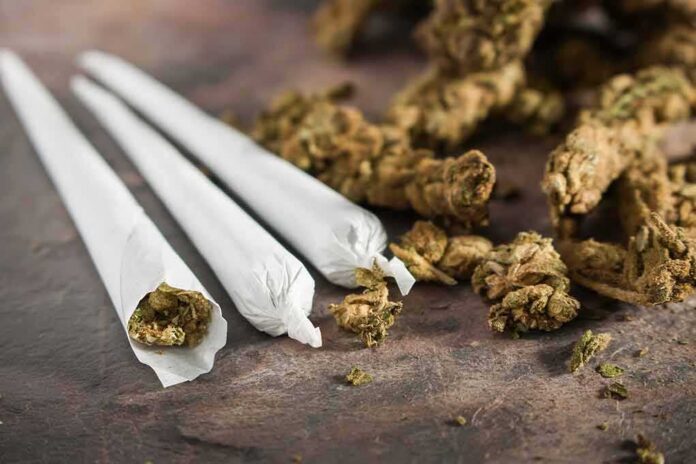
A single cannabis mistake at a Thai airport can now mean years in prison and a crushing fine for travelers who do not understand the country’s new “medical-only” rules.
Story Snapshot
- Thailand ended recreational cannabis and now allows only tightly controlled medical use.
- Buying, carrying, or bringing cannabis without a Thai prescription can lead to prison and steep fines.
- Foreign tourists face special risk at airports and borders, where ignorance is no defense.
- Thailand’s crackdown shows how fast a “green rush” can turn into harsh government control.
Thailand’s Sudden Cannabis U-Turn
Thailand once looked like a global symbol of relaxed cannabis laws, but that era ended almost overnight in 2025. The Public Health Ministry issued a directive that banned all cannabis sales for recreation and limited legal use to strict medical purposes with a doctor’s prescription. The order, published in the Royal Gazette, took effect June 26, 2025, leaving businesses and travelers almost no time to adjust to the new rules. This move turned a booming one-billion-dollar cannabis industry into legal limbo.
Under these new rules, cannabis flower was reclassified as a “controlled herb” instead of a full narcotic, but that label still comes with serious limits and penalties. Recreational use is now explicitly banned. Legal access is restricted to Thai-style medical care with prescriptions valid for no more than thirty days, tied to a short list of health conditions such as insomnia or chronic pain. What once felt like a free-for-all for tourists is now a maze of paperwork, local doctors, and tight possession caps.
Hard Penalties for Simple Mistakes
The punishments now attached to cannabis should make every traveler think twice before packing anything plant-related for a flight to Bangkok. Violating the controlled herb rules can lead to up to one year in prison and a fine of 20,000 baht—about six hundred dollars—for basic offenses like buying buds without a valid prescription. Legal experts explain that more serious cases, such as larger quantities or intent to sell, can trigger higher penalties under overlapping Thai drug laws, including multi-year prison terms. Customs officers at airports are on the front line of this enforcement.
Bringing cannabis into Thailand is flatly illegal under the 2026 legal guide, even if a traveler has a medical card from home. That includes edibles, vapes, oils, and dried flower. The same guide warns that possession, transport, or use without Thai paperwork can now count as criminal behavior, not a minor civil issue. At airports and border crossings, police and customs officers are trained to treat these cases as drug violations. That means arrest, court, and possible jail time, not a polite warning and a trash bin for the gummies.
Tourists Caught Between Confusing Rules and Zero Tolerance
Many Western travelers still think of Thailand as the first Asian nation to “legalize weed” after the 2022 decriminalization, but that picture is badly out of date now. The new framework clearly states cannabis is medical-only, with prescriptions required for every legal purchase. Foreigners can still buy cannabis in theory, but only if they hold a valid prescription from a licensed Thai medical professional and stay within a thirty-day quantity limit. Without that local paper trail, they are simply breaking the law.
Major news outlets report that tourists and residents must now show a doctor’s certificate to buy cannabis buds for specific medical conditions. Recreational sales, advertising, and consumption in public or in dispensary lounges have been banned. For visitors who remember open cannabis shops on busy streets just a year or two ago, the change can feel unreal. That shock, combined with language barriers and uneven local messaging, sets up Americans and other foreigners for serious trouble at airports if they assume old habits are still safe.
What This Crackdown Says About Global Drug Policy
Thailand’s fast reversal fits a wider pattern conservatives have seen many times before: governments jump into social experiments, then blame citizens when things spin out of control. The country first decriminalized cannabis to boost the economy and respond to pressure for reform. But officials later pointed to youth access, social problems, and a wild, unregulated market as reasons to slam on the brakes and restore tight control. The health minister has already said cannabis will be classified as a narcotic in the future, signaling even harsher rules ahead.
For American readers, this is a reminder that foreign law can be far less forgiving than ours, especially when it comes to drugs. There is no Second Amendment, no strong constitutional shield, and no jury of peers at the border. A small bag of cannabis in a carry-on, a vape pen in a jacket, or a mislabeled bottle of oil can move a traveler from vacation to a prison cell in a single search. Personal responsibility, careful planning, and deep respect for national laws matter more than ever for anyone flying into Thailand under this new regime.
Sources:
foxnews.com, reuters.com, forbes.com, youtube.com, washingtonpost.com, cnn.com, juslaws.com