

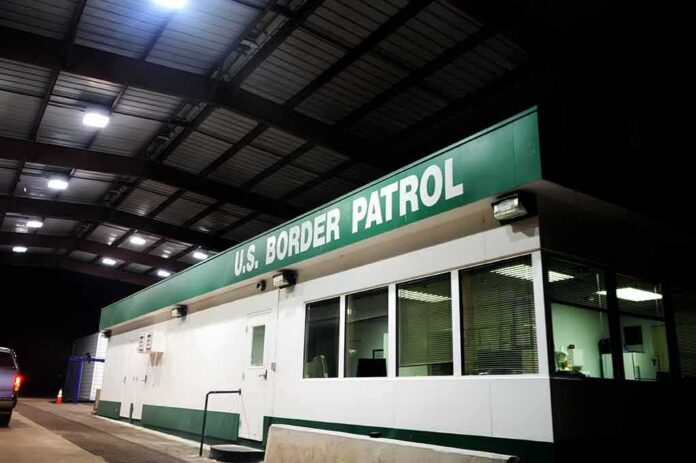
Nearly 500 people tied to border crimes were charged in just one week in Texas and Arizona, showing how President Trump’s Operation Take Back America is quietly reshaping the front lines of the immigration fight.
Story Snapshot
- 478 individuals were charged with border-related crimes in Texas and Arizona between July 10 and 16.
- Most of those charged are illegal immigrants with prior felony records, including violent and drug crimes.
- Felony illegal reentry after prior removal makes up the bulk of the new federal cases.
- Human smuggling and firearms charges highlight the link between illegal border crossings and broader criminal activity.
Major Border Crackdown Under Operation Take Back America
The Department of Justice reported that 478 individuals were charged in Texas and Arizona for border and immigration-related crimes during the week of July 10–16. In Texas alone, 199 people were charged in 194 cases, including 175 who are in the country illegally. Arizona recorded 279 individuals charged in the same period. These prosecutions fall under Operation Take Back America, which the department created in March 2025 to intensify criminal enforcement at the southern border.
Federal prosecutors focused heavily on illegal reentry after prior removal, a felony offense that has long dominated border caseloads. In the Southern District of Texas, authorities filed 146 criminal complaints in a single week just for felony reentry. The District of Arizona reported 56 reentry cases in its latest enforcement push. These numbers fit a larger national pattern, where illegal entry and illegal reentry prosecutions have made up roughly two-thirds of immigration crimes in federal court for years.
Who Is Being Charged — And Why It Matters
Justice Department statements stress that most of the illegal immigrants being charged have prior felonies, including violent crimes, narcotics offenses, and past immigration violations. One defendant had a prior conviction for aggravated assault with a deadly weapon, while another had three prior felony immigration convictions. Another case involved a United States citizen accused of trying to bring 131 pounds of cocaine into the country at a port of entry. Prosecutors argue that enhanced enforcement is catching people with serious criminal histories, not just first-time border crossers.
Similar surges have hit other weeks in Texas. A recent Southern District of Texas release noted 181 cases filed between July 3 and 9, including 129 felony reentry charges and 33 illegal entry cases. Another period saw 259 individuals charged between June 26 and July 3, with 188 felony reentry complaints and 40 illegal entry charges. In these weeks, officials again said most defendants already had convictions for narcotics, violence, or other immigration offenses, plus some for human trafficking and sexual assault against children. These repeated weekly totals point to an enforcement machine running at high speed along the border.
Human Smuggling, Firearms, and the Cartel Fight
The crackdown is not limited to simple crossing offenses. Texas officials report at least 28 human smuggling charges linked to the July 10–16 enforcement wave, while Arizona recorded 17 smuggling cases. Other weeks have seen 26 suspected smugglers charged in the Southern District of Texas alone. Justice Department summaries describe high-speed chases, crashes, and efforts to move groups of illegal immigrants across the border. They also mention firearms-related charges, although they do not yet list weapon types or quantities in public releases.
All of this is framed under Operation Take Back America’s stated goal of dismantling cartel activity along the southern border. Prosecutors say enhanced enforcement “at the border and in the interior” is bringing in aliens with serious criminal histories, including human trafficking and crimes against children. At the same time, public documents so far do not name specific cartel memberships or show detailed network maps tied to individual defendants. For many conservative readers, that gap underscores a need for Congress and the administration to push for more transparency without easing up on the pressure against smuggling and organized crime.
Concerns About Transparency and Due Process
Not everyone agrees with the pace and style of these prosecutions. Civil liberties groups and immigration advocates point to past research showing that mass border prosecutions can strain due process and push migrants into “assembly-line” hearings modeled on the earlier Operation Streamline system. Those studies argue that quick guilty pleas and large group hearings risk blurring the line between violent repeat offenders and desperate border crossers. They warn that, if left unchecked, aggressive enforcement can expand government power in ways that trouble the Constitution and basic fairness.
There are also fresh questions about transparency in specific incidents. In a separate case, Immigration and Customs Enforcement officers were reportedly not wearing body cameras during a fatal shooting of a Mexican national in Texas, and key witnesses were detained by immigration authorities. Local prosecutors say they are prepared to bring charges if criminal wrongdoing is found, but the lack of video evidence makes it harder for the public to judge the event. For many on the right, these concerns do not weaken the need for strong border enforcement. Instead, they highlight the need for tough, lawful policing that respects constitutional limits while defending American communities from repeat offenders and dangerous smugglers.
Sources:
zerohedge.com, theepochtimes.com, justice.gov, yahoo.com, thecentersquare.com, foxnews.com, youtube.com, bipartisanpolicy.org, americanimmigrationcouncil.org, nipnlg.org, law.georgetown.edu