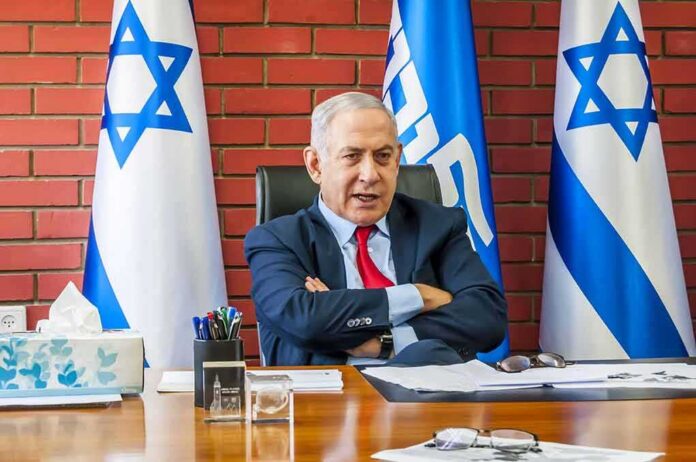
A historic corruption trial now racing toward the finish line could decide whether Israel’s longest-serving leader, “King Bibi,” walks free or falls — and how much power courts and media really have over elected governments.
Story Snapshot
- Netanyahu has finished 98 hearings of defense testimony, denying all wrongdoing and calling the trial a “witch hunt.”
- Prosecutors spent 94 court days cross-examining him and say he took lavish gifts and traded government power for media favors.
- Key corruption cases focus on expensive cigars and champagne, tax breaks, U.S. visa help, and media regulation tied to news coverage.
- The fight over Bibi’s future now doubles as a test of judicial power, media spin, and democracy in a close U.S. ally.
How Israel’s “King Bibi” Ended Up on Trial
Benjamin Netanyahu is the first sitting Israeli prime minister ever to stand trial for criminal corruption, making his case a major test of Israeli democracy and global elites’ power over elected leaders. In 2019 he was indicted on charges of bribery, fraud, and breach of trust in three linked cases now known everywhere as Case 1000, Case 2000, and Case 4000. For years he has answered every charge the same way, arguing there was “nothing wrong” and blasting the whole process as a left-wing “witch hunt” driven by hostile media and politicized legal officials.
Case 1000 centers on expensive gifts given to Netanyahu and his wife, including cigars, champagne, jewelry, trips, and hotel stays, from Hollywood producer Arnon Milchan and Australian billionaire James Packer. The indictment says these gifts added up to roughly $195,000 to $300,000 over about a decade. Prosecutors claim Netanyahu then used his office to push tax breaks that mainly helped Milchan, and even lobbied the United States government to fix Milchan’s U.S. visa, turning “friendship” into a stream of benefits tied to state power.
Inside the Three Cases That Could End Bibi’s Career
In Case 2000, prosecutors say Netanyahu tried to cut a secret deal with Arnon Mozes, the publisher of a major Israeli newspaper. According to the charge sheet, Mozes wanted laws to hurt a rival paper, and the prime minister discussed ways to slow that rival in return for more favorable coverage in Mozes’s outlet. This is where the story gets more dangerous for Bibi politically: a longtime ally, minister Ze’ev Elkin from Netanyahu’s own Likud party, has testified with detailed notes about Netanyahu’s mindset and talks with Mozes, undercutting the claim that the whole thing is just a partisan ambush.
Case 4000 alleges a deeper trade of power for media influence. Prosecutors say Netanyahu, while overseeing communications policy, granted major regulatory favors to the Bezeq telecom empire, which controlled the Walla news site, in exchange for warmer, less critical coverage of him and his family on that site. That case carries the harshest bribery charge, since it links government decisions worth real money to media content that shapes voters’ views. Critics argue this kind of back-room dealing fits a broader pattern in Israel where powerful figures try to bend both regulators and journalists to stay in office.
Bibi’s Defense: “Gifts from Friends” and a Political Witch Hunt
Netanyahu’s legal and public strategy has been simple and aggressive: he has denied every accusation, said the gifts were just tokens from wealthy friends, and claimed the entire trial exists because leftist media, police, and legal elites cannot beat him at the ballot box. On the gifts case, he insists he did not trade any specific official act for cigars or champagne, and points out that the attorney general did not even charge him with bribery in Case 1000, only with fraud and breach of trust. Supporters say this shows prosecutors do not have solid proof of a clear quid pro quo, but are stretching vague “trust” rules to destroy a conservative leader.
To many conservatives in the United States, this pattern looks familiar. Like other elected leaders facing indictment, Netanyahu frames the process as a politicized “witch hunt,” while global media and legal elites talk about “saving democracy” from corruption. An investigative report on political corruption in Israel found that in recent years only a handful of cases have even been opened, yet scandals clearly continue. That raises hard questions about which leaders are targeted, which are quietly ignored, and whether charges follow law or politics. For Trump voters at home, the echo is clear: weaponized investigations are becoming the favorite tool against right-of-center governments.
Judges, Media, and the Fight Over Who Really Runs a Democracy
Institutional actors in Israel and abroad frame Netanyahu’s trial as a necessary test of whether “no one is above the law,” stressing that this is about a powerful leader facing normal accountability. Major outlets like the BBC and Al Jazeera describe the story as a clash between democratic institutions and an entrenched prime minister, not a partisan hit job. In their coverage, the central question is whether courts and prosecutors can make a sitting leader answer charges of bribery and fraud, and whether Israel will stay a “rule-of-law” democracy if he walks away without a verdict or with a pardon from political allies.
The Israeli Knesset has voted to dissolve parliament overnight, sending "Israel" into early elections amid deepening internal political divisions and growing pressure on Prime Minister Benjamin Netanyahu’s government.
The move ends the current parliamentary term and sets the… pic.twitter.com/K4cXjWyISw
— Al Mayadeen English (@MayadeenEnglish) July 17, 2026
For American conservatives, there is another angle that matters. Israel is a close ally, deeply tied into U.S. security and foreign policy. When Israeli elites push a trial that could topple a right-of-center leader who has long worked closely with Washington, it sends a message about how global networks of judges, regulators, and corporate media can pressure elected governments worldwide. Whether one believes Netanyahu is guilty or targeted, the outcome will shape how far unelected institutions can go in forcing political change — a warning shot for anyone worried about government overreach and lawfare against conservative leaders.
Sources:
timesofisrael.com, ynetnews.com, jpost.com, en.wikipedia.org, youtube.com, jfeed.com, aljazeera.com, shomrim.news, israelpolicyforum.org, thejc.com, nytimes.com