

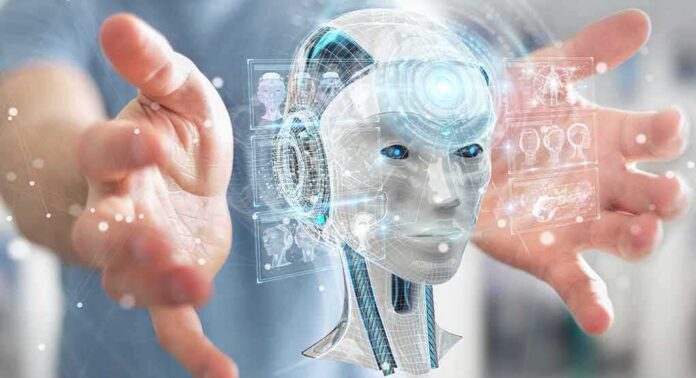
As China shows off dancing, laundry-folding humanoid robots at WAIC 2026, Americans should be asking who will control this powerful technology and whether it will serve families and freedom—or feed globalist agendas and high-tech control.
Story Snapshot
- China’s WAIC 2026 put more than 300 humanoid robots on stage, showing dancing, table tennis, and laundry tasks.
- Chinese firms claim these robots are ready for real factory lines and hotel laundry rooms, not just entertainment.
- State-linked media pushes the spectacle as a national achievement, with little outside testing or open data.
- For U.S. conservatives, the rise of foreign humanoid robots raises deep questions about jobs, privacy, and power.
China’s Robot Showcase Looks Beyond Entertainment
At the World Artificial Intelligence Conference 2026 in Shanghai, organizers filled more than 100,000 square meters of exhibition space with new artificial intelligence products and humanoid robots. Reports say more than 200 robotics companies brought over 300 robots to perform live demos at the event. These machines did not just pose for photos. They danced in fluid routines, folded laundry, played table tennis, cooked meals, and even made sandwiches for visitors watching from the floor and online.
One widely shared clip shows robots dancing with impressive balance and coordination, then moving to laundry stations where they fold clothes with dexterous hands. Another report from the event says companies set up full “hotel laundry” scenes, where humanoid robots loaded washing machines, moved clean items, and folded garments as part of a complete workflow. Chinese media and company channels stress that this is not only for show. They say embodied artificial intelligence is now moving into real commercial deployment in hotels, warehouses, and factories across China.
From Dancing Robots to Working Robots
Several Chinese firms used WAIC 2026 to claim that humanoid robots are ready for serious work. One company presented a laundry room where robots moved clothing between washers and dryers and tried to link each step into a continuous system. Another hotel scenario paired humanoid robots with food-delivery robots to show how different machines could share tasks in a real business setting, especially laundry handling. Organizers highlight “embodied intelligence,” a term for robots that use artificial intelligence to sense, move, and work in the physical world.
Conference previews describe humanoid robots as the most crowded category on the show floor, with multiple Chinese makers saying their machines are already bound for factory lines. Official figures claim more than 3,000 technologies and over 300 product debuts, many tied to robots meant for manufacturing, logistics, and everyday services. For American readers, this means China is not just showing off robots for fun. It is building a pipeline from national tech showcases to deployment in schools, businesses, and public spaces, all under a central theme of “Intelligent Partners, Co-creating the Future.”
Hype, Control, and the Missing Hard Data
While the demos look impressive, there is a major gap that should concern anyone who cares about facts over hype. The clips and press releases describe dancing, laundry folding, and sports like table tennis as “incredible feats,” but there are no independent audits of success rates, failure logs, or safety records tied to these specific demos. Outside technical journals have not yet published detailed studies of how often these robots drop items, misread people, or need human teleoperation behind the scenes.
This pattern fits what experts have seen in other robot events. Analysts note that public humanoid robot showcases often move faster than real-world reliability, especially when fine hand control is involved. Another commentary warns that real breakthroughs usually come with white papers and clear specifications, not just short vertical videos that go viral. At WAIC 2026, the loudest voices are company marketing teams and state-linked outlets that frame the show as proof of China’s leadership in artificial intelligence, not as a neutral test lab with open data for global review.
What This Means for American Jobs and Freedom
Humanoid robots capable of laundry work, hotel service, and factory tasks could reshape labor markets if they become reliable and cheap. Chinese companies now claim these machines can guide visitors, handle hotel laundry, and support production lines. For American workers, especially in service and manufacturing jobs, that raises real questions. Will foreign-made robots undercut U.S. labor, or will American firms build competing systems that stay rooted in our values and workplace safety standards?
At WAIC 2026, Zhang Wei, founder of Zhuji Dynamics, said humanoid robots are advancing exponentially, with their 'robot brain' reaching GPT-3 level intelligence. He stressed that progress is non-linear and the core challenge lies in the intelligent brain, not the robot body.…
— AwesomeAI (@Awesome_AI_News) July 21, 2026
There is also a deeper concern about control. Robots that move through public spaces, homes, and workplaces will carry sensors, cameras, and network links. When a foreign government treats humanoid robots as a strategic national project, Americans must ask who owns the data they gather, who writes the rules, and whether this tech could be used to track people instead of simply folding their laundry. As the Trump administration pushes for strong borders, fair trade, and protection of U.S. industry, the rise of China’s humanoid robots should be a clear signal: America needs its own trustworthy path for artificial intelligence and robotics, one that serves families, protects jobs, and defends constitutional freedoms.
Sources:
youtube.com, channelnewsasia.com, news.futunn.com, ainchina.com, journals.sagepub.com, jcom.sissa.it