

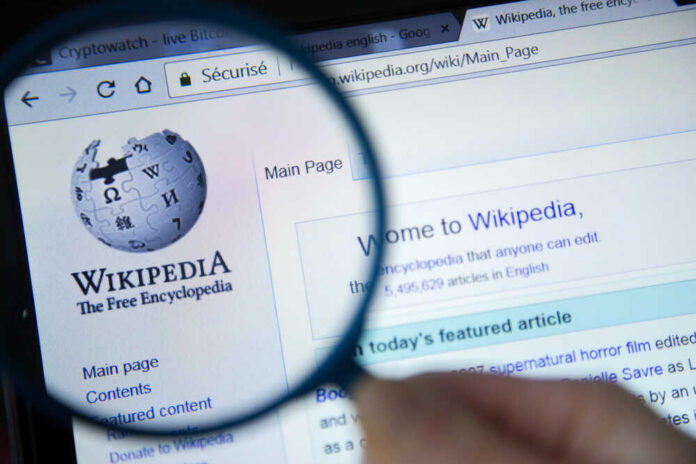
Wikipedia’s new crackdown on AI-written text exposes how a handful of gatekeepers can lock down the world’s biggest “free” encyclopedia while still claiming to speak for everyone.
Story Snapshot
- Wikipedia’s English editors have formally banned large language models like ChatGPT from writing or rewriting articles, citing accuracy risks.
- Suspected AI-generated pages can now be tagged for fast-track deletion, even when readers find them useful.
- Wikipedia still leans on human volunteers who often share elite, left-leaning views, raising bias concerns as they police AI use.
- The fight over AI on Wikipedia is really a fight over who controls information in the digital public square.
Wikipedia’s New Rule: AI Can’t Write the Articles
English Wikipedia editors have now drawn a hard line: large language models cannot be used to generate or rewrite article content, except for narrow tasks like grammar clean-up and translation from other language versions of Wikipedia, and even those edits must be reviewed by a human editor before they stay.[4] Wikipedia’s own guideline on “Writing articles with large language models” says text from these tools often breaks core rules on verifiability and neutral tone, and for that reason direct AI-written article content is prohibited.[4]
The official guidance for using artificial intelligence on Wikimedia projects explains how this clampdown evolved over several years.[1] As interest in tools like ChatGPT surged, editors reported “plausible-sounding misinformation,” fake references, and wordy, non‑encyclopedic writing showing up in new pages.[1] In August 2025, English Wikipedia adopted a rule that allowed editors to nominate suspected AI‑generated articles for speedy deletion, and by March 2026 the community decided to prohibit using artificial intelligence to add article content at all, aside from limited copyediting or translation with strong human oversight.[1]
How Wikipedia Detects and Deletes AI-Generated Pages
To enforce the new line, Wikipedia created a specific speedy deletion rule for pages that “could only plausibly have been generated by large language models” and appear not to have had serious human review.[2] Editors are trained to spot warning signs that text was likely churned out by a chatbot: citations that do not match the claim, invented sources, and phrases that sound like a chatbot talking to a user, such as “Here is your Wikipedia article on…” or “Up to my last training update…”[1] When editors see these signs together, they can move to delete the page quickly rather than go through a long debate.[2]
Volunteer essays and internal guides now catalog what they call “signs of AI writing,” including overuse of em dashes, formal words like “moreover,” promotional language, and even curly quotation marks instead of the straight ones used in normal wiki markup.[1] These style clues are not iron‑clad proof that a bot wrote the text, but they help human patrollers decide which edits to check first. Behind the scenes, a dedicated noticeboard on Wikipedia is used to report suspected misuse of artificial intelligence, and editors there remind contributors that using AI to help with writing style, not just content, has been prohibited since March because of the review burden it creates.[7]
Why Wikipedia Says AI Is Too Risky — and What That Reveals
Wikipedia’s leaders say the core problem is that large language models can sound confident while quietly bending or inventing facts, often in ways that current sources cannot support.[4] The Wiki Education Foundation, which trains students and teachers who edit Wikipedia, warned in early 2026 that chatbot text “simply will be unverifiable” too often, and told contributors never to copy and paste generative AI output into articles.[5] This focus on verifiability reflects Wikipedia’s long‑standing fear of hoaxes and biased spin, especially on hot‑button political and cultural topics where elites often try to shape the narrative.[1]
At the same time, the Wikimedia Foundation’s public “AI strategy” makes clear it is not anti‑technology; it wants to invest in artificial intelligence tools that help moderators and patrollers, making it easier for them to block low‑quality content before readers ever see it.[8] That means AI will assist the gatekeepers, but not the everyday citizen who might want to draft or improve an article using modern tools. The result is a one‑way street: artificial intelligence is welcomed when it helps enforce existing rules, but shut out when it might broaden who gets to speak in the first place.[8]
Control of the Narrative in the AI Era
Jimmy Wales, Wikipedia’s cofounder, recently told reporters that the platform does not yet “trust” AI systems enough to let them edit directly, pointing to ongoing worries about hallucinations even in advanced models.[3] Coming from a site that already relies on a small core of very active editors, many of whom lean left on culture‑war issues, this stance shows how tightly controlled the modern information space has become. The stated goal is accuracy, but the effect is to keep final say in the hands of a narrow class of gatekeepers who decide which facts and frames are acceptable.[1]
For readers who value free speech, open debate, and checks on establishment narratives, Wikipedia’s new policy is a warning sign. Artificial intelligence could, in theory, help surface forgotten local stories, challenge one‑sided coverage, and make it easier for ordinary people to contribute. Instead, the platform is channeling AI into internal policing tools while banning it from public‑facing text. As the Trump administration pushes for transparency and accountability in big tech and global information platforms, the fight over AI on Wikipedia is really a fight over who gets to shape the digital record of our history, our Constitution, and our culture going forward.
Sources:
[1] Web – Wikipedia won’t let AI edit articles, cofounder says
[2] Web – Wikipedia joins artists against generative ai – Facebook
[3] Web – Artificial intelligence in Wikimedia projects – Wikipedia
[4] Web – Wikipedia:Artificial intelligence
[5] Web – Wikipedia:Writing articles with large language models
[7] Web – Our new AI strategy puts Wikipedia’s humans first
[8] Web – Generative AI might cause the ultimate collapse of Wikipedia …