
A mid-Atlantic U-turn over a teenager’s Bluetooth speaker label shows how a single word can still trigger a full-blown security dragnet for hundreds of innocent travelers.
Story Snapshot
- A United Airlines flight from Newark to Spain returned midflight after a Bluetooth device was reportedly named “BOMB.”[2][3]
- Federal and local security treated the incident as a serious threat, evacuating, re-screening, and re-clearing the entire plane.[1][3]
- United Airlines only described a “possible” or “potential” security concern, leaving passengers and the public with few hard facts.[1][3]
- The incident highlights how vague tech signals and zero-tolerance rules can upend liberty, common sense, and travel for ordinary Americans.[2][3]
Bluetooth Name Triggers Transatlantic Turnaround
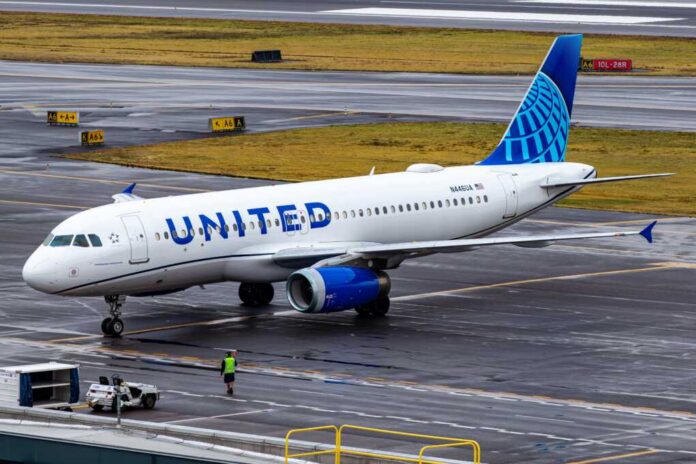
United Airlines Flight 236 left Newark Liberty International Airport for Palma de Mallorca, Spain, on a Saturday evening, but never made it across the Atlantic before turning back because of a potential security threat tied to a Bluetooth device name.[1][2][3][4] Flight tracking data and airline statements show the Boeing 767 departed around 6 p.m. and ultimately returned to Newark later that night, instead of completing the nearly eight-hour trip to Spain as scheduled.[1][2][3]
Reports from business media, public radio, and aviation trackers indicate the aircraft reversed course after concerns surfaced about the visible name of a Bluetooth-enabled device on board, seen by others through their phones or tablets.[2][3] Air traffic control communications reviewed by aviation outlets captured controllers discussing “a Bluetooth speaker” whose discoverable name contained a specific four-letter word, which they linked to a security response and the decision to discontinue the flight.[2][3]
From Device Label To Full Security Sweep
According to coverage of the incident, the key trigger was that the Bluetooth network name reportedly included the word “bomb,” which in today’s aviation environment automatically activates strict security procedures.[2][3] A self-identified passenger on TikTok and another on Reddit claimed the device was a teenager’s speaker labeled “BOMB,” matching what air traffic control described as a four-letter word that was not a curse but something more alarming to security teams.[3]
After the crew communicated with United Airlines headquarters in Chicago, the decision was made to abandon the ocean crossing and return to Newark so the concern could be handled on the ground rather than in mid-Atlantic airspace.[1][2] Once back in New Jersey, passengers were ordered off the plane, as Port Authority police conducted a sweep of the entire aircraft, including the cargo area, in coordination with federal Transportation Security Administration screeners and Customs and Border Protection officers.[1][3]
Passengers Face Evacuation, Delays, And Rescreening
Associated Press reporting states that there were 190 passengers and 12 crew members on board, all of whom were forced to evacuate and undergo fresh security checks before they could continue their journey.[1] Port Authority police inspected the aircraft while every traveler was re-screened by Transportation Security Administration officers and processed again by Customs and Border Protection, even though the apparent issue stemmed from a single personal electronic device’s name rather than any discovered weapon or explosive.[1][3]
Passengers later boarded a replacement aircraft with a new crew, finally departing in the early hours and arriving in Palma de Mallorca on Sunday afternoon, roughly nine and a half hours behind schedule.[1][3] United Airlines confirmed only that Flight 236 “safely returned to Newark to address a potential security concern” and did not publicly identify the passenger linked to the device or announce any criminal charges, despite the disruption to an entire planeload of travelers.[2][3]
Security Caution, Common Sense, And Conservative Concerns
United Airlines told public radio and other outlets that the diversion was to address a “potential” or “possible” security concern, without explaining what threat assessment justified turning an international flight around mid-journey.[1][3] Multiple passengers’ social media posts and the air traffic control audio together provide the only detailed narrative, underscoring how ordinary people are often left guessing about the exact standards that trigger aviation security actions affecting their liberty and travel plans.[1][2][3]
A United Airlines flight travelling from Newark to Palma had to return shortly after departure due to a security concern involving a Bluetooth device described as a 'bomb'. https://t.co/5O1Q4AIgKE
— Majorca Daily (@MajorcaDaily) June 1, 2026
Business and aviation coverage notes that this case fits a wider pattern where low-information cues—like a suspicious word in a device label—can cause major operational decisions, because airlines and security agencies are structured to err on the side of maximum caution.[2][3] For conservatives worried about overreach and a culture of fear, the episode shows both the importance of vigilance against real threats and the serious costs imposed on innocent passengers when rules and technology collide without transparent, common-sense guardrails.[2][3]
Sources:
[1] Web – United Airlines flight to Spain forced to return over potential …
[2] Web – Bluetooth name forces United flight back – AeroTime
[3] Web – United flight turned around over Atlantic as a boy named his … – …
[4] Web – United Airlines flight to Spain diverted back Newark over Bluetooth …