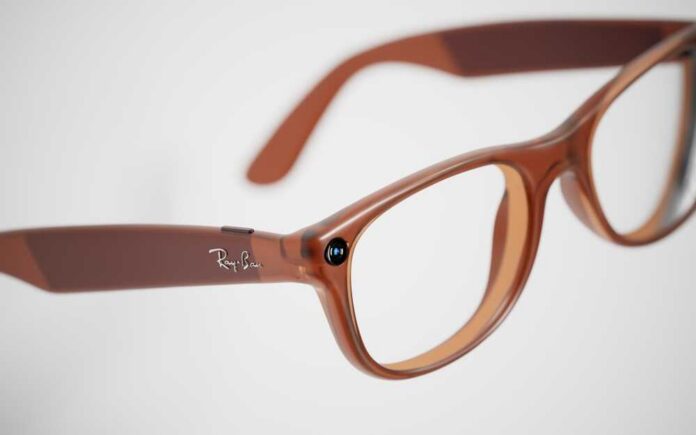
Meta is quietly developing a face-recognition feature for its Ray-Ban smart glasses that could let any stranger wearing them identify you on the street — without your knowledge or consent.
Story Highlights
- Meta is developing an internal feature called “Name Tag” for Ray-Ban smart glasses that would identify nearby people using facial recognition.
- The feature would surface personal information about identified individuals through Meta’s artificial intelligence assistant.
- Over 75 civil liberties organizations, including the American Civil Liberties Union, have sounded the alarm over the technology’s privacy and safety implications.
- Meta claims current glasses do not have built-in facial recognition, but engineers are reportedly weighing multiple versions of the feature for future deployment.
Meta’s “Name Tag” Feature Explained
Meta is developing a facial recognition feature internally called “Name Tag” for its Ray-Ban smart glasses line. According to TechCrunch, the feature would allow wearers to point their glasses at a person in public and receive identifying information about them through Meta’s artificial intelligence assistant. The technology represents a significant leap from the glasses’ current capabilities and would put powerful surveillance tools in the hands of ordinary consumers walking through public spaces.
Engineers at Meta have reportedly been weighing two versions of the feature: one that would only identify people the wearer already knows through Meta’s social platforms, and a broader version with wider identification capabilities. Either version raises serious questions about what happens when that data is misused, hacked, or expanded over time. The history of Big Tech “limited” features quietly growing in scope gives little reason for comfort.
More Than 75 Organizations Raise the Alarm
The American Civil Liberties Union and more than 75 other organizations have formally called on Meta to abandon the “Name Tag” feature, warning it would erode personal privacy and liberty in everyday public life. Their concern is straightforward: once a stranger can silently identify you, your name, and potentially your social media profile just by glancing at you through a pair of glasses, the concept of anonymous movement in public effectively disappears. That is not a theoretical concern — it is an architectural shift in how society functions.
The privacy threat extends to children as well. Legal analysts have pointed out that Meta’s smart glasses with facial recognition would create a near-impossible compliance problem under the Children’s Online Privacy Protection Act, the federal law designed to protect minors’ personal data. A wearable camera that can identify and tag children in real time may be fundamentally incompatible with laws the company is legally required to follow — a detail Meta has not publicly addressed.
Meta’s Defense Falls Short
Meta’s official response has been that its current Ray-Ban glasses do not have built-in facial recognition, and that recording is indicated by a small flashing light on the device. While technically accurate about the present product, this response sidesteps the core issue entirely: the company is actively building the capability and plans to deploy it. Saying today’s glasses lack the feature while engineering tomorrow’s version to include it is not a meaningful privacy protection — it is a delay.
🛡️ Our name is on this letter.
Yesterday we told you what Name Tag is. Today we're telling you who's standing in its way.
75 organizations, including AJL, told Meta the same thing: your glasses should not know our names.
ACLU (@ACLU). EPIC (@EPICprivacy). Fight for the Future… pic.twitter.com/FVfphqfhAA
— Algorithmic Justice League (@AJLUnited) June 5, 2026
This situation fits a well-established pattern with Big Tech: a controversial capability is developed internally, framed as a convenience or accessibility tool, and then rolled out after public attention has moved on. Meta already carries significant baggage on biometric privacy, having settled a major lawsuit over its facial-tagging feature in Facebook photos. Trusting the company to self-regulate a far more powerful version of the same technology — one mounted on a camera worn in public — requires a level of faith the company has not earned. Americans who value their right to move through public life without being catalogued by a corporation’s hardware deserve stronger protections than a flashing light and a press statement.
Sources:
[1] Web – META Silently Added Face-Recognition Code for Smart Glasses to …
[2] Web – Meta plans to add facial recognition to its smart glasses, report …
[3] YouTube – Meta Plans To Add Facial Recognition To Its Smart Glasses
[4] Web – ACLU and 75 Organizations Sound Alarm on Meta’s Plan to Add …
[5] Web – Name Tag: Meta’s spooky AI facial recognition smart glasses sets off …
[6] Web – Meta’s Smart Glasses Face An Impossible Privacy Problem With …