

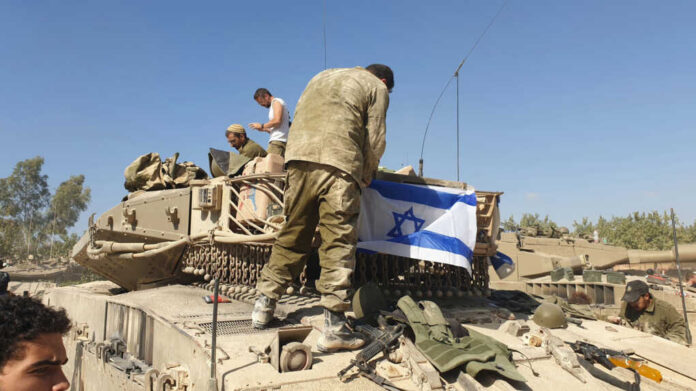
A new Israeli push toward the Litani River has revived a hard question: is this a short-term security move, or a new occupation by another name?
Quick Take
- Israeli forces captured Beaufort Castle, a high ridge with clear value for border surveillance and fire control.[18]
- Israeli officials say the goal is to protect northern Israel and build a security zone in southern Lebanon.[1][18]
- Critics say the advance looks open-ended because officials also spoke about keeping control and blocking returns.[1][2][20]
- Mass displacement and damage to civilian areas have turned the fight into a major humanitarian crisis.[11][12][18]
Why Beaufort Castle Matters
Beaufort Castle sits on commanding ground above southern Lebanon. That is why Israeli coverage describes it as a key military prize. Reporting says it overlooks roads, valleys, and parts of the border, which gives any force there a strong advantage.[18] Israeli Defense Minister Israel Katz said troops seized the Beaufort ridge because it helps protect the settlements in the Galilee and keeps Israeli forces safer.[1]
That argument is simple to understand. High ground matters in war. If a military can watch movement, spot launch sites, and hold a buffer line, it gains real leverage. Israeli officials say that is the point of the move into southern Lebanon.[1][21] They also say Hezbollah rocket fire and anti-tank threats left Israel with no choice but to push farther north and hit Hezbollah infrastructure before more attacks could reach Israeli towns.[1][21]
Why Critics Call It More Than Defense
The other side of the story is harder to ignore. Multiple reports say Israel told residents south of the Zahrani River to leave their homes and then crossed the Litani River, the deepest such advance in more than 25 years.[18][20] Reporting also says Katz spoke of keeping Israeli forces there as part of a security zone, while other coverage said displaced residents would not be allowed back until northern Israel was judged safe.[1][2][20]
That language matters because it goes beyond a one-time raid. It sounds like long-term control over land that is still inside Lebanon.[2][20] Human rights groups and international legal voices also argue that broad displacement orders can cross the line from military action into unlawful forced transfer if they are not tied to imperative military necessity.[12][14] Those warnings are not proof of illegality by themselves, but they show why the debate is so heated.
The Human Cost Is Driving the Debate
What gives the criticism force is the scale of the destruction. TIME reported that more than one million people were displaced in Lebanon during Israel’s campaign, while the International Court of Justice said Israeli displacement orders affected roughly eight percent of Lebanese territory and over one million civilians.[11][12] Other reporting says the fighting brought shelling, destroyed homes, and damage to roads and bridges, including areas near Nabatieh and along the Litani corridor.[18][20]
That reality makes the public fight over words almost secondary. Supporters of the operation point to Hezbollah attacks and Israel’s right to defend its border. Critics point to empty villages, blocked returns, and the fact that Israel previously occupied parts of southern Lebanon for 18 years before leaving in 2000.[18][20] For many readers, that history makes promises of a “security zone” sound less like temporary defense and more like mission creep.
What Is Still Unknown
The strongest evidence in the record is about what Israel said and what its troops seized. The weakest point is whether the capture of Beaufort Castle and the wider Litani push actually destroyed Hezbollah’s fighting power in a lasting way.[1][18][20] The available reporting does not include battlefield assessments, captured documents, or released planning orders that would prove the military case in full. That leaves room for both sides to claim victory.
For now, the facts support two truths at once. Israel says it is trying to shield northern communities and stop Hezbollah fire.[1][21] At the same time, the scale of the operation, the talk of a security zone, and the mass civilian fallout make it easy to see why opponents view the move as a dangerous step toward another open-ended entanglement in Lebanon.[2][12][20]
Sources:
[1] Web – Lebanon, the New Gaza
[2] Web – Why Israel’s Beaufort Castle seizure is historically and strategically …
[11] Web – What is Beaufort Castle, why does it matter strategically – Instagram
[12] Web – One Million People Displaced in Lebanon as Israel Launches … – TIME
[14] Web – Operation Litani | IDF
[18] Web – Fears of an all-out Israeli invasion mount in Lebanon – NBC News
[20] Web – Israel Invades Southern Lebanon | History | Research Starters
[21] Web – Forcibly displaced Lebanese families began returning to towns in …