

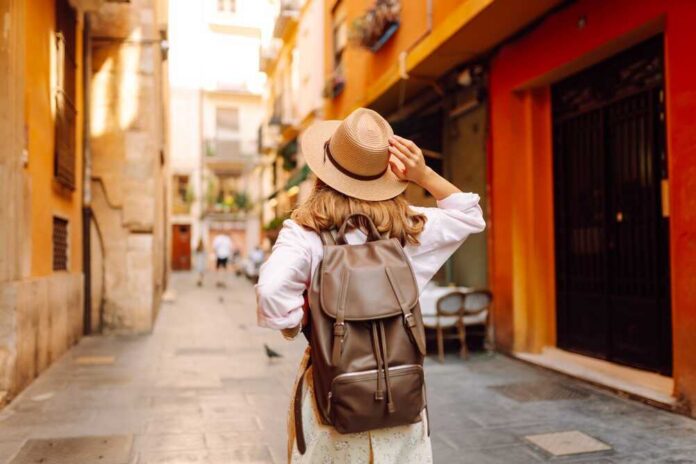
Media talk of a “female safety crisis” in Italy is growing louder, but the hard numbers tell a more balanced story that travelers deserve to hear.
Story Snapshot
- Official data show **low violent crime** against tourists in Italy, including women.
- Real risk for female travelers is **petty theft, scams, and some harassment**, not constant assaults.
- Government advisories urge **increased caution**, yet still say Italy is **safe to visit** with awareness.
- New European **border surveillance and biometric systems** raise serious privacy and freedom concerns.
What the Official Numbers Say About Crime in Italy
Western governments still rate Italy as safe for travel, even for women visiting alone. The United States State Department lists Italy at “Level 2 – Exercise Increased Caution,” mainly because of terrorism and civil unrest concerns shared across much of Europe, not because of a surge in attacks on tourists.[5] Canadian travel advice warns that petty crime like pickpocketing and bag snatching is frequent and often targets tourists, but it stresses common sense steps like watching your bag and avoiding flashy jewelry.[3] Several travel safety reviews point out that violent crime against visitors is rare and that Italy’s law enforcement presence around major sites is strong enough to keep most trips trouble-free.[1]
Some guides aimed at women travelers go even further and say official statistics “unambiguously” show a very low crime rate, especially in tourist areas with extra police on patrol.[12] Experienced solo female travelers echo that message, describing Italy as “as safe as your hometown” when you take basic precautions.[13] That does not mean assaults never happen; Canadian authorities do record sexual assaults, including against foreign women, and highlight risks like spiked drinks in bars or clubs.[3] But taken together, these sources show a picture of a busy European country where millions visit, most women are safe, and the main danger is opportunistic thieves, not constant violent attacks.
Real Risks Female Travelers Face on the Ground
For conservative families thinking about daughters or granddaughters traveling to Italy, the most common threat is simple theft in crowded city centers. The United States State Department notes that pickpocketing and rental car break-ins are common across the country, especially on public transport and at major tourist attractions.[5] Canada’s guidance lists the same hotspots: buses and trains, stations, airports, hotel lobbies, historic sites, restaurants, and even beaches.[3] Travel safety sites and tour companies agree that crossbody bags, money belts, and keeping valuables out of easy reach are basic but effective defenses.[6] Organized groups of thieves do operate around stations, bars, and cafes, and they sometimes use distraction tricks or even drugs to rob victims.[5]
Women also report lower-level harassment in some cities. Long-time solo travelers describe Italian men, especially in tourist areas, as sometimes aggressive with foreign women, using flirting, catcalling, and unwanted attention.[13] Older female travelers note that serious assaults are not common, but whistles, comments, and the occasional grope can occur.[4] Blogs aimed at women stress avoiding heavy intoxication, not leaving drinks unattended, and meeting new acquaintances only in public, well-lit places.[13][3] These are the same common sense rules parents teach their children at home, and they work in Italy too. The Italian government even maintains a dedicated 24-hours-a-day hotline, number 1522, with multilingual staff for victims of gender-based violence and stalking, showing that authorities are at least trying to offer support.[3][14]
Immigration Narratives, Fear, and What the Data Actually Show
Some outlets now frame petty crime and harassment in Italy as proof of a “safety crisis” driven by groups of immigrant youths. That language taps into wider frustration with uncontrolled migration and street disorder that many conservative readers know too well. But when you look at official advisories, they almost never blame one group; instead, they refer more broadly to “organized groups of thieves and pickpockets” at tourist spots and transport hubs.[5] Academic research on European media finds that migration is often covered with more negative sentiment than other topics, which can pull everyday crime stories into broader political battles.[18] This gap between careful government wording and heated media claims matters for travelers who want facts, not spin.
Other neutral risk mapping for female travelers points out that the highest danger zones worldwide are in parts of Sub-Saharan Africa and the Middle East and North Africa, not Western Europe.[15] Tourism studies also say Europe is widely seen as the safest region in the world when you combine political stability, personal security, and low terrorism risk.[20] That does not erase the frustration many Americans feel about failed border policies and rising street crime at home. But it does mean Italy, judged by numbers and expert assessments, looks far from a uniquely dangerous place for female tourists. For conservatives, this is a reminder to demand honest statistics instead of letting activists or sensational coverage drive the story.
New EU Surveillance Rules: A Different Kind of Threat
While crime risks remain moderate, a different issue in Europe should catch the eye of anyone who cares about limited government and personal freedom. The European Union has rolled out a new Entry/Exit System that records fingerprints, facial photos, and passport data for every non-European Union visitor, including Americans, at the border.[4] Airports already report hours-long waits as the system ramps up, and by summer 2026 every crossing is due to be fully wired in.[4] At the same time, European plans to expand police access to travel data now push to track not just air passengers but also those traveling by sea, and to relax rules that once limited data use to serious crimes and terrorism.[19] These moves are justified in the name of fighting crime, but they pile more government surveillance onto ordinary tourists.
Venice adds its own layer of control by requiring every visitor to register online before arrival and charging day-trippers an entry fee on dozens of peak days, with fines of up to three hundred euros for those who fail to get a required code.[4] For many American conservatives, this kind of bureaucracy and monitoring looks less like safety and more like a test bed for travel tracking and cash-grab schemes. While President Trump’s administration can press allies quietly on privacy concerns, individual travelers still have to face these rules at the border. Female tourists will be photographed, fingerprinted, and watched just to enjoy a museum or a church. That kind of creeping surveillance is a different threat to liberty than street crime, but it deserves just as much attention.
Sources:
[1] Web – Italy’s safety crisis: What female travelers should know before …
[3] Web – Is it Safe to Travel to Italy Right Now?(June 2026 Update) – Jetpac
[4] Web – Travel advice and advisories for Italy – Travel.gc.ca
[5] Web – Italy travel changes for summer 2026 | Rome – Facebook
[6] Web – Italy Travel Advisory | Travel.State.gov – State Department
[12] Web – Is Italy considerably safe for solo female travelers? – Reddit
[13] Web – Solo Female Travel Italy | Safety, Itinerary, Tips – NomadSister
[14] Web – Solo Female Travel in Italy – Is it Safe? – Adventurous Kate
[15] Web – Italy Solo Travel Safety: Your Guide to Safe Adventures – Uniplaces
[18] Web – Italy Solo Female Travel Safety Tips and Advice
[19] Web – [PDF] How Media Cover Migration and Intra-EU Mobility in Terms of …
[20] Web – EU member states want to expand police surveillance of travel