Brazil’s left-wing government just used visa power to block a U.S. official tied to President Trump after he tried to visit Jair Bolsonaro in prison—turning a prison visit into a high-stakes political warning shot in an election year.
Quick Take
- Brazil revoked the visa of U.S. State Department official Darren Beattie after a court blocked his request to visit imprisoned former President Jair Bolsonaro.
- Brazilian President Luiz Inácio Lula da Silva framed the move as reciprocity for U.S. visa revocations of Brazilian officials in 2025.
- Brazil’s Supreme Court Justice Alexandre de Moraes reversed an earlier approval, citing concerns about “undue interference” during an electoral year.
- The dispute lands amid already-tense U.S.–Brazil relations involving tariffs, critical minerals cooperation, and contested political prosecutions.
Visa Revocation Turns a Diplomatic Trip Into a Political Flashpoint
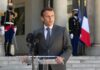
Brazilian President Luiz Inácio Lula da Silva announced on March 13, 2026, that his government revoked the visa of U.S. State Department official Darren Beattie after Brazil’s courts blocked Beattie from visiting former President Jair Bolsonaro in prison. Beattie had traveled to Brazil to participate in the Brazil–U.S. Critical Minerals Forum in São Paulo, but Bolsonaro’s lawyers separately sought court permission for a prison visit that quickly became the center of the dispute.
Brazil’s government said the visa decision was linked to what officials described as omissions on Beattie’s application, which listed only the minerals forum as the purpose of the trip. A Brazilian official also alleged “omission of information and lies” in the visa process. Lula publicly portrayed the revocation as conditional—saying the U.S. official would remain blocked until Washington restores visas previously revoked from Brazil’s health minister and the minister’s family.
A Brazilian Justice Reversed Course, Citing “Undue Interference”
The key procedural twist came from Supreme Court Justice Alexandre de Moraes. On March 10, de Moraes initially approved Beattie’s visit request, which had been submitted through Bolsonaro’s legal team. Two days later, on March 12, de Moraes reversed that approval after receiving new information from Brazil’s Foreign Ministry, which warned the visit could be viewed as “undue interference” in Brazilian politics during an electoral year.
Brazil’s Foreign Ministry also emphasized that no prison visit had been formally communicated through the typical diplomatic channels beforehand. That matters because it explains why Brazilian authorities treated the prison stop as more than a private courtesy call. The episode shows how Brazil’s executive branch, judiciary, and foreign ministry aligned to block contact between a Trump-linked U.S. official and a jailed political figure whose prosecution remains one of the most polarizing events in Brazil.
The Tit-for-Tat Backdrop: 2025 U.S. Visa Revocations and Rising Tension
Lula tied his decision directly to U.S. actions in August 2025, when Secretary of State Marco Rubio revoked visas for Brazilian officials, including Brazil’s health minister and family members. Those U.S. revocations were connected to a Cuban doctor export program, according to the reporting cited. Lula’s message was blunt: Brazil would match U.S. pressure with its own visa leverage, and Beattie became the immediate target.
From a conservative, America-first perspective, the core issue is not whether Brazil can control entry to its country—it can—but how quickly a diplomatic disagreement escalated into political retaliation. When a government publicly conditions visas on unrelated concessions, it turns normal travel rules into a bargaining chip. That approach also signals that Brazil expects foreign governments to treat travel permissions as political currency, not neutral administrative decisions.
Bolsonaro’s Imprisonment and the 2026 Election Sensitivity
The dispute cannot be separated from Bolsonaro’s status. Bolsonaro is serving a 27-year sentence tied to a 2023 coup attempt conviction overseen by Justice de Moraes, a case that has sharply divided Brazil. President Trump has publicly supported Bolsonaro and described his prosecution as politically motivated. In Brazil’s current climate, even a symbolic prison visit by a U.S. figure can be spun as foreign involvement.
Brazil’s 2026 election cycle adds another layer. The reporting notes Lula, now 80, is seeking another term and could face Senator Flávio Bolsonaro, Jair Bolsonaro’s son. That backdrop helps explain why Brazilian officials stressed “electoral year” interference concerns. It also explains why the decision carried extra visibility: Lula’s government can position itself as defending sovereignty, while Bolsonaro’s supporters can point to isolation and political control over access.
What This Means for U.S.–Brazil Relations Under President Trump
The immediate impact is diplomatic friction with potential spillover into trade and strategic cooperation. Beattie attended a critical minerals forum, a sector where the U.S. seeks stable partnerships for supply chains. It also highlights that tariffs have already been part of the Lula–Trump tension, with Trump imposing tariffs that were later partially loosened for consumer relief. A public visa fight makes quiet negotiations harder and can delay higher-level engagement.
U.S. agencies and the embassy reportedly offered no public comment in the initial aftermath, leaving Brazil’s framing largely uncontested in the moment. Based on the available reporting, Beattie’s visa remains revoked unless the U.S. reinstates visas for Brazilian officials affected in 2025. With limited post–March 13 updates, the situation appears unresolved, and any additional behind-the-scenes talks are not documented.
Sources:
Brazil revokes U.S. official’s visa in reciprocal measure
Brazil revokes U.S. official’s visa in reciprocal measure