
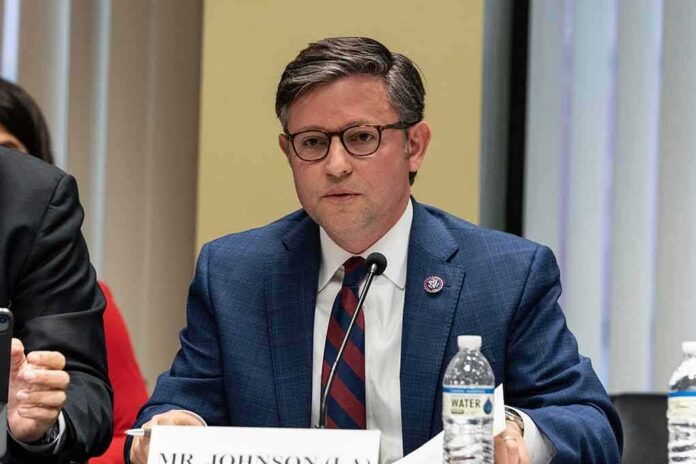
House Speaker Mike Johnson says Democrats’ rosy House forecasts are “off,” and he is anchoring Republicans’ fight to keep the majority on border security, energy, public safety, and the economy.
Story Snapshot
- Johnson rejects polls favoring Democrats and cites “partisan nonresponse bias.”
- Johnson centers the GOP message on border control, energy costs, crime, and jobs.
- Johnson says turnout in swing districts will decide control of the House.
- Forecasts still show Democrats favored, increasing pressure on fundraising and focus.
Johnson’s Core Message: Policy First, Not Poll Chasing
House Speaker Mike Johnson laid out his case for keeping the House under Republican control by focusing on bread-and-butter issues. Johnson said the campaign would stress strict border enforcement, lower energy costs through American production, safer streets, and a stronger economy. He argues voters know where Republicans stand and feel the squeeze from high prices and crime. He frames the race as a clear choice based on the GOP legislative record and a contrast in governing approaches.
Johnson tied his optimism to what he sees on the ground in swing districts. He described spending time with candidates and volunteers and watching crowds grow. He said this direct view shapes his read of voter energy more than national headlines. He called the House fight close but winnable and stressed the need for clarity and discipline in every message. He said Republicans must talk policy and results in every stop, not noise or distractions.
Polling Fight: Johnson Says Surveys Miss GOP Voters
Johnson flatly dismissed national polling that points to Democratic gains. He argued many polls undercount Republicans because right-leaning voters are less likely to answer surveys. He called this “partisan nonresponse bias” and said it skews the samples and the story lines that follow. He pointed to forecasts giving Democrats a strong chance to take the House and said the models rely on bad inputs and faulty assumptions, leading to wrong calls.
Johnson’s claim challenges a dominant media theme that Democrats are favored to flip the chamber. He says the error is not small, but systemic across many polls. He links the problem to imbalanced samples and flawed weighting. He acknowledges critics, yet insists field activity contradicts the gloomy outlook for Republicans. He argues that when the votes are counted, the gap between polls and results will be clear to everyone watching.
Turnout Math: The Path To A Working Majority
Johnson said the goal is a “working majority,” not a blowout. He framed the path as a district-by-district grind, with turnout as the key. He said Republicans must identify supporters, make personal contact, and get them to vote early or on Election Day. He argued that in close House races, a few thousand votes can decide control. He urged donors and volunteers to stay focused on operations, not horse-race chatter or social media noise.
Johnson also acknowledged the normal midterm penalty facing the president’s party. He said Republicans must “defy history” and outwork Democrats in the final stretch. That history shows the president’s party usually loses House seats, which raises the bar for this cycle. Johnson’s answer is more organizing in competitive seats and a tight message on border security, energy independence, public safety, and pocketbook relief that he believes aligns with voter concerns.
Money, Messaging, And Media Headwinds
Reporting shows Johnson pressed for more resources as several races tightened, which signals urgency inside the Republican operation. Coverage also described a “triage” posture in hard districts as campaigns reassessed late spending. Those moves do not contradict his optimism, but they underline the stakes and the narrow margin for error. Johnson’s team faces constant media repetition of polls projecting Democratic control, which can shape donor and voter expectations.
Johnson’s strategy asks Republicans to trust what they see in their towns more than what they hear in national chatter. He draws a line around core conservative priorities: secure the border, unleash American energy, back the police, and grow paychecks. He claims these contrasts cut through noise and rally voters who are tired of high prices, crime, and failed left-wing ideas. He says if Republicans execute, they can hold the line and keep the gavel in conservative hands.
Sources:
youtube.com, yahoo.com, cnn.com, silive.com, cnbc.com, ground.news, usatoday.com, sbsun.com