

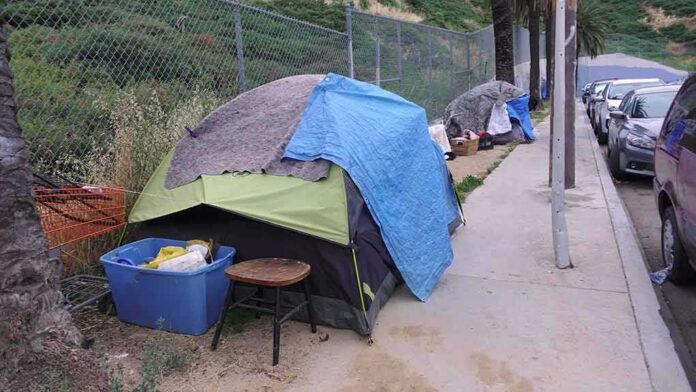
Los Angeles police cleared a sprawling freeway encampment and made more than two dozen arrests as animal rescuers pulled out dogs, cats, and even chickens from the site.
Story Highlights
- Los Angeles officers arrested over 25 people during a freeway encampment sweep.
- Animal Services removed dogs, cats, chickens, and roosters from the scene.
- Advocates earlier alleged illegal puppy sales and reported sick puppies, which were not independently verified.
- The operation reflects a wider shift toward coordinated encampment clearances in California.
Police Action Targets Encampment Under Freeway
Los Angeles officers and city crews moved on a large encampment beneath a Sun Valley–Arleta overpass on October 29. City Councilwoman Imelda Padilla said police arrested more than 25 people during the operation, underscoring a law-and-order push after weeks of public complaints. The sweep followed reports of unsafe conditions and suspected animal mistreatment at the site. Crews focused on restoring safety around the freeway, which serves thousands of drivers every day in the San Fernando Valley.
Officials framed the operation as a public safety and welfare response. Videos and local coverage showed officers coordinating with sanitation and Animal Services teams as tents and debris came down. Authorities said the goal was to stop alleged illegal activity and remove hazards that threatened people, pets, and traffic. The city has increased these multi-agency cleanups after repeated fires, drug activity, and roadway risks linked to encampments across Los Angeles.
Animal Services Removes Pets, Chickens, and Roosters
City Animal Services removed multiple animals from the encampment, including dogs, cats, chickens, and roosters, according to on-scene statements cited in coverage. Local television showed rescued animals being handled by workers as the camp cleared. Advocates had raised alarms a week earlier about alleged puppy breeding and sales at the site, and claims that some dogs became sick and puppies died. Reporters emphasized those allegations were not independently verified at the time.
Animal welfare groups argued that the city waited too long to act and should have sent more officers earlier to stop suspected breeding on public land. One advocate criticized an initial response where an officer left after a suspected breeder denied sales and refused sterilization, which the group said showed weak enforcement. While those accounts reflect frustration, the October 29 action produced concrete results: arrests, animal rescues, and the dismantling of a camp that posed health and safety risks near an active freeway.
Clearance Fits Statewide Shift Toward Coordinated Sweeps
The Sun Valley–Arleta sweep fits a wider trend in California. State leaders launched the State Action for Facilitation on Encampments Task Force to coordinate removals with services, and to reclaim public spaces that became unsafe or unhygienic. Los Angeles County also built programs to resolve camps while offering shelter and care, but enforcement now proceeds even when outreach fails. That approach responds to growing pressure from residents who demand clean streets, safe roads, and responsible animal care near homes and schools.
"A sprawling homeless encampment beneath a Los Angeles freeway became the target of a major crackdown this week, with more than 25 people arrested and dogs, cats and chickens rescued after furious animal advocates exposed the troubled area."https://t.co/UwmABFhrOa
— bluoz (@auweia1) October 30, 2026
Courts and state policy changes opened the door to stronger anti-camping enforcement, and cities are using that authority to restore order around critical infrastructure. The Arleta action shows city leaders pairing cleanups with animal rescue and police arrests when conditions cross a line. Advocates want faster intervention next time. Neighbors want lasting results. For many readers, the baseline is simple: public land must be safe, and laws must be enforced to protect families, drivers, and animals alike.
Sources:
nypost.com, planning.lacity.gov