
A Pentagon deal to field ketamine pain wafers for wounded troops now hinges on a sole-source contract and an unresolved U.S. production license.
Story Snapshot
- The Defense Department awarded nearly $41 million to develop a sublingual ketamine wafer for battlefield pain.
- The wafer is designed to dissolve under the tongue, giving medics a compact option for severe pain in combat.
- The award is reportedly sole-source, and the maker’s U.S. partner lacks a needed Nevada license.
- A September emergency-use declaration may allow use before full Food and Drug Administration approval.
Pentagon Funds Battlefield Ketamine Wafer Development
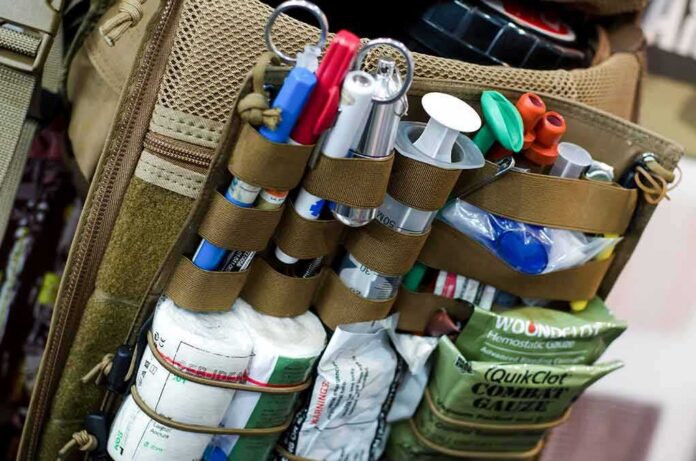
The Department of Defense awarded Singapore-based iX Biopharma nearly $41 million to develop Wafermine, a small ketamine wafer for battlefield pain relief. Military Times reported the company described the award as sole-source. Politico stated the product is intended to treat severe pain from battle injuries. The wafer is designed to dissolve under the tongue. That form could help medics treat casualties fast when supplies are tight and evacuation is delayed.
Politico reported the contract dates to February 2026, but wider attention rose after fall updates highlighted the regulatory plan and production hurdles. Reporters wrote that the wafer targets a known need: strong, quick pain control that can be given without complex gear. Military Times cited research saying ketamine has been used more by U.S. forces as a primary pain medicine for the most serious wounds, reflecting a move away from heavy opioid use in combat.
Regulatory Path Tied To Emergency-Use Authority
Military Times reported the Department of Health and Human Services issued an emergency-use declaration on September 3, 2026, which may let the Food and Drug Administration authorize unapproved drugs needed for war wounds. iX Biopharma first told investors it aimed to file for emergency use in late 2026, then updated the timeline to within the next 12 months. The reporting does not show that the Food and Drug Administration has received, accepted, or authorized the product.
The Food and Drug Administration and the Department of Defense have worked for years on faster access to military-relevant medical tools. Their collaboration programs are meant to help products move more efficiently when they address unique battlefield needs. Under federal law, emergency-use authority can allow limited use when standard approval would take too long, and when the situation calls for rapid options to save lives.
Production Hurdle And Sole-Source Scrutiny
Politico reported that iX Biopharma’s U.S. manufacturing partner, Orion, did not yet have a Nevada State Board of Pharmacy license required to operate, leaving a gap between the contract award and steady American production. Military Times repeated the licensing issue and said the company called the award sole-source, meaning the Pentagon did not run a full competition. The available reporting does not include the contract number, statement of work, or the written reason for limiting competition.
For troops on the line, the appeal is simple: fast pain relief that does not require an intravenous line or a large kit. For taxpayers, the questions are also simple: what the sole-source deal buys, how soon it reaches units, and how the Pentagon will verify safety and value before wide use. The reporting shows no battlefield deployment yet. It shows a push to meet a valid need, paired with licensing, paperwork, and schedule steps that must be closed before medics can carry the wafers.
Sources:
marinecorpstimes.com, politico.com, militarytimes.com, navytimes.com, fda.gov