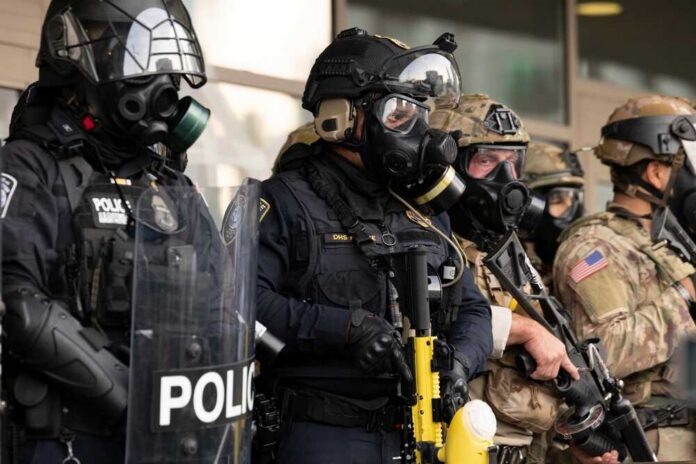
A powerful new “zero tolerance” warning from Washington is raising sharp questions about how far federal officials can go in cracking down on protesters’ words.
Story Snapshot
- DHS Secretary Markwayne Mullin vows “zero tolerance” for protesters who “verbally assault” immigration officers.
- Legal experts say there is no crime called “verbal assault” and that harsh, even ugly, criticism of officers is protected speech.
- Only true threats, violence, or real obstruction fall outside First Amendment protection under current Supreme Court rulings.
- Past “zero tolerance” policies and secret memos have drawn lawsuits claiming the Department of Homeland Security (DHS) stretched its power too far.
What Mullin Said And Why It Matters To Free Speech
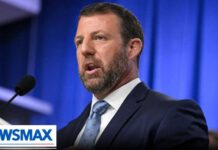
During a recent House Homeland Security Committee hearing, Department of Homeland Security Secretary Markwayne Mullin said he has “zero tolerance” for protesters who “verbally assault our officers,” “go after our vehicles,” or “assault our property,” promising, “We will find you. We will arrest you.”[1][2] He was responding to protests outside an immigration detention center where some demonstrators were arrested for alleged assault, obstruction, and threats against federal officers.[1] His remarks drew fast scrutiny from civil liberties lawyers, who focused on the phrase “verbally assault.”[1]
According to a free speech attorney at the Foundation for Individual Rights and Expression, there is no such federal crime as “verbally assaulting” an officer.[1] Under the First Amendment, Americans are free to criticize, mock, or harshly disparage law enforcement officers, and officers do not have a special right to be shielded from offense or insults.[1] The Supreme Court has said trained officers are expected to show more restraint than the average citizen when confronted with provocative or challenging speech.[1] That protection is vital so citizens can hold those who enforce the law accountable through protest and criticism.[1]
What The Law Really Says About Threats, Insults, And Protests
Supreme Court doctrine carves out only narrow exceptions where speech loses protection, such as “true threats” of violence.[1] In the case Virginia v. Black, the Court defined true threats as statements where the speaker means to send a serious message of intent to commit unlawful violence against a person or group.[1] Courts look at the words, tone, and situation to decide if a reasonable person would take the statement as a real threat, rather than a joke, hyperbole, or heated venting.[1] That means even shocking phrases like “I’ll kill you” are not automatically illegal if context shows they were not meant as real threats.[1]
At the same time, Mullin is correct that assaulting an officer, resisting, impeding officers, or destroying government property are federal crimes, and the government can arrest and prosecute those who cross that line.[1] The tension comes when officials blend these real crimes with vague talk about “verbal assault,” which can blur the line between illegal conduct and protected speech.[1] Civil liberties lawyers warn that such vague terms invite officers in the field to treat harsh criticism as a crime, even when the law does not.[1] That risk grows when agencies use “zero tolerance” language that suggests no room for judgment between speech and action.
DHS’s “Zero Tolerance” Track Record And Fears Of Overreach
Critics point out that the Department of Homeland Security has a long record of using “zero tolerance” framing and secret internal policies in ways that later sparked lawsuits and public backlash.[2][4] In the 2018 border “zero tolerance” policy, the government used a minor criminal charge of improper entry to forcibly separate thousands of children from their parents, then defended it as a necessary “rule-of-law” measure.[1][2] A Justice Department inspector general report later estimated about 3,014 children were separated while the policy was in place, with other estimates rising higher. That history makes many Americans wary when DHS again reaches for the “zero tolerance” label.
Civil rights groups have also sued DHS and Immigration and Customs Enforcement over a secret “Home Entry” memo that allegedly told immigration agents they could enter homes using an internal form instead of a judicial warrant.[4] The lawsuit claims that memo violated the Fourth Amendment, which protects Americans from unreasonable searches.[4] Other litigation has challenged what advocates call retaliatory violence and misuse of “less lethal” weapons by federal officers against protesters, journalists, and legal observers who were documenting or opposing government actions.[3][4][5] These cases build a picture of an agency that sometimes pushes past clear constitutional limits, then defends itself under vague security language.
What Patriots Should Watch For Going Forward
Legal experts emphasize that presidents and cabinet secretaries cannot create new crimes by executive order or by tough talk in hearings; only Congress can write federal criminal laws, and courts decide how they apply.[5] Federal agents remain bound by the Constitution, including the First Amendment and Fourth Amendment, just like local police.[4][5] That means a future “zero tolerance” push against “verbal assaults” could only lawfully target true threats, incitement, or conduct that actually obstructs officers, not simple insults, chants, or signs that offend those in power.[1][5]
For conservatives who back law and order yet also cherish the Bill of Rights, the key is balance: strong enforcement against real violence and property damage, paired with strong protection for peaceful, even angry, protest. Past zero tolerance episodes show how quickly a hard line can slide into government overreach when agencies use secret memos, vague labels, and political pressure.[2][4] Staying alert, demanding transparency, and insisting that Congress, not unelected officials, define the limits of protest are all essential to guard both safety and liberty.
Sources:
[1] Web – DHS Says It Has ‘Zero Tolerance’ for Protesters’ ‘Verbal Assaults.’ …
[2] Web – “We Need to Take Away Children”: Zero Accountability Six Years …
[3] Web – Impact Litigation – National Immigration Litigation Alliance
[4] Web – FOIA Request Regarding DHS “Unmasking” Subpoenas
[5] Web – Immigrants and U.S. Citizens Sue DHS over Unconstitutional “Home …