

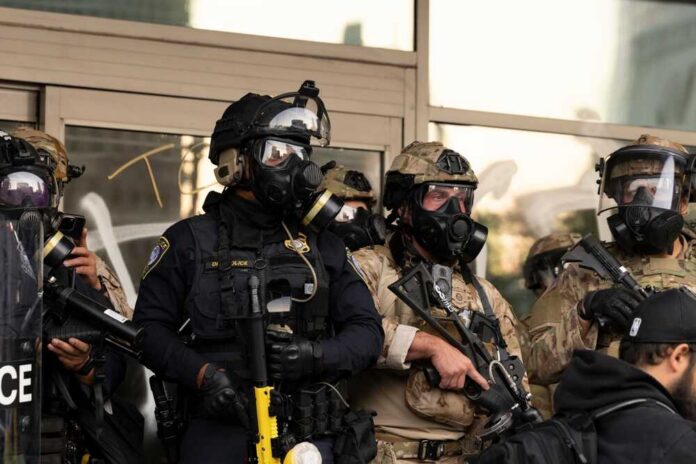
After weeks of backlash and scrutiny, Immigration and Customs Enforcement is expanding new-hire training and adding requirements to address gaps critics flagged in the hiring surge.
Story Highlights
- Lawmakers asked how many new recruits skipped the federal law enforcement academy for field training [5].
- Analysts say Immigration and Customs Enforcement training hours trail state and local police programs [2].
- A think tank tied the hiring surge to shortened in-person training and big sign-on perks [4].
- A whistleblower claim sparked national coverage; the agency denies cutting core subjects [6][10].
Congressional Pressure Zeroes In on Training Shortcuts
House Homeland Security Committee Democrats asked federal auditors how many recruits avoided the Federal Law Enforcement Training Centers and started in the field during the surge. Their December 18, 2025 letter pressed for specific counts and dates, signaling bipartisan-level concern about standards even as the border mission remains urgent [5]. The request does not prove harm, but it raises a red flag. When Congress asks if recruits skipped academy time, the public deserves clear answers and complete records.
Immigration and Customs Enforcement insists the agency can scale fast and stay safe. But several outside reviews say the training runway looks short. The Center for American Progress wrote that Immigration and Customs Enforcement training requires 344 hours, while state and local cadets on average see more than twice that time in class and drills [2]. That comparison does not equal proof of failure. It does show a gap that invites close oversight, better transparency, and upgrades where needed.
Evidence Shows Abbreviated Timelines, Not Proven Harm
Research links the hiring push to shortened in-person academies, plus incentives like fifty thousand dollar sign-on bonuses and student loan help [4]. A broadcast outlet profiled recruitment and training, showing reporters are tracking practices inside the pipeline [3]. A Facebook post even claimed training fell to forty-seven days, but that assertion is not backed by agency documents in the record [1]. The strongest facts here point to speed, not yet to safety failures tied to that speed.
That distinction matters for readers who want both strong borders and strong standards. The available sources do not provide a curriculum, pass rates, firearms scores, or field evaluation data that tie shortened training to errors [2][4]. Without those records, the debate risks drifting into narratives. Supporters can argue speed was needed. Critics can say corners were cut. The truth will rest on syllabi, audits, and outcomes, which are not fully public today.
Agency Rebuttals Emphasize Streamlining, Not Substance Cuts
Department of Homeland Security told national media that no subject matter was cut and that the agency only streamlined to remove repeat material and add technology aids. The department said recruits still receive multiple classes on use-of-force policy and the proper use of force [6][10]. Acting leaders also argued that any shorter track targeted recruits with prior law enforcement experience, focusing academy time on immigration-specific topics [6]. These explanations answer some concerns but not all.
The rebuttals stop short of publishing the July 2025 and February 2026 syllabi side by side. They also do not disclose how many recruits, if any, went straight to the field before the academy, the core question in the congressional letter [5][6]. For conservatives who value law and order, the path forward is simple: release the documents, show the test scores, and let the numbers settle the dispute. Transparency protects officers and the public alike.
What Added Training Now Aims to Fix
Immigration and Customs Enforcement is now mandating additional training for new hires, according to recent coverage built on whistleblower allegations and agency responses [6][9][8]. The move appears designed to close perceived gaps in use-of-force instruction, constitutional standards, and scenario work. Officials have highlighted growing instructor capacity and upgraded infrastructure during the ramp-up, which signals investment rather than retreat on standards, even as hiring stays aggressive [8][3]. The new steps should be measured against clear outcomes.
Conservatives should judge results, not rhetoric. Strong training protects officers, upholds due process, and prevents lawsuits that drain resources. Real border security needs well-prepared agents who know the Constitution, follow rules of engagement, and write clean cases that hold up in court. That is not “woke.” That is basic policing. If Immigration and Customs Enforcement now extends courses, restores hands-on time, and proves mastery, the agency can secure the mission and quiet the noise.
Accountability Steps That Would Build Trust
Four steps would end the doubt fast. First, publish academy curricula, daily schedules, and lesson hours for each hiring track [2][4]. Second, release cohort outcomes: firearms scores, scenario pass rates, remedial time, complaint rates, and early attrition. Third, disclose how many recruits, if any, entered field training before academy completion and why [5]. Fourth, have auditors confirm that use-of-force, constitutional law, and defensive tactics meet tested standards. Facts will beat fear and restore confidence.
Sources:
[1] Web – ICE mandates additional training for new hires after backlash
[2] Web – ICE recruitment standards changed in 2026 – Facebook
[3] Web – 4 Strategies To Improve ICE and CBP Recruiting, Hiring, and …
[4] YouTube – An inside look at ICE recruitment and training
[5] Web – ICE expansion has outpaced accountability. What are the remedies?
[6] Web – [PDF] 2025-12-18 T GAO Request re Review of ICE Hiring Surge
[8] YouTube – ICE ramps up training for new recruits
[9] Web – ICE ramps up training for new recruits – CBS News
[10] Web – ICE whistleblower warns new recruits are receiving “defective” …