A huge new study quietly confirms what many Americans already suspected: the migrant flood under past open‑border policies drove most of the recent spike in homelessness—and now changes in those flows are changing the numbers on our streets.
Story Snapshot
- A major University of Chicago study finds asylum seekers caused about 60% of the 2022–2024 surge in sheltered homelessness.
- Federal homelessness counts hit a record 771,480 people in 2024, up 18% in a single year.
- Analysts say both mass migration and a long‑running housing affordability crisis are driving the crisis.
- As migrant inflows slow or are better managed, some reported homelessness pressures are easing in key cities.
What the New Research Says About Migrants and Homeless Shelters
A working paper by University of Chicago economist Bruce Meyer and coauthors offers the strongest statistical evidence yet that asylum seekers were central to the recent explosion in people living in government and nonprofit shelters.[1] The authors estimate that between 2022 and 2024, roughly 60 percent of the historic 43 percent increase in sheltered homelessness was driven by new immigrant arrivals seeking asylum, with the spike heavily concentrated in a small set of large destinations.[1] This means earlier federal and big‑city policies that waved migrants in without adequate planning did not just strain schools and hospitals; they very directly crowded out scarce shelter beds and pushed the homeless system beyond its limits.[1][3]
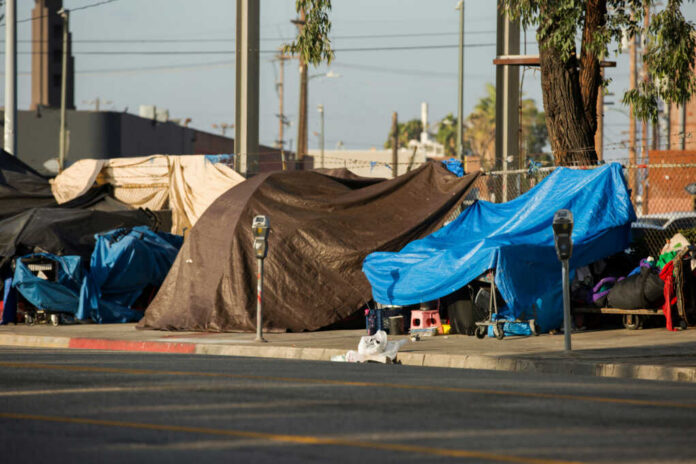
The same research stresses that the asylum‑driven surge mainly hit the sheltered side of the system, not the unsheltered encampments many Americans see on sidewalks and freeway underpasses. Unsheltered homelessness rose a much smaller 17 percent over those two years, continuing a pre‑existing upward trend rather than suddenly spiking. That contrast matters politically: previous leaders could point to “more people indoors” as a sign of compassion, while the data now show that the jump was largely a byproduct of channeling huge numbers of new arrivals straight into local shelter systems.[1][2] When migrant inflows slow, are diverted, or are managed differently, that mechanical pressure on shelter counts eases, and some of the “homeless increase” that panicked headlines blamed on the economy begins to recede.[2]
Record Homelessness Did Not Come From Migration Alone
Even with the asylum‑seeker effect, the wider homelessness crisis is bigger than migration and has been building for years.[3][6] Federal data show that on a single night in January 2024, about 771,480 people were homeless in the United States, the highest number recorded since the Department of Housing and Urban Development began its modern counts.[1][2][5] That figure marked an 18 percent jump—roughly 118,000 additional people—over 2023, the largest single‑year increase ever recorded.[1][2] Analysts across the political spectrum point to sky‑high rents, years of under‑building, inflation, and the expiration of pandemic relief programs as major drivers pushing vulnerable Americans over the edge.[3][6]
The National Alliance to End Homelessness, which is closely tied to Housing and Urban Development policy discussions, describes the lack of deeply affordable housing and low incomes as the primary causes of homelessness, with immigration‑related shelter demand as one important but downstream factor.[3][5] Harvard’s Joint Center for Housing Studies similarly emphasizes an ongoing affordability crisis, arguing that the end of emergency rental aid and other temporary supports, combined with rising rents and prices, has pushed more households into homelessness even as overall employment remained solid.[6] From this lens, the surge in asylum seekers interacted with a system already stretched by high rents and scarce low‑cost units, turning a long‑running housing problem into a very visible crisis in certain cities.[1][3][6]
How Cities and States Felt the Migrant Impact on the Ground
Recent homelessness increases have not been evenly spread across the country; they have been concentrated in states and cities that received large migrant inflows or already faced extreme housing shortages.[2][6] Between 2023 and 2024, homelessness rose in 43 states, with the largest percentage jumps in Illinois, Hawaii, Massachusetts, and New York.[2][3] These same jurisdictions either saw heavy migrant arrivals, severe housing constraints, or both.[2][6] One national analysis found that much of the 18 percent national increase occurred in just a handful of high‑immigration states, linking local shelter spikes directly to migrant surges.
Reporting from California and New York shows how failing to distinguish between long‑time residents and recent migrants can exaggerate or misread local trends.[1][2] In Los Angeles and other California cities, analysts have warned that not separating asylum seekers in the data makes homelessness appear even worse than it is for existing residents, because a large share of the new shelter use reflects federal border policy choices rather than local economic collapse. At the same time, local officials in sanctuary‑style cities have acknowledged that thousands of migrants were leaving shelters each month as they secured other housing or moved on, even while new arrivals kept coming. That churn makes it clear that when Washington changes enforcement, processing, or resettlement policies, the daily shelter numbers on city dashboards can change dramatically in just a few months.
What This Means for Policy in the Trump Era
For conservative voters focused on sovereignty, fiscal sanity, and public order, the research underscores how border and asylum policies ripple all the way into homeless shelters and tent encampments.[1][2] When Washington invites in large numbers of people without making sure there is housing, work authorization, or a clear resettlement plan, local taxpayers and struggling families pay the price through crowded shelters, higher service costs, and fewer beds for citizens already in crisis.[1][6] That dynamic also helps explain why some cities now report easing pressure as migrant inflows slow, are redirected, or are handled through more structured programs rather than ad hoc placements.[2]
At the same time, experts warn that even strong border enforcement or tighter asylum rules will not solve homelessness if the underlying housing shortage, weak labor‑market ladders, and drug and mental‑health crises go unaddressed.[3][4][5][6] The data show a multi‑cause problem: mass migration and past “catch‑and‑release” practices sharply increased sheltered counts in specific years and cities, while decades of under‑building and rising rents steadily increased both sheltered and unsheltered homelessness nationwide.[1][3][6] For 2026‑era policymakers, the message is clear in the numbers: secure borders and common‑sense migration rules are necessary to protect shelters and neighborhoods, but they must be paired with policies that expand affordable housing and strengthen families if the United States truly wants fewer migrants and fewer homeless on its streets.[3][4][5][6]
Sources:
[1] Web – Fewer Migrants, Fewer Homeless
[2] Web – New Research Shows 60% of Historic Homelessness Increase …
[3] Web – Asylum Seekers and the Rise in Homelessness – Cato Institute
[4] YouTube – 770000 experiencing homelessness US amid migrant crisis
[5] Web – rates, correlates, and differences compared with native-born adults
[6] Web – State of Homelessness: 2025 Edition