

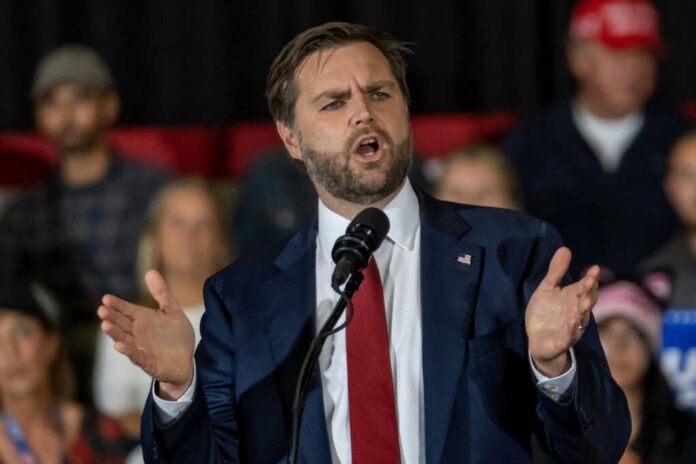
Vice President JD Vance’s sharp joke about Texas Democrat James Talarico lit up the campaign trail and the media, putting culture-war stakes back at the center of the Senate fight.
Story Highlights
- Vance joked “in a totally platonic way… I’m the Vice President, not James Talarico,” spurring claims he implied Talarico is gay.
- Vance also said he would not want to see Talarico’s web search history, later calling it “just guessing”.
- CNN’s Jake Tapper framed the moment as a sexuality insinuation and a distraction from policy.
- Vance’s speeches tie Talarico to far-left views on gender and religion, making values the ballot issue.
What Vance Said And Why It Sparked A Firestorm
On October 13 in Tyler, Texas, Vice President JD Vance replied to a supporter, “I love you too, sir. In a totally platonic way, to be clear. I’m the Vice President, not James Talarico.” That line drew laughs in the room and hard pushback online, where critics said the joke implied that Talarico is gay. Vance has also jabbed that he would not want to see Talarico’s browsing history, later adding, “Maybe he doesn’t. Just guessing,” signaling it was speculation, not a claim of fact.
CNN anchor Jake Tapper cast the moment as the vice president “insinuating that [Talarico] is gay,” arguing it signals a campaign turning to personal shots, not policy. That charge shaped national coverage. The clips are short and lack full transcripts, so tone and setup are limited in public view. The words exist on video, but the intent behind the humor is debated, and no claim about Talarico’s actual orientation is established by the record.
Vance’s Framing: Values, Kids, And Faith
Vance has tied his remarks to Talarico’s record and statements on gender and religion. In multiple speeches, he says Talarico focuses on transgender topics and has described God as “non-binary,” which Vance calls an attack on Christian teaching. He argues Texans should judge Talarico’s priorities, especially when families face high costs, rising crime, and school battles over age-inappropriate content. The punch lines land inside a broader case that Democrats push fringe ideas into classrooms and churches.
In that same vein, Vance has questioned “what really motivates a man who spends so much time talking about 11 year-old drag queens,” linking Talarico’s culture positions to judgment about fitness for office. Supporters view this as fair comment on public stances, not private life. Critics reply that jokes about sexuality cross a line and distract from issues. The competing takes show how a one-liner can become a proxy fight over parents’ rights, faith, and who sets moral norms in public schools.
Media Clash And The Free-Speech Reality
National outlets split on the stakes. Some highlight the “gay insinuation” charge. Others stress Vance’s focus on Talarico’s policy and religious claims. The law gives wide room for political speech, even sharp satire. Courts protect opinion and rhetorical hyperbole, especially about public figures. That reality explains why campaigns use pointed humor and innuendo in hard-fought races; it shapes perception while staying short of provable factual claims.
For conservative voters, the core is not the joke but the agenda it spotlights. Vance is pressing a choice: traditional faith, parental control, and common-sense limits on sex and gender lessons in schools versus a left that blurs those lines. Texans will decide whether Talarico’s views match their churches, their kids’ classrooms, and their wallets. The dust-up shows the terrain in 2026: values first, identity politics under a bright light, and no pauses in a fight over America’s cultural core.