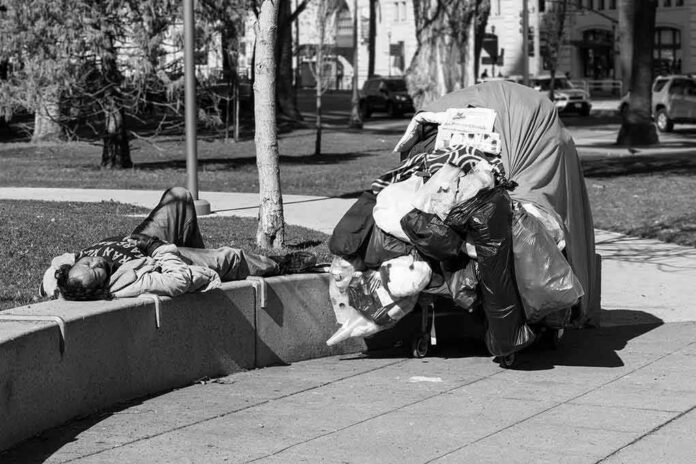
San Francisco’s Democratic mayor admitted progressive policies “lost” the city as overdose deaths and street crime surged, then vowed tougher enforcement and prosecution on national TV.
Story Highlights
- Mayor Daniel Lurie said San Francisco “lost its way” by getting “entrapped” in progressive values.
- Lurie cited 810 overdose deaths and 30,000 car break-ins in prior years to show the cost of drift.
- Police-reported crime fell 25% in 2025, while open-air drug markets still trouble the city.
- Health officials and local reports highlight treatment expansions and complex causes for overdoses.
Lurie’s On-Record Break With Progressive Governance
San Francisco Mayor Daniel Lurie said the city “lost its way” and was “entrapped” in progressive values that ignored what was happening on the streets. He made the remarks in a CNN interview on October 8, 2026. He argued city leaders talked about progressivism while residents faced daily disorder. Lurie presented his shift as a return to common sense, with a clear message to offenders: if you commit crimes in San Francisco, police will catch you and prosecutors will act.
Lurie backed his critique with stark numbers. He said 810 people died of overdoses and 30,000 car break-ins hit the city in prior years. He also pointed to small shops closing after repeated theft. These figures framed his call for enforcement, drug market crackdowns, and more prosecution. The interview did not supply source tables for those totals, which limits precision. But the mayor cast them as proof that ideology crowded out practical safety needs.
What Changed On The Ground: Enforcement And Measured Gains
One year into Lurie’s tenure, police-reported crime fell 25% in 2025, according to an ABC News account citing police statistics. Lurie credited a firmer approach on street crime and drug sales. He also admitted that visible, open-air drug markets persisted, showing that tougher tactics alone have not solved every problem. This mix of progress and stubborn hot spots tracks with what many city residents still see day to day.
Local reporting shows San Francisco also paired enforcement with treatment moves. City communications and news accounts describe added treatment beds, a triage and stabilization push, and stricter rules for groups handing out drug-use supplies without treatment referrals. These steps aimed to pull people from sidewalks into care more quickly. Critics questioned pace and process, but the policy trend lines show a shift away from permissive street conditions.
The Pushback: Health Factors And Data Gaps
Public-health officials warned that overdose risk comes from deep problems like poverty, lack of housing, and trauma. A city plan reported fatal overdoses fell more than 20 percent in the first ten months of 2024, after expansions in treatment access and street care. Those records argue the crisis is not only about ideology or policing, but also services and capacity. These points do not erase Lurie’s claims, but they do add needed context.
SF mayor admits city 'lost its way' by embracing ultra-left ideology | Titus Wu, California Post
San Francisco Mayor Daniel Lurie blamed the city’s progressive politics for fueling its homelessness, drug overdose and business exodus crises, admitting in a new interview that the… pic.twitter.com/W39rExZEI6
— Owen Gregorian (@OwenGregorian) October 11, 2026
Some of Lurie’s headline figures lack clear sourcing in media coverage. The 810 overdose deaths and 30,000 car break-ins were not accompanied by linked datasets in the reports. That does not mean they are wrong, but it sets a limit on firm conclusions. The safer ground is what is documented: Lurie’s on-camera break with progressive framing, the stated crackdown strategy, the reported crime drop, and the stubborn street-drug markets that still test the city.
Why This Matters To Conservatives Nationwide
Big-city policies ripple far beyond city limits. When leaders excuse disorder, small businesses shut, families leave, and crime spreads. Lurie’s turn signals that even Democrat-run cities can rediscover common sense: back the police, prosecute crime, and connect people to treatment with real accountability. That approach supports public safety, property rights, and the rule of law. It also shows that clarity beats slogans when drug cartels push fentanyl and law-abiding citizens pay the price.
What To Watch Next: Proof Over Rhetoric
San Francisco’s test now is follow-through. Residents should expect monthly public data on overdose deaths, car break-ins, arrests, prosecution rates, and treatment outcomes. Clear metrics will show whether tougher enforcement and expanded care are working together. If the city keeps closing open-air markets and speeds people into treatment beds, then families, shop owners, and visitors will feel it. If not, voters will know who chose talk over results in the face of a lethal drug wave.
Sources:
yahoo.com, nypost.com, cnn.com, foxnews.com, newsbreak.com, sfchronicle.com, aic.gov.au