An Army investigation says layered system breakdowns — not one pilot’s mistake — led to the deadly D.C. midair collision.
Story Snapshot
- The Army cites failures across conflict-management layers, not single-pilot error.
- Investigators flagged broken radios, instrument errors, and harsh night-vision conditions.
- The National Transportation Safety Board found risky route design and weak oversight near Reagan National.
- Nominal vertical spacing on the helicopter route could be as little as about 75 feet.
Army Probe Finds Multiple Safety Barriers Failed
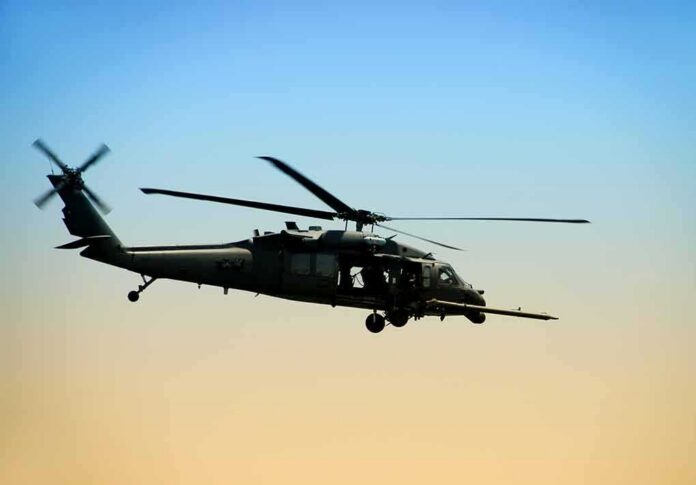
Stars and Stripes reports that a 50-page Army investigation concluded the crash resulted from failures across all layers of conflict management, not one cockpit mistake. Lt. Gen. Michael McCurry reached that finding by a preponderance of the evidence, according to the outlet. The report points to gaps in how risks were handled before and during the flight. That framing matches modern safety practice that looks at systems, not a single person, when several defenses fail at once.
The investigation cites broken radio communications that limited what the Black Hawk crew could hear from air traffic control. Investigators also listed instrument inaccuracies as a factor. The crew flew at night over a brightly lit city while using night-vision goggles, which can wash out contrast. Gusty winds added workload. Each item by itself may be manageable. Together, they cut the crew’s ability to detect and avoid an oncoming regional jet in a tight, urban airspace.
NTSB Details Route Risks Near Reagan National
The National Transportation Safety Board’s final report describes a dangerous setup near Ronald Reagan Washington National Airport, where a helicopter route ran close to an airliner approach path. The board says the Federal Aviation Administration did not regularly review routes and data and leaned too much on pilots seeing and avoiding each other. That approach did not fully account for night flying, urban glare, or workload. The board tied these oversight gaps to the crash sequence.
The National Transportation Safety Board warned that helicopters using the Route 4 corridor could have only about 75 feet of vertical separation from jets on approach to Runway 33 when flying at the route’s authorized maximum altitude of 200 feet above the river. That margin can shrink if an airliner is slightly low or the helicopter is offset along the shoreline. Such a narrow buffer leaves almost no room for human or technical error. It also limits the time to see, decide, and turn.
What Happened, Where, and Who Was Lost
The collision involved a United States Army Sikorsky UH-60L Black Hawk, callsign PAT25, and a PSA Airlines CRJ700 flying as American Airlines Flight 5342. The aircraft hit each other around 8:48 p.m. Eastern time on January 29, 2025. The location was about one half mile southeast of Reagan National. Sixty-seven people died in the crash and aftermath. The scale of the loss, in the nation’s capital, makes the case a high priority for fixes that prevent another tragedy.
The Army’s focus on broken radios, instrument error, and night-vision challenges fits with the National Transportation Safety Board’s broader system concerns. The Army report, as summarized, highlights cockpit constraints. The National Transportation Safety Board highlights route design and oversight gaps. Together, they show how design choices, oversight, communications, equipment accuracy, and human limits can line up. When that happens, small misses can stack into a fatal outcome in seconds.
What Fixes Make Sense Right Now
Federal leaders can act on clear items. The Federal Aviation Administration should revise the helicopter corridor and increase vertical and lateral spacing from jet approaches near Reagan National, as urged by the National Transportation Safety Board. Controllers and pilots need dependable radio coverage with tested handoffs and backups. Military and civil operators should verify critical instruments against recent maintenance and weather. Night-vision operations over bright cities need tailored training and procedures.
President Trump’s administration can press agencies to implement these steps fast. The goal is simple: keep our service members, crews, and passengers safe while keeping government honest and focused. Strong oversight, clear routes, solid radios, and accurate instruments are not big-government bloat. They are basic duties. Conservatives expect competence and accountability, not excuses. When Washington designs an airspace with inches to spare, families pay the price. That must end, and it can end this year.
Why This Matters for Constitutional Government
Limited government still must do its core jobs well. Airspace design and aviation safety are core jobs. The National Transportation Safety Board identified design and oversight failures. The Army flagged cockpit constraints that made detection hard. Neither finding blames a lone worker. The fixes are practical and measurable. Transparent action, not spin, honors the 67 lives lost. It also shows that this administration will demand results from federal agencies and deliver safer skies over our capital.