
United Nations famine assessments show Gaza’s displaced families still face crisis hunger, with more than half the population short of reliable food.
Story Highlights
- United Nations and partner analyses tracked Gaza’s slide from “imminent famine” in 2024 to confirmed famine in 2025, with crisis hunger still widespread in 2026.
- Displacement, damaged markets, and blocked access left families relying on reduced rations or single-item distributions like wheat flour.
- The World Food Programme said nearly all Gazans faced acute food insecurity in late 2024, warning famine risk if supply lines stayed restricted.
- United Nations reporting in 2026 still found 59 percent of people in Crisis or worse, including 212,000 in Emergency.
UN Data Shows Deep, Lasting Food Crisis
United Nations reporting traced a clear pattern. In March 2024, food experts using the Integrated Food Security Phase Classification said famine was imminent in northern Gaza. They found almost nine in ten people faced emergency-level hunger across the strip. In August 2025, the World Health Organization said famine was confirmed in Gaza, with more than half a million people trapped in famine conditions and projections rising through September. By July 2026, United Nations coordinators still measured severe hunger for most families.
The United Nations Office for the Coordination of Humanitarian Affairs said that from mid-April to June 30, 2026, over 1.2 million people faced Crisis or worse hunger, including 212,000 at Emergency level. That means many homes struggled to eat daily or skipped meals to cope. It also means higher risk for children and mothers. These numbers match what aid workers warned for two years: when aid routes are tight and fighting blocks access, hunger surges fast and lasts longer.
Displacement and Access Limits Drove Ration Cuts
United Nations updates in July 2024 linked the largest waves of displacement to ration cuts and shrinking stocks. The World Food Programme reported that limited supplies forced them to scale back in some areas, with families sometimes receiving only wheat flour. Earlier, in October 2024, the World Food Programme estimated 1.95 million people, or about 91 percent of Gaza, faced acute food insecurity. That included 345,000 people in catastrophic hunger and 876,000 in emergency conditions, with risk persisting if supply lines did not reopen.
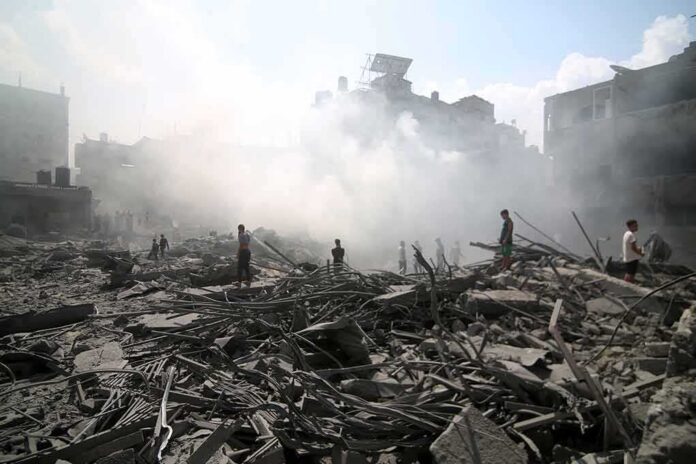
United Nations news in April 2025 said food stocks were exhausted and shortages spread beyond food to medicine, shelter, and safe water. Those gaps quickly worsen nutrition and health, especially in crowded shelters where cooking fuel, clean water, and basic sanitation are scarce. When people must move often to avoid danger, they lose access to markets and aid points. Trucks may not reach them, and shops may be empty or destroyed. That is why United Nations analysts tied displacement so closely to deepening hunger.
From Imminent to Confirmed Famine, Then a Long Grind
Famine experts follow strict rules before they use the word “famine.” In March 2024, the Famine Review Committee said famine was projected and imminent in North Gaza and Gaza governorates, and warned about risk in central and southern areas. By August 2025, the World Health Organization said famine was confirmed in Gaza, with hundreds of thousands trapped in the worst conditions. Even after some access improvements, later reports still showed large numbers stuck in Crisis or worse by mid-2026.
Israel’s restrictions leave Palestinians in Gaza facing severe food shortages despite ceasefire terms promising more aid, forcing displaced families to rely on charity kitchens and some to search through rubbish for food and fuel pic.twitter.com/JoK8KiZJ4h
— TRT World Now (@TRTWorldNow) August 23, 2026
For American readers, the takeaway is simple and sober. Families, many with children, spent years moving from one damaged area to the next while food routes see-sawed. Aid groups documented the slide with hard numbers. The path out is not slogans or vague pledges. It is secure corridors, steady deliveries, working markets, and open crossings. That is how you turn “imminent” and “confirmed” famine into recovery that holds, so people can feed their families without fear.
Sources:
youtube.com, ochaopt.org, en.wikipedia.org, news.un.org, wfp.org, un.org