

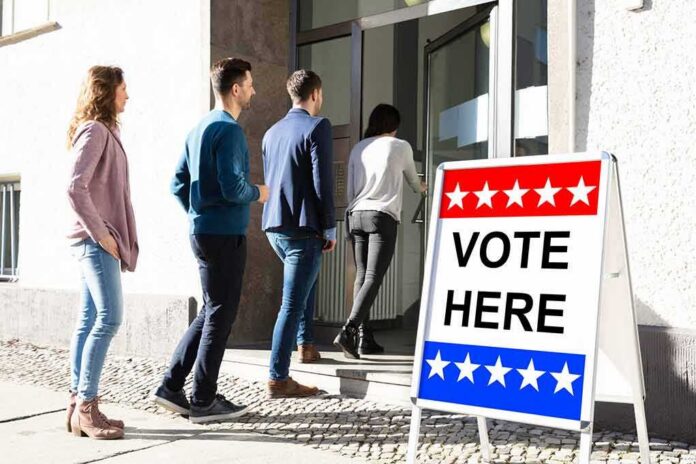
Kansas’s top lawman ordered a canvassing group to stop offering $5 gift cards tied to voting, citing state and federal election-bribery laws.
Story Snapshot
- Kansas Attorney General issued a cease-and-desist to Bluestem Kansas over alleged $5 gift-card offers tied to voting.
- Action followed a voter’s report that a canvasser identified with Bluestem offered a gift card connected to voting.
- Kansas law and federal law both prohibit giving anything of value in exchange for voting.
- Letter orders Bluestem to preserve records that could confirm who did what and when.
AG Targets Alleged Vote Incentives Before Election Day
Kansas Attorney General Kris Kobach sent a cease-and-desist letter to Bluestem Kansas on October 31. The letter ordered the group to stop offering incentives tied to voting in the November 3 general election. The Attorney General said the office received evidence from a Kansas voter the same day. The voter reported that a canvasser, who said he worked with Bluestem Kansas, offered a $5 gift card in connection with voting. The office warned the conduct violates Kansas and federal law.
State law bans giving, offering, or agreeing to give a benefit in exchange for voting. Reports describe the offense as a severity-level-7 nonperson felony under Kansas statutes. The Attorney General’s action emphasized that exchanging anything of value for a vote is unlawful. The federal statute cited in coverage, Title 52, Section 10307(c), likewise forbids paying people to vote in elections with federal candidates on the ballot. These laws aim to protect the ballot from cash or gifts.
What the Voter Reported and What Investigators Sought
The Attorney General’s office described a firsthand account from a Kansas voter. The voter said a canvasser offered a $5 gift card linked to voting and identified himself as with Bluestem Kansas. The cease-and-desist letter ordered Bluestem to preserve documents, messages, and records about canvassing and any incentive offers. Those records could include rosters, scripts, and communications that show who authorized the plan, who canvassed, and how any gift cards were handled. That evidence could corroborate the voter’s account.
Officials moved quickly because the general election was days away. The Attorney General’s warning aimed to halt the practice at once and keep the playing field level. The office’s public posture fits a common pattern in election enforcement. Authorities step in when an incentive appears tied to the act of voting rather than a lawful civic activity. The key legal question turns on the condition attached to the benefit. If the offer hinges on voting, the law applies squarely.
How This Fits Election Law and Voter-Protection Norms
Federal and state rules draw a bright line: do not pay people to vote. The United States Department of Justice explains that these laws remove money from the voting decision and protect free choice. Kansas reporting underscored the same point. Many civic groups encourage turnout with legal methods like reminders or rides. The line is crossed when value is offered for the act of voting itself. That is why even a small $5 gift card matters under the statute.
President Trump amplified the Kansas development as Election Day neared. Coverage noted he called the alleged conduct a criminal offense and pointed to claimed evidence. Local and regional outlets focused on the Attorney General’s enforcement letter and the cited laws. Some reports used different labels for Bluestem, calling it a civics group, a canvassing group, or linking it to a political committee. The core state action remains the cease-and-desist and record-preservation demand.
Sources:
redstate.com, wibw.com, forth.news, yahoo.com, lasvegassun.com, cnn.com, therightscoop.com