

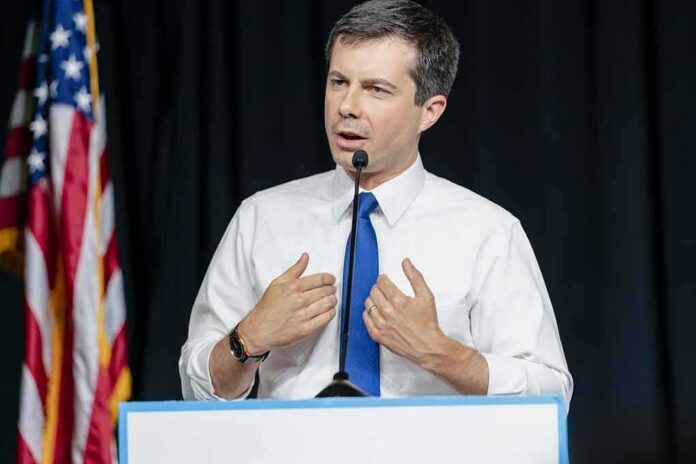
Transportation Secretary Pete Buttigieg acknowledged that Democrats moved too slowly on the border and credited President Trump’s tougher approach with driving crossings down.
Story Highlights
- Buttigieg said Democrats waited too long to act and credited Trump’s enforcement focus.
- Former Border Patrol Chief Raul Ortiz said the border was quietest under Trump’s current policies.
- House Homeland Security reported an 83 percent drop in encounters during Trump’s first year back.
- Biden-era border totals remained historically high before late declines, fueling voter anger.
What Buttigieg’s Admission Signals About Border Policy
Pete Buttigieg’s on-camera remarks mark a rare moment. A senior Democrat said the party waited too long on border security and credited Trump’s approach. This matters because it confirms what many Americans saw. Crossings surged for years. Communities and officers felt the strain. Buttigieg’s stance recognizes that enforcement, detention, and swift removals deter unlawful entry. It also undercuts claims that only Congress could fix the crisis, a claim Trump’s actions have already challenged.
Buttigieg’s comments come after a long period of record encounters. House Homeland Security data show nearly 2.9 million nationwide encounters in fiscal year 2024 and more than 10.8 million since fiscal year 2021. These totals made everyday life harder in border towns and far from the border. They increased costs for states and cities. They also shook confidence that Washington would enforce the law fairly and firmly. Those numbers set the stage for a course correction.
Trump’s Current Enforcement Track Record
Former Border Patrol Chief Raul Ortiz said the border was at the quietest level he had seen under Trump’s current policies. He argued for balance, but he tied the calm to real enforcement on the ground. That aligns with a House Homeland Security summary reporting an 83 percent drop in nationwide encounters from February 2025 through January 2026, compared with the prior year under Biden. The same account highlighted steep declines in known “gotaways” once enforcement ramped up.
The committee credited restored tools already in law: expedited removal, detention, and tighter asylum rules. It also cited an end to broad parole-and-release practices that drew people to make the trip. The message was simple. If you enter unlawfully, you face fast consequences. That signal, backed by action, changes behavior. It shows a president can use existing authority to secure the border while Congress debates bigger reforms that may never pass.
Biden-Era Declines Came Late and Could Not Erase Cumulative Surges
Customs and Border Protection reported a sharp drop after a June 2024 proclamation by President Biden. Encounters between ports of entry fell twenty-nine percent from May to June, with the agency later noting a sixty percent decline from May to December and about 47,330 Border Patrol encounters in December 2024. Those results showed policy can shift flows in the short term. But they arrived after years of elevated totals and growing public frustration.
Even with the late 2024 decline, the larger record fueled skepticism. The House Homeland Security Committee’s October 2024 summary stressed nearly 3 million encounters that fiscal year alone. Voters saw busloads arriving in cities and rising costs for shelters and services. They wanted consistent enforcement, not seasonal swings. That is why Buttigieg’s admission resonates now. It reflects the lived reality that delayed action has real costs for safety, budgets, and trust in the rule of law.
What Comes Next Under President Trump
President Trump’s team has leaned on clear rules, detention capacity, faster removals, and limits on abuse of the asylum process. Those steps align with what front-line agents, local sheriffs, and many citizens have asked for. The early-year drops in encounters and known gotaways suggest the strategy is working. The test ahead is holding the line, finishing key infrastructure, and keeping courts from weakening tools that Congress already gave the executive branch.
Conservatives should watch three items. First, keep expedited removal and detention funded and active. Second, maintain strict standards that stop catch-and-release. Third, press Congress for targeted fixes that backstop executive action, even if gridlock continues. Buttigieg’s words are a reminder. Delay invites disorder. Swift, lawful enforcement protects families, supports workers, and defends the Constitution’s promise that our laws mean what they say.
Sources:
youtube.com, cbp.gov, homeland.house.gov, cbsnews.com