
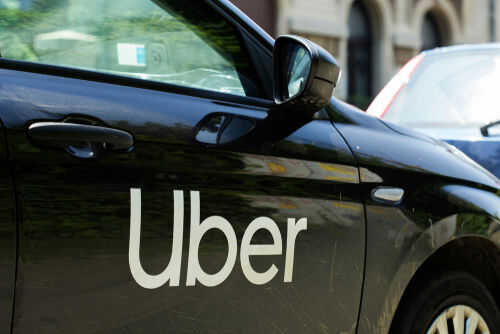
Uber once raced to replace human drivers with robot cars, but after safety failures and a costly retreat, the company is now watching rivals set the terms of the future.
Story Snapshot
- Uber’s autonomous-vehicle push accelerated in 2015–2016 with a Pittsburgh robotics hub and early self-driving pilots.
- A 2018 fatal crash involving an Uber test vehicle triggered suspensions, scrutiny, and a strategic pullback from in-house AV development.
- By its 2019 IPO period, Uber no longer had a clear “self-driving edge,” leaving it more dependent on human drivers and outside partners.
- Competitors like Waymo continued scaling testing and operations, widening the gap as Uber’s program stalled.
Uber’s Early AV Sprint Collided With Real-World Consequences
Uber’s driverless strategy started as a direct bet on replacing labor costs with automation. The company opened a robotics facility in Pittsburgh in 2015 and recruited heavily from Carnegie Mellon University, then rolled out a self-driving pilot in Pittsburgh in 2016 using modified Volvo vehicles with safety drivers. That timeline shows a company chasing rapid deployment more than slow, cautious validation—an approach that later proved difficult to sustain under public-safety expectations.
Uber’s autonomy ambitions expanded through acquisitions and broader testing, including the Otto deal tied to self-driving trucks and additional prototypes in multiple cities. But this was also the period when legal and reputational risks piled up, including disputes connected to talent and technology. Those conflicts mattered because autonomous driving is not only engineering—it is trust, liability, and regulatory permission, all of which can vanish quickly after a single high-profile failure.
The 2018 Fatal Crash Became a Turning Point for Regulators and Investors
The pivotal break came in 2018 when a pedestrian was killed in Arizona by an Uber autonomous test vehicle. The incident halted momentum, intensified regulatory scrutiny, and reshaped how the public evaluated the technology. According to the compiled timelines, Uber also shut down its autonomous trucking effort that year. From a limited-government perspective, the predictable outcome of a safety crisis is more oversight; once a program loses public trust, regulators tend to tighten rules for everyone.
By 2019, Uber approached its IPO without the same autonomous narrative it had sold earlier. The available research indicates doubts about Uber’s self-driving positioning during that period, while rivals continued building mileage and operational experience. The consequence is straightforward: when a company abandons a core technology race, it often returns later as a buyer or renter rather than an owner—less control, less leverage, and fewer options when policy or market conditions shift.
Rivals Stayed in the Game, and Uber’s Costs Didn’t Disappear
It contrasts Uber’s retreat with continued progress by competitors, including Waymo’s expanding testing and experience. Autonomous vehicles require massive iteration, and the biggest advantage is cumulative learning under real-world conditions. When Uber paused or exited key initiatives, it effectively stopped compounding that advantage. For everyday Americans, the practical reality is that ride-hailing still relies on human labor at scale, meaning costs remain exposed to wage pressures, insurance pricing, and local regulation.
What “Paying the Price” Looks Like in 2026: Less Control, More Dependency
It does not include confirmed 2025–2026 corporate disclosures about Uber’s current AV operations, so the exact present-day structure cannot be verified here. What the sourced timelines do support is the chain of events: early expansion, a major safety failure, and a pivot away from owning the technology. In business, that typically means trading long-term independence for near-term stability—an outcome many investors recognize as costly.
For conservatives who value accountability and competence, the takeaway is not that innovation should stop, but that “move fast and break things” becomes unacceptable when the “things” are human lives and public roads. The same dynamic shows up in Washington: once institutions lose trust, bureaucracy grows. Uber’s story is a reminder that poor execution in the private sector can invite heavier-handed rules—often punishing responsible actors along with reckless ones.
Sources:
History of autonomous vehicles timeline
Uber driverless cars timeline project
The evolution of autonomous cars on screen
Self-driving car timeline: Top 11 automakers