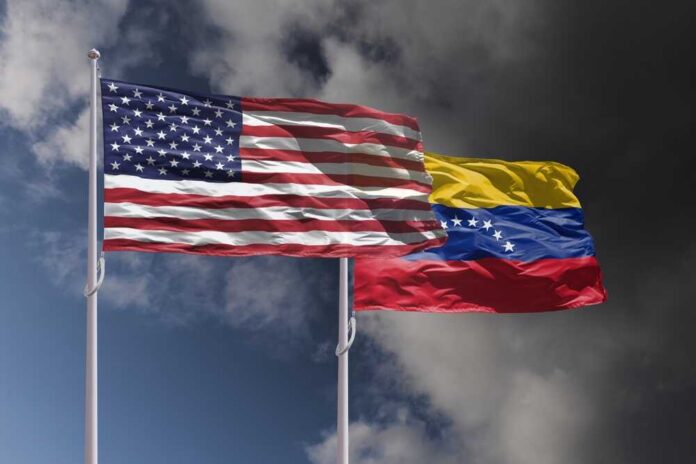
The first direct U.S.–Venezuela commercial flight in seven years is taking off amid a high-stakes political reset that could reshape security, immigration enforcement, and regional influence.
Story Snapshot
- American Airlines launched its first Miami-to-Caracas flight in roughly seven years on April 30, 2026, after a long suspension tied to U.S. security concerns and broken diplomatic relations.
- The route restart signals a significant thaw in U.S.–Venezuela relations, with reporting linking the shift to major political changes inside Venezuela and renewed diplomatic engagement.
- American plans to expand service, including a second daily flight beginning May 21, suggesting the carrier sees durable demand from the Miami-area Venezuelan diaspora.
- Key uncertainties remain around long-term stability, security, and the pace of regulatory approvals for sustained operations.
Miami-to-Caracas Returns After a Long Security Freeze
American Airlines’ flight AA 3599 departed Miami for Caracas on April 30, 2026, restoring direct commercial service between the United States and Venezuela for the first time since the 2019-era shutdown. The route had been suspended after U.S. officials raised security concerns and diplomatic ties deteriorated, pushing travelers into indirect connections through other Latin American hubs. The aircraft on the renewed route has been reported as an Embraer E175 operated by Envoy Air.
Miami matters here because it is one of the largest Venezuelan diaspora centers in the United States, meaning demand is not just tourism but also family travel and small-business links. American’s announcement that it plans to build out frequency—moving toward an additional daily flight later in May—reads as a bet that traffic will support routine service rather than one-off, headline-driven demand. That is a practical indicator that the airline expects the policy environment to hold.
What Changed: Diplomacy, Leverage, and a New Operating Reality
The resumption is not just an airline story; it is a signal that Washington and Caracas are operating under a different set of assumptions than they were in the years after relations broke down. Reporting around the restart frames it as part of easing tensions that includes renewed diplomatic engagement and an embassy reopening in Caracas. Some coverage also references the reported U.S. capture of Nicolás Maduro as a pivotal development shaping the current thaw, though the public record in the provided materials leaves open key details.
For Americans who prioritize border security and clear national sovereignty, direct flights can cut both ways. Better-defined routes can improve screening and tracking compared with opaque, multi-stop itineraries that disperse passengers across jurisdictions. At the same time, reopening air links with a country that has faced chronic instability raises obvious questions: how vetting will be handled, what standards are being used, and whether agencies have the staffing and tools to keep pace if traffic grows quickly. The sources emphasize that regulatory hurdles and approvals still matter.
Economic Upside Meets a Regulatory and Security Stress Test
On the economic side, the benefits are straightforward: direct service can reduce cost, time, and uncertainty for families and businesses, and it can re-open a channel for lawful commerce tied to travel. Aviation industry coverage describes the Miami–Caracas market as “poised to reignite” after years of disruption, and American’s plan for daily service supports that. If the route proves reliable, competing carriers could eventually seek entry, expanding choices for consumers.
Still, the restart also becomes a test of whether government agencies can execute the basics—consistent standards, transparent approvals, and credible security posture—without political games. Conservatives who are skeptical of bureaucratic competence will watch whether decisions are explained clearly or routed through vague “process” language. Liberals concerned about human rights and inequity will watch whether the policy shift is paired with measurable improvements in treatment, stability, and legal clarity for travelers. The reporting available emphasizes optimism, but also flags questions about security and leadership.
What to Watch Next: Frequency Increases and Policy Follow-Through
The near-term milestone is American’s planned expansion to a second daily service beginning May 21, 2026. More flights mean more throughput, which puts pressure on airports, customs processes, and coordination between governments. If approvals proceed smoothly, the route could normalize quickly and become another routine corridor out of Miami. If approvals stall—or if security incidents occur—service could remain fragile and politically contentious rather than a stable restoration.
Direct commercial flights from US to Venezuela resume for first time in 7 yearshttps://t.co/TDS8hocSQa
— Human Events (@HumanEvents) April 30, 2026
The bigger question is whether this reopening reflects a durable strategic posture or a temporary window created by fast-moving political events. It points to a dramatic shift in the bilateral relationship, but it also acknowledges uncertainty about stability and long-term security conditions. For voters across the spectrum who think Washington too often lurches between extremes, this story is a live test of whether the federal government can reopen a major international channel without repeating the errors that created the shutdown in the first place.
Sources:
American to resume service to Venezuela
American Airlines Resume Flights Miami Venezuela April 2026