
As Kim Jong Un orders a more “deadly and destructive” war posture, South Korea is building a vast drone army that could drag America into a high-tech showdown on the Korean Peninsula.
Story Snapshot
- Kim vows a more “deadly and destructive offensive posture” while testing new missiles and artillery.
- South Korea plans over 20,000 attack and spy drones and 500,000 trained “drone warriors.”
- Analysts warn this drone buildup may be a hollow force that fuels an arms race with a nuclear regime.
- North Korea is pairing nuclear growth with new warships, raising stakes for U.S. forces and allies.
Kim’s ‘deadly and destructive’ push and why it matters to Americans
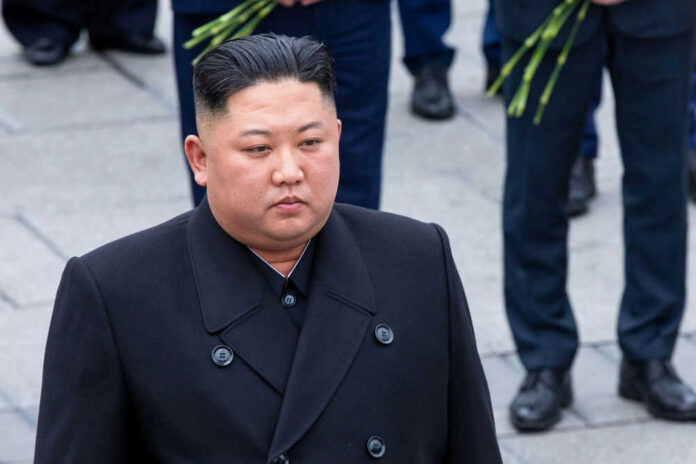
North Korean leader Kim Jong Un just watched major weapons tests and ordered his forces to boost a “deadly and destructive offensive posture,” according to state media reports.[8] The tests included a tactical ballistic missile with a special warhead, improved rocket launchers, and long-range artillery aimed at targets in South Korea, including United States bases there.[8] Kim said his goal is to make enemies feel “constant uneasiness and fear,” showing he wants pressure, not peace.[8] For American readers, that means more risk to our troops and allies in a region where nuclear weapons are already in play.[9]
Kim’s threat comes only days after North Korea commissioned its first large guided-missile destroyer, the Choe Hyon-class, which analysts say is built to carry nuclear-capable cruise and ballistic missiles at sea.[11] This ship gives Kim new ways to threaten United States forces and allies from the water, not just from hidden bunkers on land.[11] Arms control experts already estimate North Korea has about 50 nuclear warheads and material for dozens more, plus advanced missile systems that can reach United States territory.[9] Kim is clearly tying this growing nuclear power to an aggressive, fear-based strategy aimed at Washington, Seoul, and Tokyo.[9]
South Korea’s massive drone gamble: 20,000 systems and 500,000 ‘drone warriors’
In direct response, South Korea’s Defense Ministry announced plans to “drastically” expand its drone forces the same day Kim’s comments were reported.[2] Seoul says it will develop long-range exploding drones and acquire more than 20,000 low-cost reconnaissance and attack drones by 2030 to deal with North Korean threats.[3] Defense Minister Ahn Gyu-back says the goal is for every conscript to earn drone credentials during mandatory service, creating about 500,000 so-called “drone warriors” across all branches.[3] He wants troops to operate drones “like personal firearms,” making drones a second personal weapon.[3]
This push is not only about buying hardware; it is also about training and industry. South Korea’s National Assembly approved 33 billion won, roughly 22 million dollars, for 2026 to buy about 11,000 commercial drones for training and to build the needed school and support systems.[1] The government plans to produce 110,000 domestically made drones by 2029 for the army, navy, air force, and marines, aiming to make drones a universal combat tool.[3] A key piece is the K-LUCAS long-range one-way attack drone, a loitering munition designed to strike targets deep inside enemy territory.[4] Officials present this drone wave as “proactive deterrence” that can hit North Korean launchers, artillery, and command posts fast if war starts.[3]
Critics warn of a ‘hollow’ drone force and a dangerous arms race
Not everyone is convinced this giant drone army will work as advertised. A detailed analysis in War on the Rocks argues that South Korea’s 500,000 “drone warriors” risk becoming a hollow force, because the plan aims at a moving target while North Korea races ahead with its own drones and missiles.[1] Many of the 11,000 drones funded for 2026 are commercial models meant only for training, not combat, which means real battlefield power will lag behind bold headlines for years.[1] There is also no outside audit yet proving how effective South Korea’s new swarms or the K-LUCAS system will be in real combat.[1]
There is a deeper danger here that American conservatives will recognize from other regions. Security experts who study drone warfare in places like India and Pakistan say that when one side builds up drones for “defense,” the other side sees a threat and races to match or beat it.[16] That cycle lowers the political cost of using force, because drones can strike from far away with no pilots at risk.[17] On the Korean Peninsula, that means Kim can point to South Korean drone swarms and United States support to justify even more nuclear weapons, missile tests, and warship construction.[11] The result is an arms race in the air and at sea, with little real accountability and very high risk if anything goes wrong.
What this means for U.S. policy, spending, and security
For Americans worried about endless foreign entanglements and runaway spending, this story is a warning sign. As South Korea pours money into drone forces and North Korea doubles down on nuclear and naval power, pressure grows on Washington to answer with more missile defenses, more ships, and more deployments in the region.[7] Think tanks already urge the United States to keep nuclear-capable bombers and submarines nearby and even consider bringing tactical nuclear weapons back to South Korea if North Korea keeps expanding.[7] Every new North Korean test and every South Korean drone announcement strengthens the case for bigger Pentagon budgets and long-term commitments far from home.[7]
Kim Jong Un vows military buildup as North Korea marks Korean War anniversary https://t.co/jvjPlMbw8a
— Chad O'Carroll (@chadocl) June 26, 2026
For conservatives who value a strong defense but also fiscal sanity and clear limits, the key question is simple: does this high-tech arms race make America safer, or just lock us into another open-ended standoff with a rogue nuclear regime? North Korea’s message is open and hostile. South Korea’s drone surge aims to deter that threat, but may also fuel it. The Trump administration now faces a tough balance between backing allies, deterring Kim, and refusing to write a blank check for another unstable arms race.
Sources:
[1] Web – South Korea to acquire 20,000 low-cost military drones
[2] Web – South Korea’s 500,000 Drone Warriors Will Be a Hollow Force
[3] Web – S. Korea military to seek to acquire 11,000 commercial drones for …
[4] Web – South Korea says to train 500,000 ‘drone warriors’ to counter North …
[7] Web – South Korea accelerates deployment of unmanned systems
[8] Web – Kim Jong Un hails new weapons as South Korea speeds drone …
[9] Web – Seoul, June 26, 2026 (AFP) – South Korea to acquire … – NAMPA
[11] YouTube – Korea’s Military Boosts Drone Power Amid Global Conflicts
[16] Web – North Korea’s Choe Hyon-class Destroyers – Beyond Parallel – CSIS
[17] Web – North Korea Commissions First-in-class Destroyer Choe Hyon