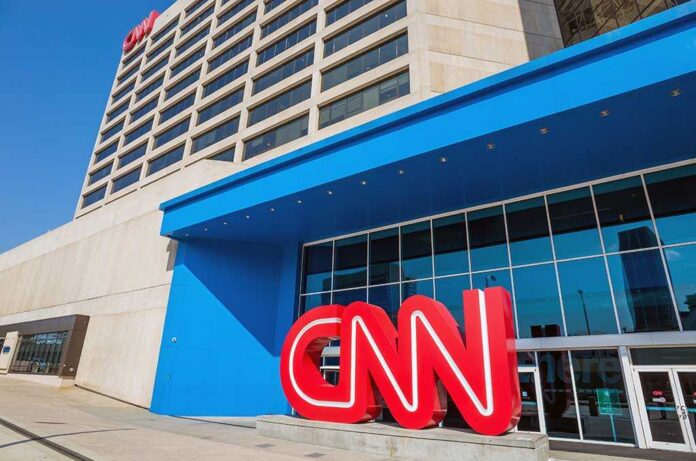
Paramount’s top lawyer said selling CNN is “on the table” to end a 12-state antitrust fight over its Warner Bros. deal, putting the network’s future up for grabs.
Story Highlights
- Paramount publicly floated a CNN sale as a merger remedy amid a state lawsuit.
- A judge temporarily blocked the Warner-Paramount merger while the case proceeds.
- States say the combined giant would dominate films and basic cable bundles.
- The Justice Department under President Trump allowed the deal to proceed federally.
Paramount Signals CNN Could Be Spun Off To Save The Deal
Paramount’s chief legal officer told reporters that a sale of CNN is on the table to resolve a multistate antitrust challenge to the Warner Bros. Discovery acquisition. The statement confirms that divesting the news network is a live option, not just rumor. Public reports add that the merger includes CNN as part of the Warner Bros. Discovery assets, so a sale would change the structure, not just behavior, of the combined company. That is the type of fix courts often consider in big media cases.
Paramount’s move comes as the states argue the combined firm would control a large share of theatrical film distribution and a hefty slice of basic cable channels, raising prices and limiting choice. The California-led suit frames the risk as broad market power, not only news. That is why a visible asset sale like CNN is attractive as a bargaining chip. It offers a simple headline remedy while keeping most of the $110 billion plan intact, if regulators accept it.
Court Freeze Raises Stakes And Timelines For A Remedy
A federal judge issued a temporary order halting the merger, signaling that the states’ case is serious enough to merit immediate relief while the court weighs a longer pause. Litigation could stretch well into 2027, adding cost and uncertainty. That timeline pressure often pushes parties toward structural fixes that can unlock a settlement. Paramount has already agreed not to close before trial or June 1, 2027, which heightens the need for a clean resolution path.
Even with the state case pending, the federal government has already completed its review. The Department of Justice under President Trump said it did not find likely harm to competition, clearing a major hurdle at the national level. That split screen matters. Federal clearance weakens the argument for killing the deal outright. But state enforcers still have leverage in court, so a targeted divestiture could bridge the gap if it truly lowers concentration in the states’ defined markets.
Would Selling CNN Really Fix The Antitrust Concerns?
Industry reporting says the lawsuit barely mentions CNN and centers instead on the combined share across basic cable and wide-release films, which suggests a CNN sale alone may not cure the core theory of harm. If concentration across many channels and studio distribution is the issue, regulators might demand broader divestitures. That is why Paramount’s signal helps, but does not guarantee a deal. No filed consent decree or term sheet naming CNN has surfaced publicly yet.
Paramount says CNN sale 'on the table' to resolve antitrust suit https://t.co/pYRpOpIBTS
— Rory Bernier (@RoryCrave) August 13, 2026
Inside CNN, staff fear leadership changes and mission drift under new owners, reflecting years of turmoil and sliding ratings in a crowded market. Paramount’s leaders insist they will not bend CNN to personal views, but the network’s culture war baggage remains real for many viewers. For conservatives, a sale could open the door to viewpoint balance and accountability. For antitrust law, the only test is whether any divestiture restores real competition at home, not just optics in headlines.
Sources:
variety.com, finance.yahoo.com, cnn.com, bbc.com, reuters.com, ajc.com, npr.org