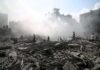
A deadly blaze in China’s “shoe capital” has killed at least 28 workers, raising sharp questions about communist China’s factory safety while American manufacturers face growing pressure to rely on that same system.
Story Snapshot
- At least 28 workers were killed when fire tore through the Huiteng shoe factory in Jinjiang, China.
- State media say highly flammable shoe materials helped the fire spread fast, trapping people on the roof.
- President Xi Jinping ordered a nationwide safety inspection but key facts and accountability details remain vague.
- The tragedy highlights deep safety problems in China’s manufacturing model that U.S. companies increasingly depend on.
Deadly blaze in China’s ‘shoe capital’
Chinese state media report that at least 28 people died after a massive fire ripped through the Huiteng Shoes factory in Jinjiang, a major footwear hub in Fujian province. The blaze broke out around noon local time, turning a multi-story concrete building into a death trap for workers on the production lines. Video from the scene shows thick black smoke pouring from upper floors while people appear stranded on the roof with no clear escape. Rescue crews fought the fire for hours before bringing visible flames under control by late afternoon.
Reports say 239 people were inside the factory when the fire started, with 213 evacuated, two of whom later died at the hospital. That means 26 people initially listed as missing were later confirmed dead, bringing the total toll to 28. Many more are believed to be injured, but Chinese authorities have not released a clear breakdown of the wounded or the long-term health impact. This lack of detail is common in tightly managed emergencies inside communist China’s state-run information system.
Official story: flammable materials and welding sparks
Local officials say the fire likely started on the ground floor, where shoe-making materials and chemicals were stored. These materials, including rubber, foam, and powerful adhesives, are highly flammable and can turn a small spark into an explosive blaze in minutes. A preliminary investigation claims sparks from welding may have ignited inflammable paint, rapidly feeding flames that raced upward through the building. That early story matches a familiar pattern from other industrial disasters in China, where basic safety rules around hazardous materials are poorly enforced.
State broadcaster footage shows flames bursting from upper-floor windows and heavy smoke blanketing the area, while rescue workers struggled to reach trapped employees. More than 180 firefighters and at least 35 vehicles were sent to the site, backed by hundreds of additional emergency personnel over the course of the day. Chinese media later said over 500 firefighters ultimately joined the mission. Despite that large response, communication was lost with some workers during the fire, and questions remain about whether exits were blocked or alarms failed.
Xi Jinping’s orders and the question of accountability
Chinese leader Xi Jinping called the blaze a “major” or “significant” casualty event and ordered a full search-and-rescue effort, a thorough investigation, and strict accountability for those responsible. He also directed officials to carry out a nationwide safety inspection, signaling concern that similar risks exist across China’s manufacturing sector. The Ministry of Emergency Management echoed those instructions, demanding an “all-out” push to extinguish the fire, locate survivors, and treat the injured. On paper, these statements sound tough, but they leave many key issues unanswered.
At least 28 people have been killed after a massive fire tore through a shoe factory in Jinjiang, Fujian Province, China. Reports say blocked exits, highly flammable materials, and rapidly spreading flames trapped workers inside the building. Dramatic visuals showed thick black… pic.twitter.com/MS9slkc6NC
— Hindustan Times (@htTweets) July 10, 2026
Chinese police have detained the owner of Huiteng Shoes and several others suspected of bearing responsibility for the fire. State media also report that the company’s bank accounts were frozen as part of the probe. However, authorities have not publicly named all individuals involved, nor have they released a full timeline of events inside the factory. There is still no detailed official report explaining why workers were trapped on the roof, how fast the fire alarms and sprinklers worked, or whether prior safety inspections missed serious hazards.
What this means for U.S. workers and buyers
American conservatives watching this story see more than a distant tragedy; they see the dark side of a global supply chain that many U.S. companies lean on to cut costs. China’s factories make a huge share of the shoes and clothing sold in American stores, often under brands that talk loudly about “social responsibility” while staying quiet about safety records overseas. When communist officials and state media control what information gets out, it becomes hard for families here at home to know whether the products they buy were made in safe, honest conditions.
For decades, globalist trade policies pushed U.S. manufacturing jobs offshore, sending work to places like Jinjiang’s “shoe capital” instead of keeping plants in American towns with tougher safety rules and real transparency. This fire is another reminder that cheap labor in closed systems often comes with hidden risks paid by workers, not by executives or foreign politicians. As Americans debate trade, border security, and the strength of our own industry under the current administration, events like this highlight why many conservatives still argue for secure supply chains, accountable factories, and clear respect for human life and basic safety.
Sources:
youtube.com, mezha.net, timesunion.com, amp.dw.com, facebook.com, ktalnews.com, osint613.com