
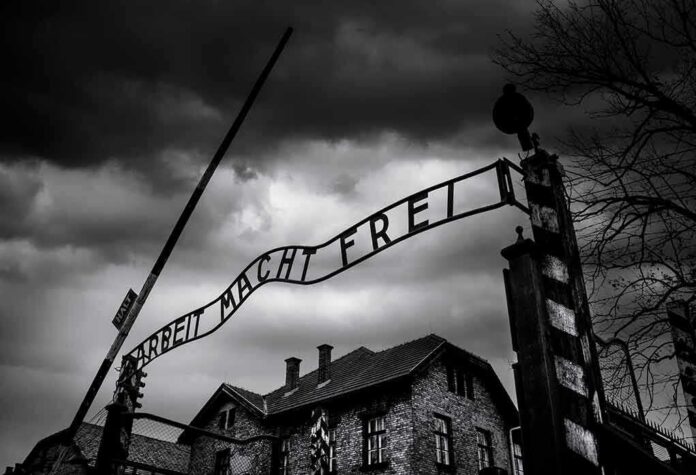
A 1944 War Department letter refused requests to bomb Auschwitz, calling the strike militarily impractical and a diversion from decisive operations.
Story Highlights
- Assistant Secretary of War John McCloy rejected proposals to bomb Auschwitz in November 1944 on military grounds.
- War Department letters said precision bombing would divert vital aircraft and yield doubtful results.
- Appeals from the War Refugee Board and others were acknowledged but declined using the same rationale.
- Historians and memorial institutions still debate whether a strike could have slowed the killing.
What McCloy Told The War Refugee Board In 1944
Assistant Secretary of War John J. McCloy wrote on November 18, 1944 that the War Department had considered bombing Auschwitz and decided against it. McCloy said the operation would require precision bombing and would divert air power from ongoing decisive campaigns. He added that the likely effect was uncertain or even dangerous. His language placed priority on winning the war while acknowledging the humanitarian goals raised by the War Refugee Board director, John Pehle.
Earlier, on August 9, 1944, the War Department sent a similar refusal to the World Jewish Congress. The reply said such attacks could be done only by diverting considerable air support needed for other operations and were of doubtful efficacy. That letter also said the department appreciated the humanitarian motives but could not approve the plan at that time. The August and November letters show a consistent position across months and petitioners.
Why The War Department Said “No”
War planners argued the proposed strikes needed precise attacks that would pull bombers and escorts from key fronts. They judged the likely military benefit as too low for the cost. They also described risks to prisoners and the chance of limited, short-lived disruption. McCloy wrote that the department had sought the best military opinion on feasibility. The records we have show the decision text, not the underlying target studies or sortie math behind it.
These documents frame the choice as triage during a total war. Leaders believed victory required focus on industrial plants, oil, rail hubs, and front-line targets tied to the battlefield. They signaled concern for victims while holding to a resource rule: do not divert aircraft unless the outcome helps end the war faster. That stance guided replies even as eyewitness reports and the Auschwitz Protocol reached Washington through the War Refugee Board in late 1944.
What The Debate Looks Like Today
Scholars, survivors, and memorial institutions have argued that bombing the gas chambers or rail lines might have slowed the killing and saved lives. The United States Holocaust Memorial Museum notes the case made by bombing proponents in those terms. Supporters say Allied bombers already hit nearby industrial sites, proving reach. Critics of the 1944 decision also argue no thorough study was done, or that leaders did not treat the rescue goal as a priority.
The historical record confirms the War Department’s stated reasons, but gaps remain. The available letters do not include detailed strike plans, named operational sign-offs, or damage forecasts. The Auschwitz memorial recounts that despite appeals and reports, the gas chambers and crematoria never became formal targets for the Allies. The public debate continues because the moral stakes are immense, and the operational files many people want to see are still thin in open sources.
Why This Matters For Americans Today
Americans expect leaders to act with moral clarity and real plans. The 1944 letters show how big bureaucracies default to process and resource rules, even in the face of evil. Citizens should demand transparency when agencies say “not feasible.” Leaders must show evidence, options, and tradeoffs, not just broad language about doubtful efficacy. That standard honors both the victims of the past and our duty to check government power with informed oversight grounded in facts and results.
What To Watch For In The Records
Researchers continue to seek the internal feasibility work McCloy referenced, including who gave the “best military opinion,” what targets they assessed, and how they weighed risks. Deeper release of staff papers would help test the 1944 judgments with hard data. Until then, the solid facts are the official refusals, their stated reasoning, and the urgent appeals that preceded them. The moral and strategic debate will endure, but the documents we do have are clear about what the department decided and why.
Sources:
youtube.com, jewishvirtuallibrary.org, katz.sas.upenn.edu, pbs.org, considerthesourceny.org