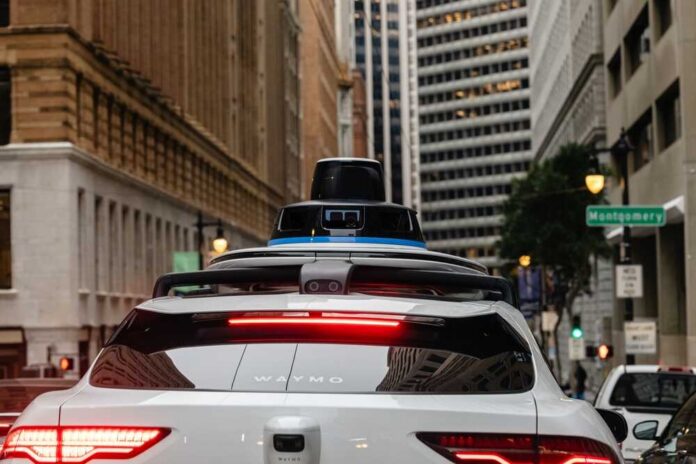
Trump’s Transportation Department is moving to strip away old “human driver” rules so robot vehicles can hit American roads faster, and safety advocates are warning that regulators may be trusting Big Tech more than they are protecting families.
Story Snapshot
- Trump’s Department of Transportation plans three major rule changes to clear the way for driverless vehicles without steering wheels or pedals.
- Supporters say cutting “driver-only” hardware rules will boost U.S. innovation, jobs, and competition with China.
- Critics warn the plan weakens crash reporting and removes safety gear without first proving the new systems are safer.
- Past failures by companies like Cruise show the real dangers when robotaxis and regulators get safety wrong.
Trump’s DOT pushes new rules for driverless vehicles
The Trump administration’s Transportation Department is rolling out a new automated vehicle framework built on three pillars: safety, innovation, and commercial deployment.[4] Transportation Secretary Sean P. Duffy says federal safety rules written decades ago for human drivers do not fit a future where computers, not people, control the car.[2] The Department plans three rulemakings to modernize Federal Motor Vehicle Safety Standards for vehicles that use automated driving systems and may not have steering wheels, pedals, or other manual controls.[5]
These rulemakings will target standards that assume a human is always in the driver’s seat.[2] One focuses on transmission and gear shift rules, another on windshield defrosting, defogging, and wiper systems, and a third on lighting and reflectors.[2] For vehicles designed from the ground up to drive themselves, the Department of Transportation says many of these hardware rules are now “redundant requirements.”[2] Officials argue removing them will still uphold safety while clearing away needless red tape that blocks new American-made designs.[5]
What changes for robotaxis and self-driving delivery vehicles
Under the new approach, the National Highway Traffic Safety Administration is proposing to allow self-driving vehicles that are not built for human drivers to drop hardware like steering wheels, brake pedals, shift sticks, and some dashboard controls.[5] The agency has already finalized rules that let certain self-driving delivery vehicles skip crash safety requirements that only make sense when people ride inside.[2] The Trump-era framework also streamlines how companies report crashes involving advanced driver assistance and fully automated driving systems.[21]
Industry trade groups have cheered these moves as a chance for the United States to lead the world in driverless technology and to compete with China.[7] Companies like Tesla and General Motors, which are betting big on robotaxis, could benefit from a single clear national standard instead of fifty different state rulebooks.[3] Supporters say removing driver-only hardware can cut costs, speed up deployment, and still save lives if the software is proven safe.[5] They frame the changes as pro-innovation, pro-jobs, and pro-American manufacturing.[21]
Safety advocates warn about weak spots and missing proof
Safety groups and some consumer advocates are sounding alarms about what is missing in the new rules. They point out that the Department of Transportation has not put forward hard crash data or independent studies showing that removing driver controls, wipers, and other equipment will “safely accelerate deployment.”[2] Critics also warn that simplifying crash reporting means less serious incidents may be logged only monthly, with property damage thresholds that could hide patterns until it is too late.[6]
Groups like the Center for Auto Safety argue that the National Highway Traffic Safety Administration has fallen behind on safety mandates from Congress while rushing to approve experimental systems.[2] They stress that edge cases and emergencies matter most: when a system fails, hits black ice, or faces an odd road layout, there is no steering wheel for a human to grab.[9] Advocates say regulators should first demand detailed emergency protocols and real-world performance proof before letting automakers remove basic physical safeguards.[9]
Lessons from Cruise: when robotaxis and regulators fail
The debate is shaped by recent scandals in the driverless industry. Cruise, General Motors’ robotaxi unit, failed to fully report a 2023 San Francisco crash where a self-driving car hit a pedestrian and then dragged her about twenty feet.[12] A National Highway Traffic Safety Administration consent order found the company left out key pre-crash, crash, and post-crash details, and Cruise agreed to pay a $1.5 million penalty and file a corrective plan for future reporting.[12]
An internal report after that crash found the vehicle’s software wrongly treated the person on its hood as a side impact and tried to pull over instead of stopping, exposing deep flaws in its decision-making logic.[16] The Department of Transportation’s Inspector General later charged Cruise with making false statements and falsifying records during the federal investigation.[15] For many Americans, that case shows what happens when companies overpromise, software fails in a rare situation, and regulators do not catch problems quickly.
How conservatives can think about freedom, safety, and Big Tech
For conservative readers, this fight is about more than gadgets on wheels. Driverless technology could lower costs for trucking, reduce crashes, and keep American companies ahead of China. But it also hands more power to large corporations and software that most people will never fully understand. Strong but sensible rules can protect life, liberty, and property while still letting innovators move forward. Weak oversight risks turning our highways into testing grounds without our consent.
Many on the left only see regulation as a way to slow business, while some tech boosters want Washington out of the way entirely. Conservatives can demand a better balance. That means backing Trump’s push for one clear national standard instead of a patchwork of blue-state rules, while also insisting that any car without a steering wheel proves it is safer than a human before it gets a green light. Families deserve transparent data, honest reporting, and a system that puts American lives ahead of corporate shortcuts.
Sources:
[2] Web – DOT moves to modernize safety standards for self-driving cars
[3] Web – Self-Driving Vehicles Allowed to Skip Some Crash Safety Rules
[4] Web – NHTSA Announces First Actions Under Trump Administration’s New …
[5] Web – Trump’s Transportation Secretary Sean P. Duffy Unveils New …
[6] Web – Trump’s Transportation Secretary Sean P. Duffy Advances AV …
[7] Web – US agency eases some self-driving safety rules, sending Tesla stock …
[9] Web – Here’s Where Federal Automated Driving Law Stands Near the End …
[12] Web – Cruise to pay $1.5M penalty in connection with San Francisco …
[15] Web – Cruise: A detailed review of the recent SF hit-and-run incident – …
[16] Web – Incident 293: Cruise’s Self-Driving Car Involved in a Multiple-Injury …
[21] Web – The Road Ahead for Autonomous Vehicle Regulation