

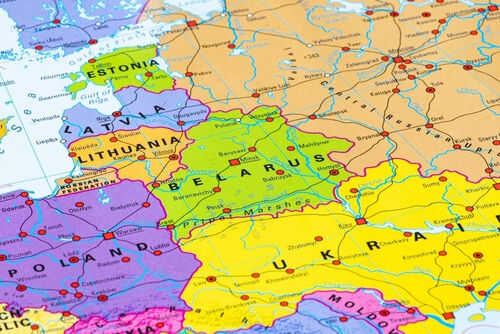
A crude plywood drone from Belarus just sent Lithuanian leaders racing to bunkers and shut down a NATO capital’s airport, reminding Americans how fragile airspace security really is in a world of cheap unmanned aircraft.
Story Snapshot
- Homemade aircraft from Belarus violated Lithuanian airspace and crashed near the border.
- Lithuania moved top leaders to shelters and halted flights in Vilnius as alarms sounded.
- NATO fighter jets on Baltic Air Policing duty were redirected in response to the alert.
- Officials later called the object a makeshift unmanned plane with no visible payload.
Leaders Sheltered and Airspace Locked Down Over Mystery Drone
Lithuanian authorities ordered their prime minister and parliamentary speaker into shelters after an unidentified aircraft crossed into their airspace from Belarus and triggered a national alert, underscoring how even a crude drone can rattle a North Atlantic Treaty Organization country.[1] Officials said the object was first detected late morning and quickly treated as an airspace violation, not a harmless curiosity.[1][2] Residents near Vilnius received warnings to seek shelter while security services scrambled to understand what was approaching.[1][2]
Emergency measures did not stop with political leaders. Lithuania temporarily halted operations at Vilnius airport and urged people in parts of the capital region to move into bunkers as air raid-style alerts went out.[1][2] Fighter jets already airborne for the North Atlantic Treaty Organization’s Baltic Air Policing mission were redirected toward the possible threat, showing how quickly alliance assets can be pulled into action when a border state reports a suspicious object.[1][3] Rail and public transport also saw precautionary disruptions.[1]
From Suspected Strike Drone to “Plywood and Foam” Glider
Initial reports inside Lithuania referenced concern that the object might resemble Iranian-made Shahed drones that Russia has used in strikes on Ukraine, which explains why the response looked more like wartime readiness than routine air traffic control.[1] That suspicion remained unconfirmed, but it shaped the early threat assessment. As investigators closed in on the crash site near the Šumskas border checkpoint, about one kilometre from Belarus, they found a very different picture.[2] Debris indicated a makeshift unmanned aircraft built from lightweight materials.[2]
The State Border Guard Service described what they saw as a homemade aircraft “resembling a makeshift plane” constructed largely of plywood and foam, not a mass-produced strike drone.[2] Follow-up reporting said there was no indication the craft was carrying cargo and that officials concluded it “posed no threat” once they had eyes on the wreckage.[1][2] Euronews likewise relayed that closer investigation identified the object as an unmanned, improvised plane that did not present danger, even though it had triggered full-blown air-defense procedures hours earlier.[1]
Belarus Route Raises Hybrid-War Questions Despite Limited Forensics
Lithuanian border officials stated the aircraft crossed into their airspace from Belarus before crashing near the frontier, confirming at least a physical violation of a North Atlantic Treaty Organization member’s border.[2] The Lithuanian army’s public account framed the detection as an “airspace violation from Belarus,” anchoring the event in an already volatile regional context where Vilnius has accused Minsk of hybrid pressure using migrants, balloons, and drones.[1][2] That route alone guarantees the incident will be read through a security lens rather than dismissed as a hobbyist’s error.
At the same time, Lithuanian authorities have not publicly identified who built, launched, or controlled the craft. The available reporting offers no radar logs, technical debris catalog, or laboratory analysis that would show exactly how the drone was powered, guided, or potentially modified.[1][2] That evidentiary gap leaves room for competing narratives. Some will argue officials overreacted to a low-grade contraption, while others will see a deliberate hybrid probe designed to test North Atlantic Treaty Organization response times and political nerves without firing a shot.
What This Means for NATO Security and for Americans Watching Abroad
This Lithuanian episode fits a growing pattern on Europe’s eastern flank, where low-cost drones and balloons cross borders often enough that governments must treat ambiguity itself as a threat. States from the Baltics to the Black Sea have faced unmanned craft that are hard to track, identify, and attribute quickly. That reality forces leaders to choose between underreacting to a possible attack or overreacting to what later proves a homemade glider, with public trust on the line either way.[1]
Lithuanian government was taken to a bunker
A drone approaching from Belarus triggered a security alert in Lithuania. The president, prime minister, and speaker of the Seimas were urgently taken to shelters.
Members of the Lithuanian parliament (photo) were likewise in… https://t.co/D3s1GnSmWB pic.twitter.com/6UhP8HqVlq
— NEXTA (@nexta_tv) May 20, 2026
For American readers, the lesson is not that Lithuania panicked over plywood, but that modern air defenses are being stressed by cheap technology our adversaries can build in a garage. A small, improvised craft from Belarus was enough to shut down a North Atlantic Treaty Organization capital’s airport, send leaders into bunkers, and pull allied jets off their regular patrol.[1][3] That should harden our resolve to secure our own skies, borders, and critical infrastructure without surrendering common sense or constitutional freedoms.
Sources:
[1] Web – Lithuanian politicians taken to shelters after Belarus airspace …
[2] Web – Lithuanian leaders taken to shelter as Belarus-launched aircraft …
[3] Web – Lithuanian Leaders Taken to Shelters After Airspace Alert