
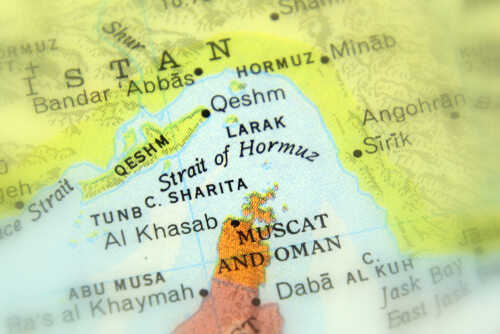
President Trump halted a U.S. military operation to reopen the Strait of Hormuz just one day after its launch, signaling potential diplomatic breakthroughs with Iran while maintaining a complete blockade on Iranian ports.
Story Snapshot
- Trump paused “Project Freedom” on May 5, 2026, citing requests from Pakistan and other mediators
- U.S. maintains full blockade on Iranian ports despite pause in ship escort operations
- Secretary of State Marco Rubio confirmed active negotiations aimed at securing a “complete and final agreement”
- The Strait of Hormuz handles roughly 20% of global oil trade, making the blockade economically significant
Abrupt Halt to Military Escort Operation
President Donald Trump announced on May 5, 2026, that “Project Freedom” would be paused, less than 24 hours after launching the operation to escort commercial vessels through the Strait of Hormuz. Trump posted on Truth Social that the decision came at the request of Pakistan and other mediating nations working to finalize diplomatic arrangements with Iran. The pause does not signal withdrawal from the region, as Defense Secretary Pete Hegseth ordered ships already in the area to evacuate while U.S. naval forces maintain their strategic positioning throughout the Persian Gulf.
Blockade Remains as Diplomatic Window Opens
Secretary of State Marco Rubio clarified that while escort operations are paused, the United States continues enforcing a complete blockade preventing all access to Iranian ports. Rubio told reporters that U.S. envoys Steve Witkoff and Jared Kushner are actively negotiating with Iranian officials, describing the talks as progressing toward a comprehensive resolution. The administration’s dual approach combines maximum economic pressure through the blockade with diplomatic engagement, a strategy consistent with Trump’s preference for achieving agreements through leverage rather than prolonged military engagement.
Economic Stakes and Global Impact
The Strait of Hormuz represents a critical chokepoint for global energy markets, with approximately 20% of the world’s oil trade passing through the narrow 21-mile waterway between Iran and Oman. The blockade has already triggered volatility in oil prices, with potential increases of 10-20% if the standoff continues, based on patterns from similar 2019 incidents. Shipping companies face the costly alternative of rerouting around Africa’s Cape of Good Hope, adding an estimated $1 million per container. European and Asian economies dependent on Middle Eastern oil imports face the most immediate economic consequences, while American consumers could see rising gas prices if diplomatic efforts fail.
Pressure Strategy Mirrors Reagan-Era Precedent
Trump’s approach echoes Operation Earnest Will from 1987-88, when the Reagan administration escorted reflagged Kuwaiti tankers through these same waters during the Iran-Iraq War. The current operation follows completion of “Operation Epic Fury,” a military action against Iranian targets that Secretary Rubio described as achieving its objectives without being offensive in nature. The administration has proposed a United Nations resolution backed by Gulf allies including Saudi Arabia and the UAE, threatening additional sanctions if Iran refuses to negotiate. This strategy reflects conservative principles of projecting strength while avoiding unnecessary military escalation, prioritizing American interests and regional stability over prolonged conflict.
The pause represents a calculated gamble that Iran will accept diplomatic resolution rather than risk continued economic isolation and potential military consequences. With both sides claiming progress toward an agreement, the coming days will determine whether Trump’s maximum pressure approach yields the “complete and final agreement” he seeks, or whether the world’s most vital oil transit route remains closed, threatening global economic stability and potentially forcing the administration to resume military operations.