
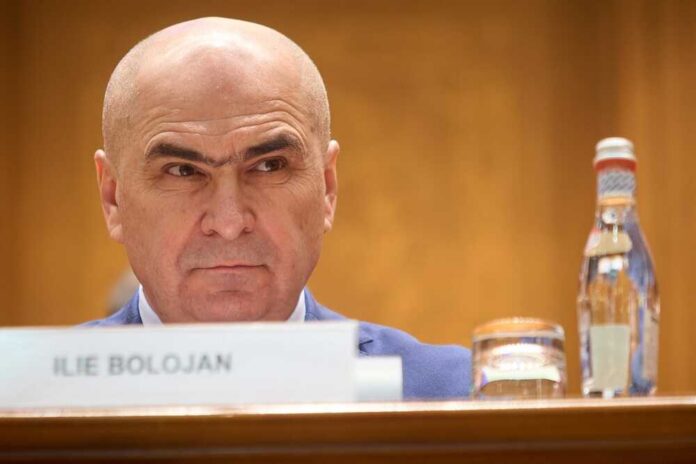
Romania’s pro-EU government collapsed when socialists and hard-right nationalists forged an unprecedented alliance, exposing how political elites on opposite ends of the spectrum unite against austerity while ordinary citizens bear the cost.
Story Snapshot
- Prime Minister Ilie Bolojan’s center-right coalition fell on May 5 after a no-confidence vote passed 281–183 in parliament, toppling the government after just ten months.
- The Social Democratic Party (PSD) and the hard-right Alliance for the Unity of Romanians (AUR) joined forces to oust Bolojan, breaking a longstanding political taboo by uniting ideological opposites.
- The collapse signals growing resistance to austerity measures and EU-aligned policies, even as Romania navigates NATO obligations and economic instability near Ukraine.
- Political paralysis now threatens Romania’s access to €80 billion in EU recovery funds, while the Romanian leu has depreciated 2–3 percent amid market volatility and investor uncertainty.
An Unlikely Coalition Against Austerity
Romania’s Socialist Democratic Party and the nationalist Alliance for the Unity of Romanians abandoned decades of mutual hostility to dismantle Prime Minister Bolojan’s pro-European government. The PSD, Romania’s largest parliamentary party, and AUR, which leads opposition polls with nationalist and anti-EU messaging, submitted a joint no-confidence motion with 251 signatures. This alliance represents a watershed moment in Romanian politics: two ideologically opposed forces prioritized blocking austerity over preserving traditional left-right divisions, exposing how government spending policies can override fundamental political differences.
Why Bolojan’s Coalition Crumbled
Bolojan formed his four-party pro-EU coalition in late 2025 specifically to marginalize AUR’s rising parliamentary influence. The PSD initially joined but withdrew in April 2026, citing Bolojan’s fiscal discipline measures and concerns about his government’s proximity to far-right political forces. The PSD leadership, led by Sorin Grindeanu, calculated that opposing austerity and regaining power outweighed the political cost of partnering with AUR. This calculation underscores a troubling reality: when government policies directly threaten the interests of major political parties, ideological boundaries dissolve in pursuit of immediate advantage.
Economic Consequences and Investor Alarm
Romania now faces severe economic headwinds from political instability. The collapse delays access to €80 billion in European Union recovery funds, and currency markets have responded with the Romanian leu depreciating 2–3 percent since the vote. Bond yields have spiked as investors flee uncertainty, and the International Monetary Fund has warned that GDP growth will stall if political paralysis persists. Interim Prime Minister Bolojan, stripped of meaningful executive power, cannot advance reforms necessary to unlock EU financing or restore investor confidence. Citizens caught between austerity and inflation face mounting pressure as political dysfunction deepens economic distress.
The Normalization of Populism
The PSD-AUR pact signals a dangerous normalization of hard-right politics across Europe. AUR, which emerged in 2020 as an anti-corruption populist force, now polls as Romania’s leading opposition faction with nationalist and anti-EU messaging gaining traction amid economic hardship. By legitimizing AUR through coalition negotiations, the PSD has mainstreamed a party previously isolated by pro-EU centrists. This mirrors patterns in Hungary and Poland, where populist parties have consolidated power by exploiting public frustration with traditional elites. Romania’s experience suggests that when voters lose faith in establishment parties’ ability to address economic suffering, they increasingly embrace anti-system alternatives regardless of ideological coherence.
What Comes Next
Romania’s president will now consult political parties to form a new coalition. A snap election remains unlikely before 2028, leaving the PSD as kingmaker. The most probable outcome involves a reformed PNL-PSD coalition excluding AUR, but such arrangements carry inherent fragility given the PSD’s demonstrated willingness to abandon partners over policy disputes. Whether Romania’s next government stabilizes the economy, secures EU funds, and maintains NATO alignment depends on whether political elites can prioritize national interests over immediate tactical gains. The precedent set by this week’s no-confidence vote—that left and right will unite against fiscal discipline—suggests such consensus may prove elusive.
Sources:
Romanian left and right wings unite to oust liberal prime minister
Romania’s Socialists and a hard-right party seek to topple the center-right prime minister
Taboo broken: Social Democrats join far-right to bring down Romania’s prime minister