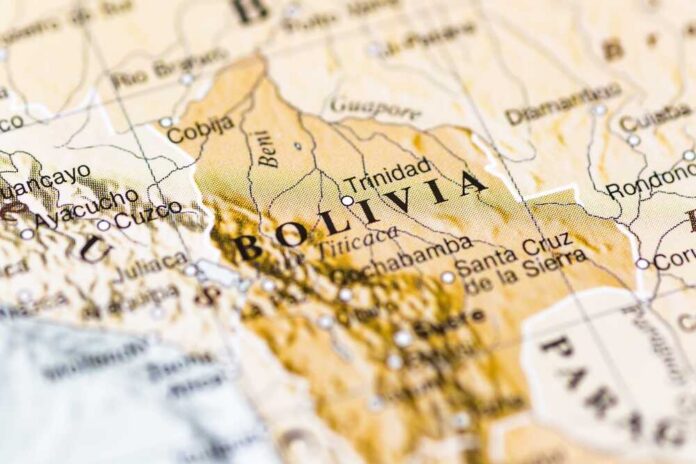
A deepening left-fueled blockade crisis in Bolivia now shows how fast mob rule can strangle a country’s food, fuel, and freedom when a government finally tries to clean up years of economic mismanagement.
Story Snapshot
- Bolivia’s president has declared a state of emergency after 50 days of road blockades choking food, fuel, and medicine supplies.
- Protests erupted when fuel subsidies were cut to fix a crisis created under nearly 20 years of leftist rule.
- Blockades, led by unions and allied groups, have paralyzed the economy and caused deaths as patients could not reach hospitals.
- The showdown is a warning about how fast “street power” can undermine democracy, markets, and basic order.
Blockades Turn Political Anger Into National Hostage Crisis
For nearly two months, Bolivia has been locked down by road blockades that cut off major highways, trapped truckers, and choked deliveries of basic goods into the capital city of La Paz and other key areas.[17] Protesters began with an open-ended strike and then moved to blocking roads at more than eighty to one hundred points nationwide, hitting six of nine regions and freezing normal life for millions.[17] Families have faced empty shelves, farmers cannot move crops, and businesses report billions in losses.
These actions are not simple marches or rallies. They are targeted shutdowns of the country’s transport arteries, used as leverage to force the president to resign and reverse economic reforms.[17] Labor unions, rural groups, and backers of former socialist leader Evo Morales have played central roles in organizing the blockades.[10] As days dragged into weeks, the costs grew. Supply chains broke, fuel ran short, and what began as “social protest” morphed into open pressure to topple an elected government.[18]
Economic Meltdown After Years of Left Rule Fuels the Unrest
The anger on the streets comes from a real economic crisis, but that crisis did not start with the current president. Rodrigo Paz took office in November after almost twenty years of hard-left rule under the Movement Toward Socialism, which left Bolivia with its worst economic mess in a generation.[3] Chronic fuel shortages, soaring inflation near or above twenty percent, and a near-empty central bank pushed voters to turn away from the old model and toward a more market-friendly path.[18]
Once in power, Paz tried to stop the bleeding. His government cut long-standing fuel subsidies to shrink the deficit and save scarce dollars.[10] These subsidies had kept prices low but drained public money and fed smuggling. Cutting them was painful. Fuel prices jumped, inflation bit harder, and earlier efforts to patch shortages with poor-quality gasoline had already damaged thousands of vehicles.[3] Congress also stalled reforms meant to attract investment. Ordinary Bolivians now feel squeezed, and many of the same groups that backed the old leftist project say Paz has not delivered fast relief.[3]
From Legitimate Demands to Deadly Disruption
Some protesters have clear economic demands, like wage hikes and access to fuel and dollars.[10] But the main tactic they chose—blocking highways for weeks—has hit the weakest people first. The national rights office and outside groups report that several people have died because ambulances and patients were stuck behind barricades and could not reach hospitals in time.[3] Food and fuel shortages have been worst in La Paz and other big cities, where barricades on key roads left gas stations dry and store prices spiking.[13]
Clashes have turned violent. Demonstrators armed with dynamite have battled riot police, leaving dozens injured and hundreds arrested.[3] Truck drivers and families have slept in their vehicles, stranded for days along blocked routes.[21] Even as some unions signed deals to ease pressure and shift back to talks, more radical factions refused dialogue and kept highways shut.[5] Many Bolivians who dislike austerity still reject the blockades because they see their neighbors going hungry and their jobs disappearing.[18]
Paz Invokes Emergency Powers to Clear Roads and Defend Order
Facing a country at what he called a “breaking point,” President Paz declared a state of emergency to clear the roads and restore the flow of food, fuel, and medicine.[2] The measure gives the military broad power to remove barricades and secure highways after about fifty days of crippling disruption.[13] Security forces began pushing through blockades almost immediately, as officials warned that people could not keep being “hostages” of illegal closures that stop them from working, studying, or getting care.[9]
President Rodrigo Paz on Saturday declared a state of emergency that gives the military broad power to remove road blockades that have put a stranglehold on fuel and food supplies in Bolivia's seat of government and other major cities.https://t.co/T3iVegAKRW
— Talk 1370 (@TALK1370) June 21, 2026
Paz has stressed that the emergency is meant to “free the country’s roads,” not silence all dissent, and he has continued to call for talks with unions, peasant leaders, and Indigenous groups willing to negotiate.[1] At the same time, he argues that the uprising is no longer only about fuel prices. He says it has become a coordinated push, backed by the old ruling camp, to destabilize Bolivia’s democracy and reverse the voters’ choice for change.[6] Some social media and regional reports also point to Morales allies and other leftist operators trying to turn hardship into a political comeback.[20]
Why This Matters for Americans Who Care About Borders, Markets, and the Rule of Law
What is happening in Bolivia should matter to readers in the United States. It shows how quickly a country that tries to correct failed socialist policies can run into street movements that weaponize chaos instead of ballots. A new government that cuts wasteful subsidies and leans toward free markets can face blockades, shortages, and foreign pressure—especially when old left networks see a chance to regain power.[18] It is a familiar pattern across Latin America, from energy fights to currency crises.
For Americans worried about illegal immigration, globalist deals, and soft-on-crime politics, Bolivia is a warning sign. When governments lose control of their roads, borders, and energy systems, ordinary families pay the price while political activists push their own agenda. The United States under President Donald Trump has backed leaders who try to strengthen markets and sovereignty instead of feeding endless subsidies.[10] Bolivia’s struggle is a reminder that defending order, property rights, and the rule of law is not “extreme.” It is the basic work of keeping a nation free.
Sources:
[1] YouTube – Bolivia president declares state of emergency as blockades choke …
[2] Web – Bolivia’s Paz declares state of emergency over blockades – DW.com
[3] YouTube – Bolivia at ‘breaking point’ as protests spark fuel and food shortages
[5] Web – Bolivian Congress allows deployment of troops to quell protests – BBC
[6] Web – Protests/road blocks in Bolivia, how to travel around? – Reddit
[9] Web – Bolivia – South America | UPDATE: there are not more blockades …
[10] Web – Bolivia’s president declares state of emergency over blockade crisis
[13] Web – Bolivia’s president declares state of emergency – AP News
[17] YouTube – Bolivia declares state of emergency to clear protest blockades
[18] Web – Bolivia Crisis: 40 Days of Road Blockades – Latina Republic
[20] Web – Travel Information Regarding Road Blockades in Bolivia – Reddit
[21] Web – In Bolivia, blockades—of which there are currently more than 80 …