A federal judge just handed President Trump a major early victory on election integrity, refusing to halt his effort to tighten mail-in voting rules nationwide.
Story Snapshot
- A Washington, D.C. judge refused Democrats’ request to immediately block President Trump’s mail-in voting executive order, allowing it to move forward for now.[2][3]
- The order directs federal agencies to compile lists of eligible voters in each state and tells the Postal Service to deliver mail ballots only to those verified voters.[1][2]
- Democratic officials and voting-activist groups claim the order illegally interferes with state control of elections and could restrict ballot access.[1][2]
- The judge ruled the case is premature because agencies have not yet implemented the order, but left the door open for future challenges once concrete rules are in place.[2][3]
Judge Lets Trump’s Mail-In Voting Order Stand — For Now
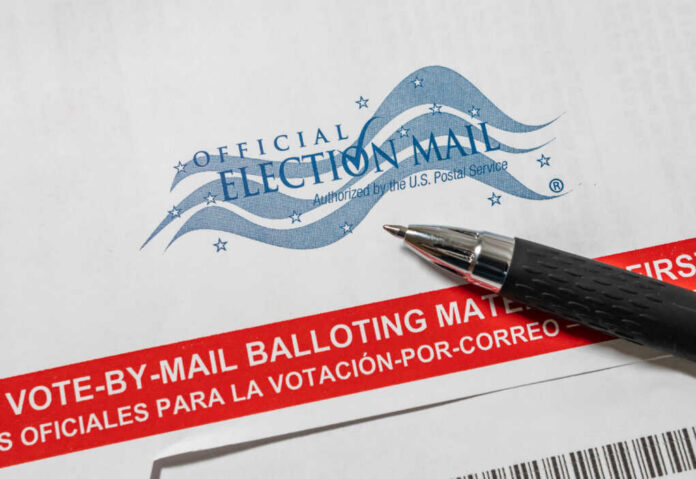
A federal judge in Washington, D.C., declined to immediately block President Donald Trump’s executive order aimed at tightening rules for voting by mail, meaning the order remains in effect as the 2026 midterm season ramps up.[2][3] The lawsuit, brought by Democratic Party groups and allied voting organizations, demanded an emergency halt, arguing the order unlawfully intrudes on state control over election procedures and threatens to limit lawful voters’ access to mail ballots.[1][2]
According to courtroom coverage and legal summaries, the judge ruled that the challenge was not yet “ripe” because key federal agencies, including the Department of Homeland Security and the United States Postal Service, have not finished writing or enforcing the rules that would carry out Trump’s order.[2][3] With no new mail-in voting rules currently in place, the court said alleged harms were still speculative, so it refused to issue the extraordinary step of a nationwide injunction at this early stage.[2][3]
What Trump’s Executive Order Does on Mail Voting
President Trump’s order, formally titled Ensuring Citizenship Verification and Integrity in Federal Elections, directs federal agencies to help verify who is eligible to vote by mail in each state.[2] Reporting from legal analysts and policy groups notes that the order instructs the Department of Homeland Security and other federal offices to assemble lists of eligible voters and then requires the United States Postal Service to deliver mail ballots only to those individuals who appear on the approved state lists.[1][2]
The White House describes the order as a basic election-integrity measure, framed around confirming citizenship status and tightening the chain of custody for ballots in federal races. Supporters argue that after years of chaos, loose mail-ballot rules, and public doubts about close elections, requiring accurate voter lists and controlled ballot distribution is common-sense protection for one person, one vote.[2] The order does not itself change who can vote, but it attempts to impose stricter federal coordination over how mail ballots reach eligible citizens.[1][2]
Democrats, Activists Claim Federal Overreach Into State Elections
Democratic officials and voting-advocacy groups quickly sued, claiming the president is trying to usurp the states’ constitutional authority to run elections, especially the details of mail-in voting.[1][2][3] Organizations aligned with the left argue that the president lacks constitutional power to regulate election administration directly and warn that centralizing mail-ballot eligibility around federal data and postal screening could lead to eligible voters being left off lists or facing added burdens to receive ballots.
The Brennan Center for Justice and allied groups characterize the order as instructing the United States Postal Service to decide who may vote by mail, which they say crosses a line from delivering ballots into effectively policing voter eligibility. A coalition of voting-rights organizations filed a separate challenge in federal court in Massachusetts, emphasizing similar claims that the order amounts to illegal interference in state-run elections and could chill mail voting among lawful citizens who rely on it, such as seniors and military members.[2]
Why the Judge Said ‘Not Yet’ — And What Comes Next
The judge’s decision did not resolve whether Trump’s order is ultimately lawful; instead, it focused narrowly on timing and evidence.[2][3] Because the Department of Homeland Security and the Postal Service have not yet put detailed regulations or new procedures into effect, the court concluded that no concrete injury had been proven, and it would be improper to strike down the order based on predictions about what federal agencies might do in the future.[2][3] For now, existing state mail-in voting systems remain in place while agencies work behind the scenes.
🚨 A federal judge has ruled that the Trump administration can begin implementing an executive order imposing new restrictions on mail-in voting, while allowing a legal challenge to continue.
The ruling denies a request by Democratic lawmakers to block the order for now. pic.twitter.com/HjLf7reCez
— NewsShiftX (@NewsShiftX) May 29, 2026
Election-law specialists note this fits a familiar pattern where courts often wait to see how a controversial election policy is implemented before ruling on its constitutionality.[3] The judge explicitly left the door open for Democrats and advocacy groups to return to court once specific rules or practices emerge from Trump’s order, and if concrete evidence shows that voters are being wrongly denied mail ballots or that states’ election authority is being directly overridden.[2][3] Until then, Trump’s push for tighter mail-in voting standards remains a live effort in the broader fight over election integrity.
Sources:
[1] Web – Judge Declines To Block Trump’s Order On Mail-In Voting
[2] YouTube – Judge won’t block judge’s mail in voting order
[3] YouTube – Federal judge blocks Trump Admin. orders aimed at vote-by-mail in …