President Trump used the White House Correspondents’ Dinner stage to hammer Rep. Ilhan Omar and tell her to get out of the country.
Story Snapshot
- Trump told the crowd Omar “oughta get the hell out” and “shouldn’t be here.”
- He labeled Omar “low IQ” and “very dishonest,” drawing gasps and cheers.
- He referenced her brother as “husband number one,” implying impropriety.
- The exchange shows how spectacle can drown out proof and policy.
Trump’s On-Record Broadside From the Dinner Podium
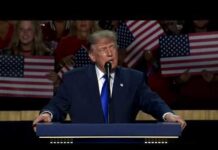
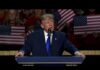
President Trump turned the rescheduled White House Correspondents’ Dinner into a live-fire exercise. He named Rep. Ilhan Omar and told the room she “oughta get the hell out of our country” and “shouldn’t be here.” The line landed hard in a hall built for jokes and jabs, not deportation riffs. The remarks were captured on video and carried by outlets that focused on Trump’s direct attack and the crowd’s split reaction.
Trump framed Omar as dishonest and incompetent before pressing the point. He called her “a low-IQ person” and “very dishonest,” which set the table for a sharper hit. He then reached for a long-circulating claim, saying she “calls her brother husband number one.” The crowd stirred again, and the moment raced across social feeds and cable panels before the dinner was even over. Coverage confirms the lines were delivered in public, on camera.
The Omar Line That Lit Up Social Feeds
Trump’s brother reference served a clear purpose. It suggested Omar had deeper integrity problems, without pausing for evidence or context. That is a hallmark of modern political theater. It plants a sticky idea in a short, punchy phrase. In this case, available coverage quotes the phrase and shows it reached a national audience. The specific documentation behind the allegation did not surface in the clips and write-ups that spread first.
The dinner’s format helped the claim travel. The event rewards sharp elbows and viral lines. Producers cut clips, audiences share them, and the biggest shock wins the most views. That speed favors accusation over verification. The outlets that posted the speech focused on what Trump said and how he said it. They did not present new records that prove the brother claim. Viewers saw the fireworks, not the files.
What The Record Shows, And What It Doesn’t
The public record from that night is clear on one point. Trump told a packed room that Omar should get out of the country. He also tied her to a brother-related claim with the “husband number one” phrasing. Both points appear in video coverage and contemporaneous reports. The same coverage does not include new primary evidence on the allegation itself. The claim’s spread outpaced any effort to pin it to documents.
That gap matters for any reader who cares about facts over vibes. Claims about personal life should rest on records or sworn statements. The dinner clips do not supply those. They show the accusation’s reach, not its proof. A careful approach says separate the event from the evidence. The event happened on camera. The proof question remains outside the dinner hall and belongs to records, not applause lines.
Why This Moment Resonates With Voters
Voters say they want blunt talk, and they got it. Trump’s attack played to concerns about honesty, border security, and national pride. Many conservatives hear “she shouldn’t be here” as a moral line, not a legal brief. They want leaders to call out what they see as double standards and media spin. They cheer when a politician refuses to tiptoe around charges that insiders dodge. The dinner became a proxy fight over who sets the tone in public life.
There is a cost when spectacle beats proof. Noise can bury facts that help citizens judge claims on the merits. Strong countries need strong speech, but they also need clear evidence when reputations are on the line. The better path is simple and firm. Keep the free shots, but back the serious charges with documents. Until then, count the dinner moment as a case study in how a punchline can steer the news cycle for days.