
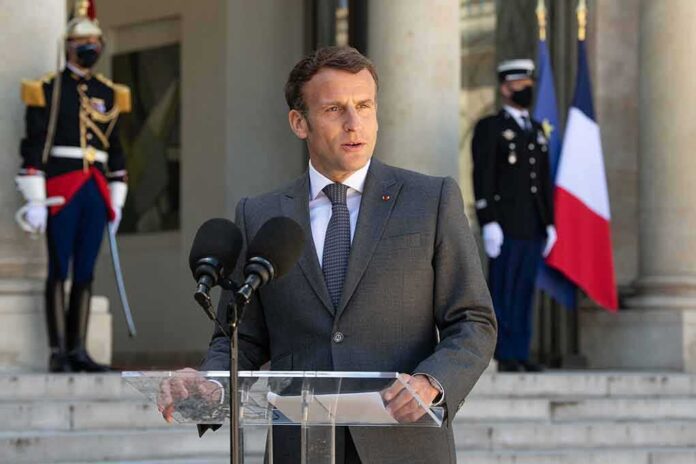
France’s latest riots exposed President Emmanuel Macron’s fading grip on order as critics demand tougher action backed by clear authority.
Story Highlights
- Macron resisted a state of emergency while flooding streets with 45,000 officers.
- Arrests soared past 1,300 on the fourth night before later declining.
- Macron urged parents to keep kids home and condemned the violence.
- Édouard Philippe pressed for firmer decisions and constant leadership presence.
Police Surge Without Emergency Rule Defined the State Response
French leaders boosted traditional policing instead of declaring a national state of emergency. Interior Minister Gérald Darmanin deployed about 45,000 officers and shut down buses and trams at night across the country. President Emmanuel Macron did not suspend normal institutions or use the military. This approach leaned on curfews in some areas, transport stops, and large police numbers to push calm back into the streets as the unrest spread through many towns and cities.
Macron called the violence an exploitation of a teen’s death and asked parents to keep their children at home. His statements were firm on restoring order but avoided the language of emergency rule. The plan aimed to use the tools of ordinary governance. It relied on police power, arrests, and limits on movement at night. This mix signaled caution about extraordinary powers. It also set a public test of whether strong policing alone could end the chaos fast.
Arrests Spiked Early, Then Fell as Order Gradually Returned
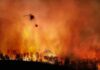
Arrests surged during the peak nights. Police detained more than 900 in one night and 1,300 during the fourth night of unrest. Fires, looting, and attacks hit many areas despite the big deployments. After several days, arrests fell sharply. One Sunday night saw 157 arrests, a large drop from earlier spikes. Officials also counted hundreds of damaged buildings and vehicles. The pattern showed a rough start, then a steady cooldown as the police presence took hold.
Macron met with mayors from hard-hit towns and said the peak had passed. That message fit the data on easing tensions. It also showed the Élysée still working through elected local leaders, not bypassing them. The timeline suggests that the police surge, transport limits, and local curfews matched the downturn in arrests. But the record does not prove which single measure caused the shift. Many actions came at once, and the effect likely came from all together.
Critics Say France Needed Firmer Command and No Mixed Signals
Former Prime Minister Édouard Philippe said Macron’s response lacked concrete steps. He argued that the country “needs to be commanded.” He also said Macron should not have left France during the crisis. His words focused on clear authority, stronger measures, and constant presence at home. Analysts also noted that images from a Céline Dion concert became a symbol used by critics to frame Macron as detached from the pain in the streets while violence spread.
Wow! Unbelievable leadership.
Macron hit with criticism for attending Celine Dion concert before violent riots broke out https://t.co/2wFTLpc9sg— Marilyn Thomas (@Marilyn94789979) October 20, 2026
Television and online clips of burning cars and looted shops shaped public reaction. The dramatic scenes made it easier to sell the idea that the state response was weak. Even with falling arrests later, many people will remember the early surge of violence and damage. That memory competes with the numbers that show calm returning. The scale of the first days gives critics a lasting edge in the debate over leadership choices and the cost of waiting on emergency rule.
Why This Matters for Americans Who Value Law, Borders, and Stability
France’s unrest shows what happens when order cracks and leaders hesitate to use every legal lever. Police needed time to catch up as mobs hit shops, streets, and transit. Scenes like these echo what many Americans saw in past riots. They feed calls for clear command, parental duty, and swift justice. Conservatives will see a lesson: strong borders, tough policing, and firm leadership protect families, small businesses, and the rule of law when chaos tries to spread.
Sources:
youtube.com, rfi.fr, voanews.com, bbc.com, apnews.com, efe.com, abc17news.com