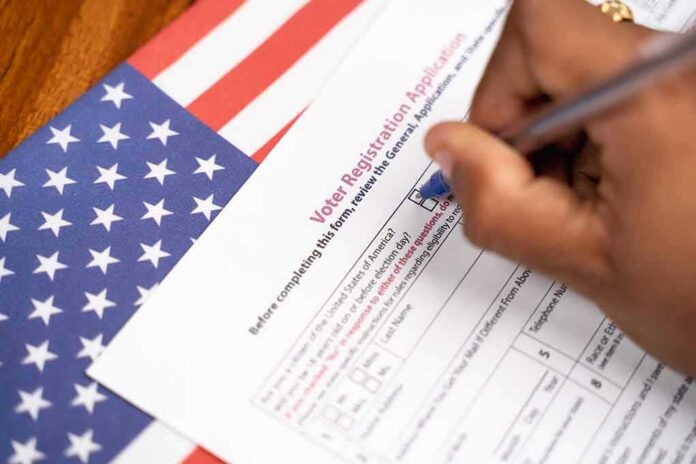
Federal prosecutors say a noncitizen stole his former landlord’s identity to register and vote in 2024, then tried to get the victim deported for the very crime he staged.
Story Snapshot
- Justice Department charged a Chinese national with fraudulent registration and voting in Massachusetts.
- Prosecutors say he used his former landlord’s identity, then sent false immigration tips to get him in trouble.
- News reports say the suspect admitted using the landlord’s name to vote and remained angry over a housing dispute.
- Case highlights targeted fraud risks and why tight voter rolls and identity checks matter.
What Prosecutors Allege Happened
The United States Department of Justice said agents arrested a Chinese national living in Andover, Massachusetts. Prosecutors charged him with one count of fraudulent voter registration and one count of fraudulent voting tied to the 2024 election. Officials said he used his former landlord’s personal information to sign up and then cast a ballot under the landlord’s name. After the vote, prosecutors say he sent anonymous tips to federal immigration agencies to frame the victim.
Prosecutors described a simple, harmful plan: steal an identity, cast a ballot, and trigger immigration trouble for an innocent person. The press release states the tips went to Homeland Security Investigations and United States Citizenship and Immigration Services months after the election, as part of the alleged scheme to punish the landlord. The charges carry potential prison time and fines if a jury convicts. The defendant is presumed innocent until proven guilty in court.
What Investigators Say the Suspect Admitted
A Washington Times report says investigators questioned the suspect last month. According to that account, the man told them, “I used his name to vote,” and admitted to submitting the anonymous tips. He reportedly blamed a landlord dispute and claimed he was angry at how he was treated. A Chinese-language outlet also reported statements showing he remained “very, very resentful” toward the landlord and his wife during questioning.
These reported admissions support the timeline prosecutors laid out. They also explain a possible motive rooted in a personal feud, not politics. The claim is that he weaponized the voter system and the immigration system to hurt a private rival. That is lawless and dangerous. It also shows how identity theft can spill into election processes and then into immigration enforcement, risking harm to victims who did nothing wrong.
Why This Rare Case Still Matters
Election researchers often say noncitizen voting and in-person impersonation are very rare across the country. One review found only about 30 suspected noncitizen voting incidents out of 23.5 million ballots in 2016. Still, rare does not mean impossible. Even a single illegal vote cancels a lawful one. This case, if proven, shows a focused exploit using stolen identity and weak checks that can undermine trust at the margins.
Conservatives have pushed for cleaner voter rolls, stronger identity checks, and tighter data sharing. They argue those steps deter identity theft and protect legal voters. This case fits that argument. Prosecutors say a noncitizen accessed the system online, assumed a real person’s identity, and cast a ballot. Stronger verification at registration and at the ballot could block that path. Better alerts could also warn the real voter if someone changes their record without consent.
Policy Stakes Under the Trump Administration
President Trump’s Justice Department has said it will step up enforcement against illegal voting. Federal prosecutors have brought more cases in recent years under laws that ban voting by noncitizens. In this case, the department moved with public charges and a clear narrative of identity theft tied to a personal grudge. That sends a signal: misuse of voter systems and immigration systems will draw swift federal attention.
States and counties can also act. Officials can audit online registrations for identity mismatches and follow up with mail confirmation to the true address. They can flag sudden changes to a voter’s record and notify the voter through multiple channels. They can coordinate with federal databases to confirm citizenship where allowed by law. These steps protect every legal voter, make cheating harder, and keep confidence high without blocking honest citizens from voting.
Bottom Line for Readers
Federal filings describe a targeted, personal plot that used a ballot and immigration complaints as weapons. The facts, as charged and as reported, point to identity theft and a scheme to harm an innocent person. Most people play by the rules. But systems must be strong enough to stop the few who do not. Secure voter rolls, clear identity checks, and real penalties defend the value of every lawful vote and the rights of every law-abiding resident.
Sources:
washingtontimes.com, justice.gov, oag.ca.gov, nextgov.com