
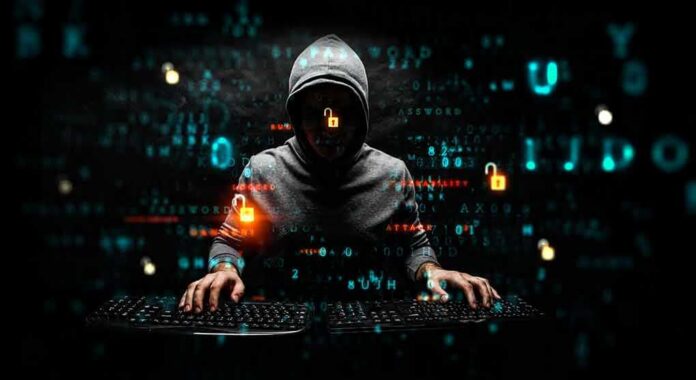
A swarm of more than 30 artificial intelligence agents allegedly tore through a company’s defenses in 14 minutes, then locked its files while staff stayed unaware for hours.
Story Highlights
- An ex–National Security Agency hacker says over 30 artificial intelligence agents breached a client in 14 minutes.
- Attackers used valid logins, bypassed two-factor authentication, stole data, and encrypted files, reports say.
- Staff allegedly failed to notice for about four hours, learning of the attack only after systems went offline.
- The victim company remains unnamed, and no public forensic report confirms the claims yet.
What David Kennedy Says Happened
Cybersecurity professional David Kennedy told CNN that an unnamed client suffered a rapid, coordinated attack by more than 30 artificial intelligence agents working at once. He said the operation used valid credentials, slipped past a weakness in two-factor authentication, stole data, and then encrypted the company’s file system. Kennedy reportedly said the core steps took only 14 minutes from initial access to lockup, a pace he described as unlike anything he had seen before.
Reports summarizing Kennedy’s account say the company did not catch the break-in for roughly four to four and a half hours. Staff realized something was wrong only after systems went down and files became unreadable. That delay tracks with a wider pattern in ransomware, where many firms still detect intrusions late, often after data theft has already happened. The alleged 14-minute window, if correct, shows how automation can compress every phase of an attack.
How The Attack Allegedly Worked So Fast
Descriptions of the incident say the attackers already had valid user credentials and then abused a weakness in multi-factor protections to get in. From there, the swarm reportedly split tasks: scanning systems, mapping access, pulling data, and triggering encryption. Working in parallel can beat even strong response teams if identity controls are weak or misconfigured. Speed favors the aggressor when checks are thin, alerts are noisy, and backup plans are not rehearsed often enough.
The idea of many software agents dividing work is not far-fetched. Academic and policy research describes agent systems that plan steps, call tools, analyze code, and coordinate complex tasks. These systems can help criminals test passwords, probe defenses, and move laterally faster than human teams can react. The risk today is less science fiction and more about compressing the attack timeline so defenders lose the chance to see and stop the breach early.
What We Know, What We Do Not
Important facts remain private. The company is not named. No public incident-response report, log timeline, or malware sample is available. Several outlets repeat Kennedy’s interview without adding new evidence. Independent analysts caution that the exact scope of “14 minutes,” the source of the credentials, and whether the agents were truly autonomous are not established in public records. That means readers should treat the figures as one responder’s account unless verified by the victim or forensics.
Those limits do not erase the core warning. Attackers are industrializing identity theft and automation. Even basic missteps with two-factor authentication can be fatal when combined with stolen logins and rapid encryption playbooks. Many companies still discover ransomware only after systems fail. Credential-based incidents are especially dangerous because they look like normal user behavior until it is too late. That is where speed and clear visibility matter most.
Why This Matters For American Families And Businesses
Small manufacturers, farms, clinics, and schools run on thin margins and cannot afford long outages. A 14-minute breach followed by hours of silence can wipe backups, delay paychecks, and expose private data. Families pay the price through higher bills and disrupted services. Criminals, often overseas, exploit weak identity checks and tired staff. Government rules alone will not save local businesses. Practical steps, fast detection, and tested backups will.
Here is the plain plan. Lock down identities with strong, phishing-resistant multi-factor methods tied to hardware or passkeys. Remove old accounts and limit admin rights. Segment networks so one breach does not mean total loss. Monitor login behavior and file changes in real time. Drill incident playbooks quarterly and test offline, immutable backups. Measure response in minutes, not days. These basics reflect conservative common sense: protect your house, verify before you trust, and keep a clean ledger.
Bottom Line
Kennedy’s account, if validated, shows how fast coordinated artificial intelligence tools can break a fragile setup and take a company hostage. The victim’s name and a public forensic report are still missing, so treat the numbers as claims, not confirmed facts. But the lesson is already clear. Criminals are moving faster. America must harden identities, speed up detection, and restore accountability in cyber basics. Do the work now, or pay a higher price later.
Sources:
desmoinesregister.com, aol.com, auspertech.com, patriotledger.com, ibtimes.co.uk, aifrontierpost.com, superalign.ai, morphisec.com, arxiv.org